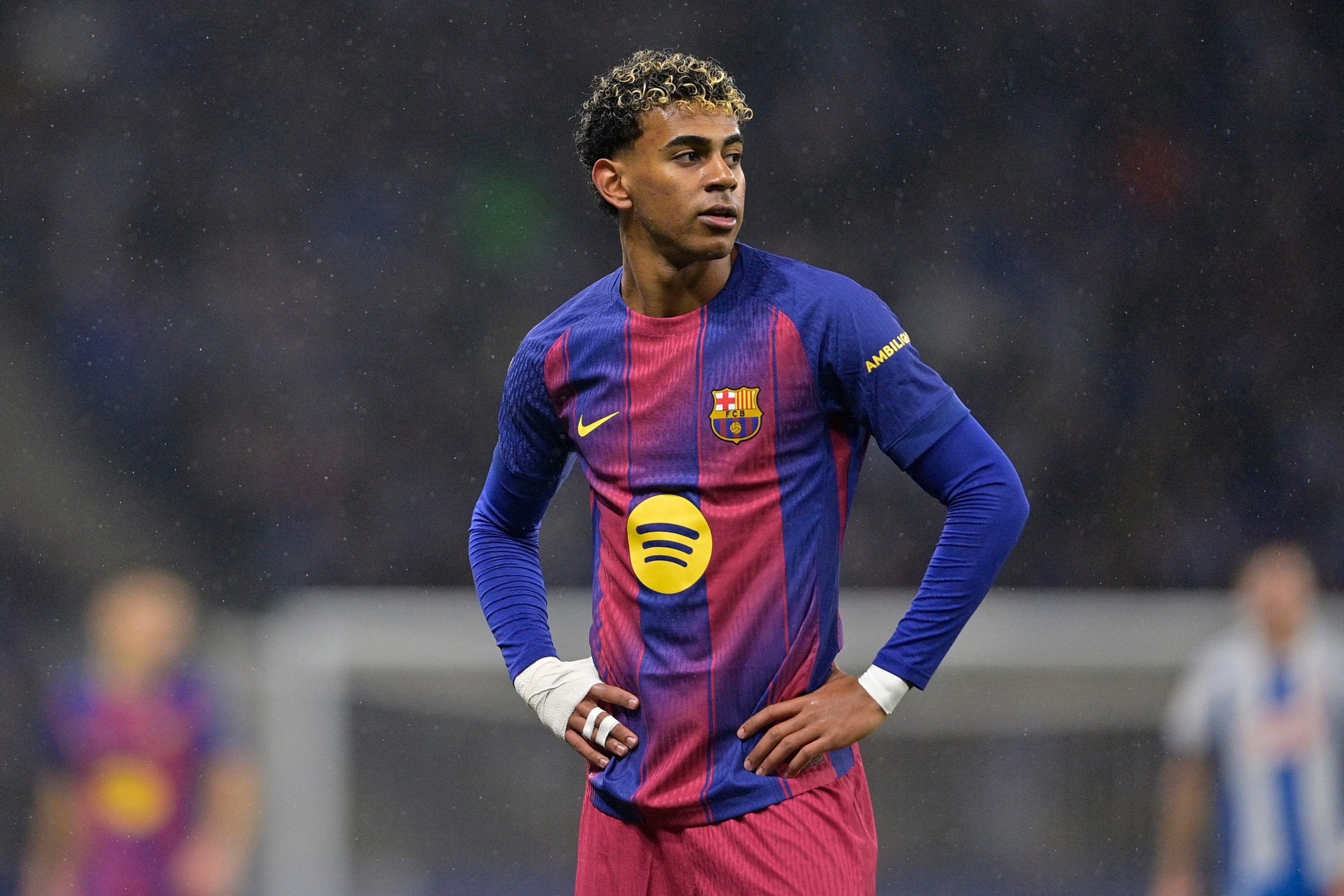
Lamine Yamal is used to noise, packed stadiums, flashing cameras, the weight of expectation that follows prodigies.
But during a recent visit to the Sheikh Zayed Grand Mosque in Abu Dhabi, the Barcelona and Spain winger spoke about something far quieter: peace.
“The mosque gives a person great peace,” Yamal said. “No matter what religion you belong to, when you go there, you feel this peace. For us Muslims, this peace is much more special.”
The remarks, shared during his early January 2026 trip to the UAE, spread quickly across social media and Turkish sports outlets, offering a rare glimpse into how one of football’s brightest young stars grounds himself away from the pitch.
Born in Mataro, Spain, in 2007 to a Moroccan father and an Equatoguinean mother, Lamine Yamal Nasraoui Ebana has risen at remarkable speed.
He joined Barcelona’s La Masia academy at seven, debuted for the first team at 15 and has since become a cornerstone for club and country.
His breakout on the global stage came at Euro 2024, where he helped Spain lift the trophy and earned the tournament’s Best Young Player award at just 16.
Now 18, Yamal remains central to Barcelona’s ambitions in La Liga, the Champions League and domestic competitions during the 2025-26 season.
Yet his story has always been about more than football.
Growing up in a working-class Catalan neighborhood and shaped by a multicultural family, Yamal has openly embraced his Muslim faith alongside his Spanish identity.
Yamal has never hidden his beliefs.
Cameras often catch him making a brief dua before kickoff.
During Ramadan, he has chosen to fast when schedules allow, with Barcelona providing flexibility and support, something he has described as both respectful and empowering.
He has also been seen praying with fellow Muslim players and visiting mosques during international travel.
Those moments, often shared online, reflect how faith serves as a stabilizing force amid the demands of elite football and global fame at a young age.
Yamal’s comments followed a visit to one of the world’s most striking places of worship.
Completed in 2007 and named after the UAE’s founding father, the Sheikh Zayed Grand Mosque can host more than 40,000 worshippers.
Its 82 domes, four soaring minarets and vast white-marble courtyards are designed to inspire stillness as much as awe.
Open to non-Muslims through guided tours, the mosque has become a symbol of interfaith openness.
Visitors often describe the same sensation Yamal articulated, calm created by light-filled halls, expansive space and an absence of distraction.
For Muslims, that calm runs deeper.
Mosques are central to daily prayer, reflection and community, places Islam describes as sanctuaries of sakina, tranquility.
Yamal’s distinction that the peace feels “much more special” for Muslims reflects that layered experience: universal serenity enhanced by spiritual meaning.
The response to Yamal’s words has been largely positive, especially among fans who see humility and balance in a player still at the start of his career.
In a sport where young stars are often encouraged to avoid personal subjects, his openness has drawn praise rather than controversy.
His reflections also place him alongside a growing group of footballers, from Mohamed Salah to Achraf Hakimi, who express their faith publicly while competing at the highest level.