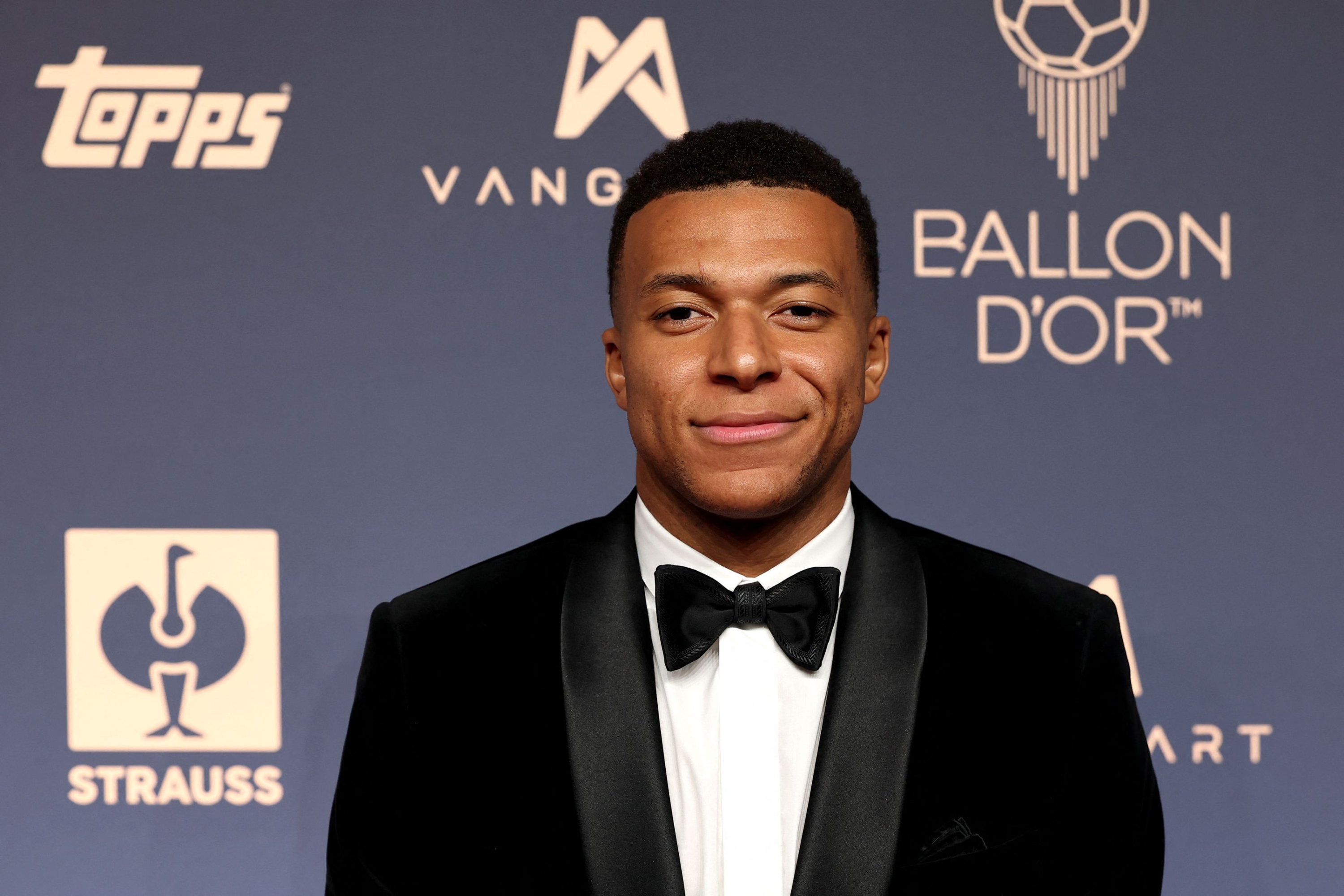
Kylian Mbappe has lost endorsement deals with two major Chinese companies after a video circulated online in which the French football star appeared to joke about former Chinese leader Mao Zedong, triggering a backlash on social media.
Dongpeng Beverage and Mengniu, two prominent Chinese consumer brands, announced Tuesday that they were ending their partnerships with the Real Madrid forward, citing remarks they said offended Chinese national sentiment.
“Our company firmly opposes and has a zero-tolerance policy toward any behavior that offends national sentiments,” Dongpeng said in a statement. “With immediate effect, we are terminating all cooperation with Kylian Mbappe.”
The drinks company had featured the 27-year-old France captain in advertising campaigns ahead of this year's World Cup, including AI-generated images showing him drinking its sports beverages.
Mengniu, China's largest dairy producer, also announced an immediate end to its partnership with Mbappe, who had enjoyed considerable popularity among Chinese football fans and amassed millions of followers on Chinese social media platforms.
“Mengniu firmly opposes and has a zero-tolerance policy toward any words or actions that hurt the feelings of the Chinese people,” the company said in a statement announcing the decision.
The controversy erupted after a video emerged online in which Mbappe reportedly described a meme featuring his face superimposed on that of a Chinese historical figure as the funniest internet meme he had seen.
In the video, Mbappe appeared to say that his face had been edited onto that of “some guy, I think he's a Chinese dictator,” an apparent reference to Mao, the founding leader of the People's Republic of China, who died in 1976.
Agence France-Presse (AFP) Fact Check could not immediately verify the authenticity of the video.
Jokes or perceived disrespect involving Mao remain highly sensitive in China, where his legacy continues to carry significant political and cultural weight.
The video quickly sparked a backlash online. “Dongpeng Beverage ends cooperation with Mbappe” became the top-trending topic on Weibo, China's leading social media platform.
One user described Mbappe's remarks as “extremely serious wrong remarks” that had crossed an unacceptable line. Others called on Dongpeng to remove the footballer's image from its energy drink bottles.
Dongqiudi, one of China's largest online football platforms, also condemned the remarks in a statement Monday evening, saying they were offensive to China and its people and had hurt the feelings of Chinese football fans.
The fallout marks a sharp turn for Mbappe, who had developed a strong following in China. Fans there affectionately call him “Guigui,” the Chinese translation of “Turtle,” a nickname inspired by internet memes linking his appearance to a character from the Teenage Mutant Ninja Turtles franchise.
The incident also revived scrutiny of memes depicting Mbappe alongside controversial historical figures. In September, the French forward addressed a separate meme portraying him as a military dictator in an interview with French sports newspaper L'Equipe.
“There's a part of it that's funny. You can tell that, for some people, it's all in good fun,” Mbappe said. “But there is another part that's a bit less funny because of the damage such people have caused throughout history.”
He added that being compared with individuals responsible for mass killings and widespread suffering was difficult to accept.
“Being compared to individuals who murder others, or who have brought misery to millions upon millions of people, well, I don't think I've ever done anything like that in my life,” he said.
The backlash comes a day after Mbappe lost the Ballon d'Or to Harry Kane, who won football's most prestigious individual award.
The episode highlights the commercial risks international sports figures face when their remarks touch on politically sensitive issues in China, a major market for global brands and sporting organizations.
Other high-profile figures have faced similar repercussions. In 2023, former NBA player Dwight Howard drew criticism on Chinese social media after referring to Taiwan as a country in a video featuring the island's vice president, Lai Ching-te, who later became president.
Beijing claims Taiwan as part of its territory and has threatened to use force to bring the self-governed island under its control.
In 2019, Daryl Morey, then general manager of the Houston Rockets, sparked a diplomatic and commercial dispute by posting a message supporting pro-democracy protesters in Hong Kong. China responded by suspending NBA sponsorship agreements and removing league games from Chinese television broadcasts for about a year.