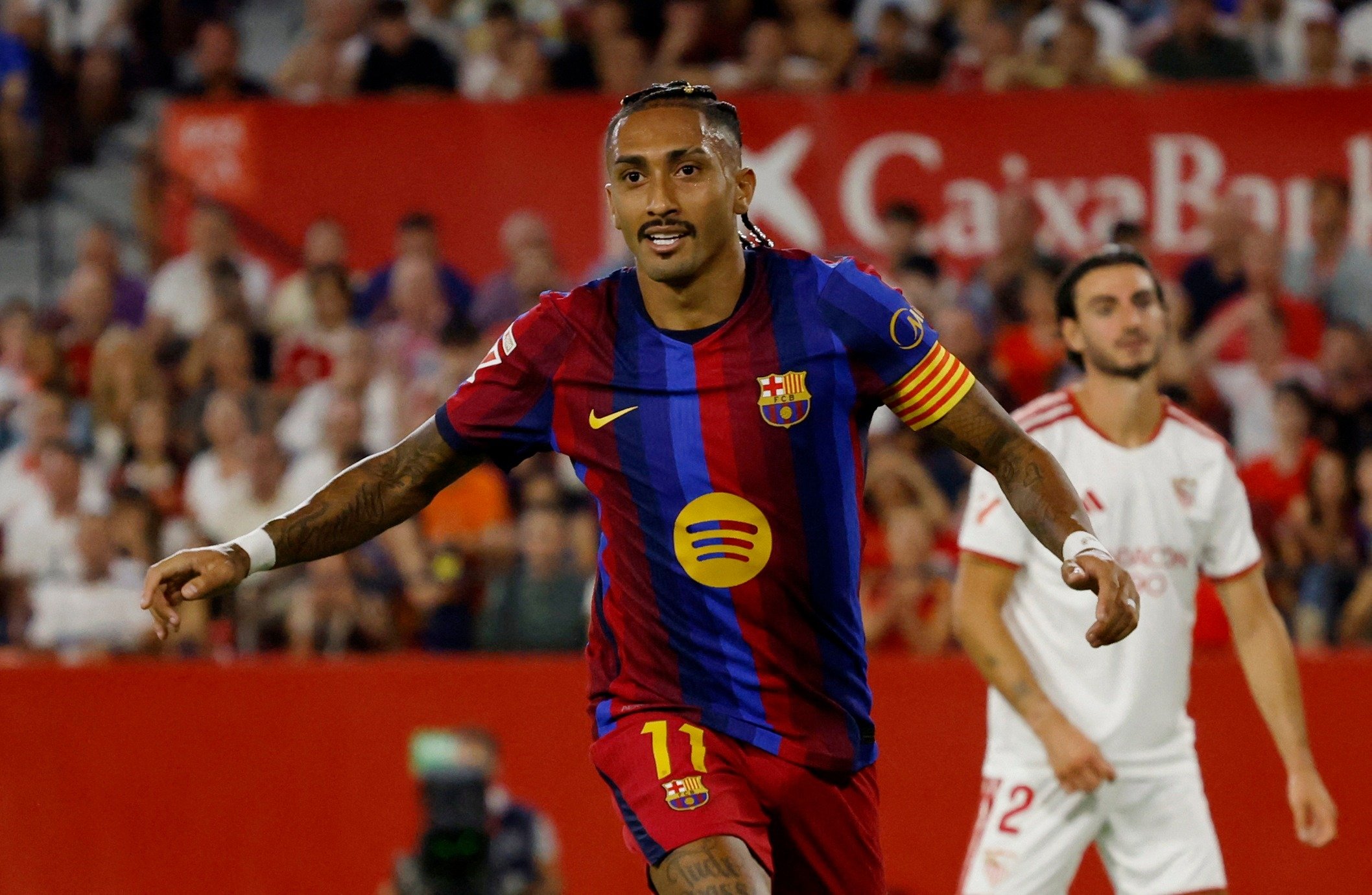
Raphinha has spent much of his career being told he was not quite good enough. Now, the Barcelona forward is wearing the captain’s armband, leading the club’s attack and making an increasingly convincing case that he belongs among the world’s elite.
The Brazilian scored a perfect hat trick Saturday as Barcelona came from behind to beat Sevilla 3-1 at the Ramon Sanchez-Pizjuan, finding the net with his right foot, his head and his left foot. The performance came just four days after another three-goal haul in Barcelona’s 7-2 win over Racing Santander, giving him six goals in three days.
Raphinha has now scored 12 goals in seven La Liga matches and 14 in all competitions, while Barcelona have won all eight of their competitive games this season.
Against Sevilla, Youssouf Fofana put the hosts ahead in the 19th minute, but Raphinha equalized three minutes later after Andreas Christensen slipped a pass through the middle. He then headed Barcelona in front early in the second half after Lamine Yamal found him in the box before completing his hat trick with a left-footed finish.
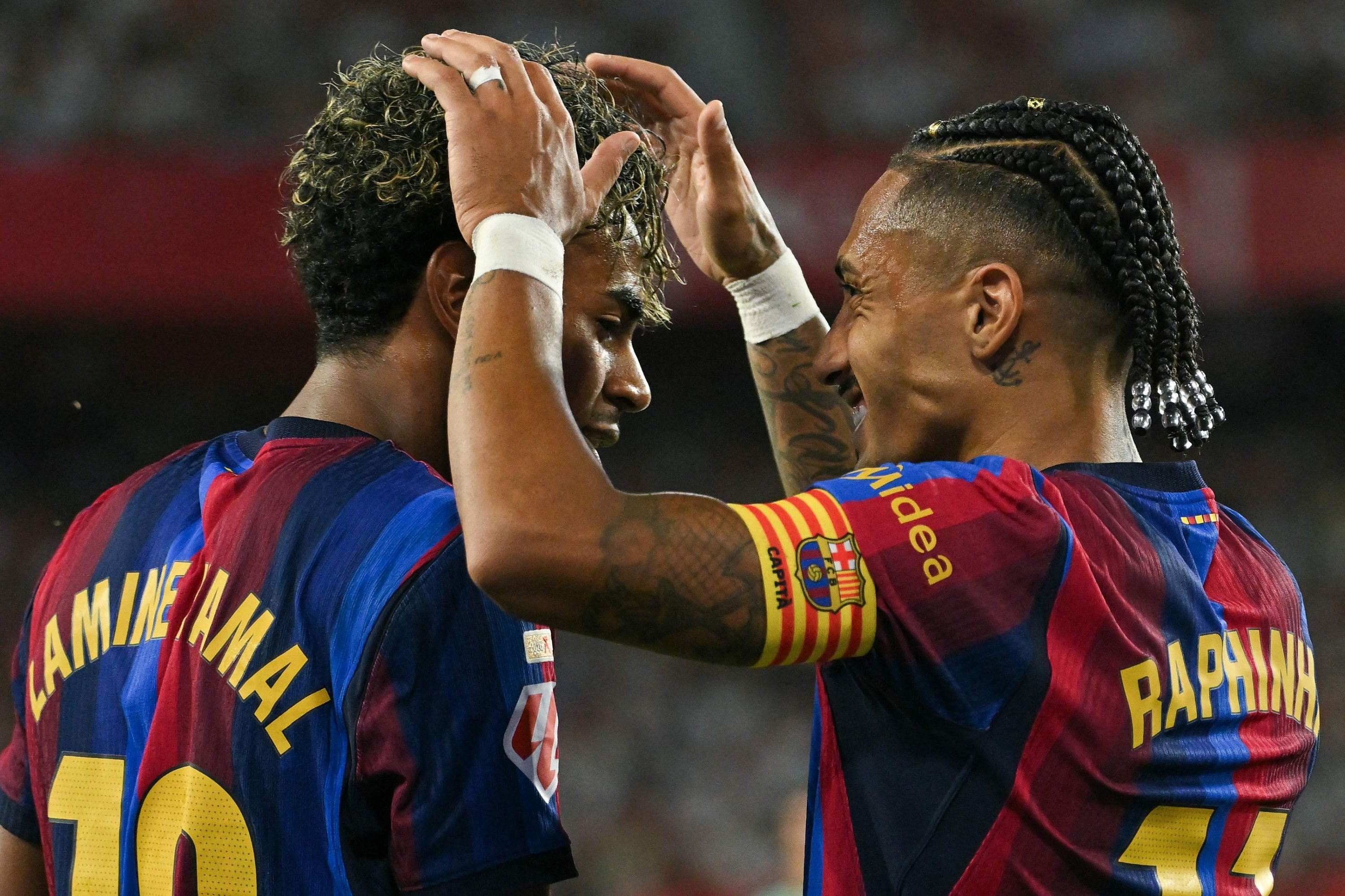
It was a performance that captured the remarkable evolution of a player whose place at Barcelona once appeared far from secure.
Raphinha’s rise is particularly striking because Barcelona were prepared to listen to offers for him only a couple of years ago.
After joining the club from Leeds United in 2022 for a deal worth up to 55 million euros, he struggled to find a settled role and scored 10 goals in each of his first two seasons. He was moved between the wings, while Barcelona were also pursuing Nico Williams as another option for the left side.
Saudi Arabian interest reportedly offered Raphinha a lucrative alternative, and the Brazilian later acknowledged that leaving could have provided financial security for himself and his family.
Instead, he stayed.
Flick’s arrival proved decisive. The German coach made it clear that Raphinha was central to his plans, giving him a defined role on the left and allowing him to attack the penalty area rather than remain isolated on the touchline.
Raphinha responded with the best season of his career in 2024-25, scoring 34 goals and providing 25 assists in 57 appearances as Barcelona won La Liga, the Copa del Rey and the Spanish Super Cup.
He was named La Liga’s Player of the Season and scored 13 goals in the Champions League, helping Barcelona reach the semifinals. He also finished fifth in the Ballon d’Or voting.
Yet recognition remained elusive.
Raphinha was left out of the FIFPRO World 11 despite his extraordinary season and was subsequently omitted from the 30-man shortlist for the 2026 Ballon d’Or.
The latter decision came after an injury-disrupted campaign in which he missed significant periods and suffered a hamstring injury that ended his 2026 World Cup after only 38 minutes. His production remained impressive, but limited availability inevitably affected his case.
Raphinha, however, has responded by producing the kind of start that makes his omission increasingly difficult to ignore.
Raphinha is not the type of attacker who depends on spectacular tricks or highlight-reel dribbles. His game is built around relentless movement, intelligent positioning, pressing and an ability to keep making dangerous runs long after defenders have begun to tire.
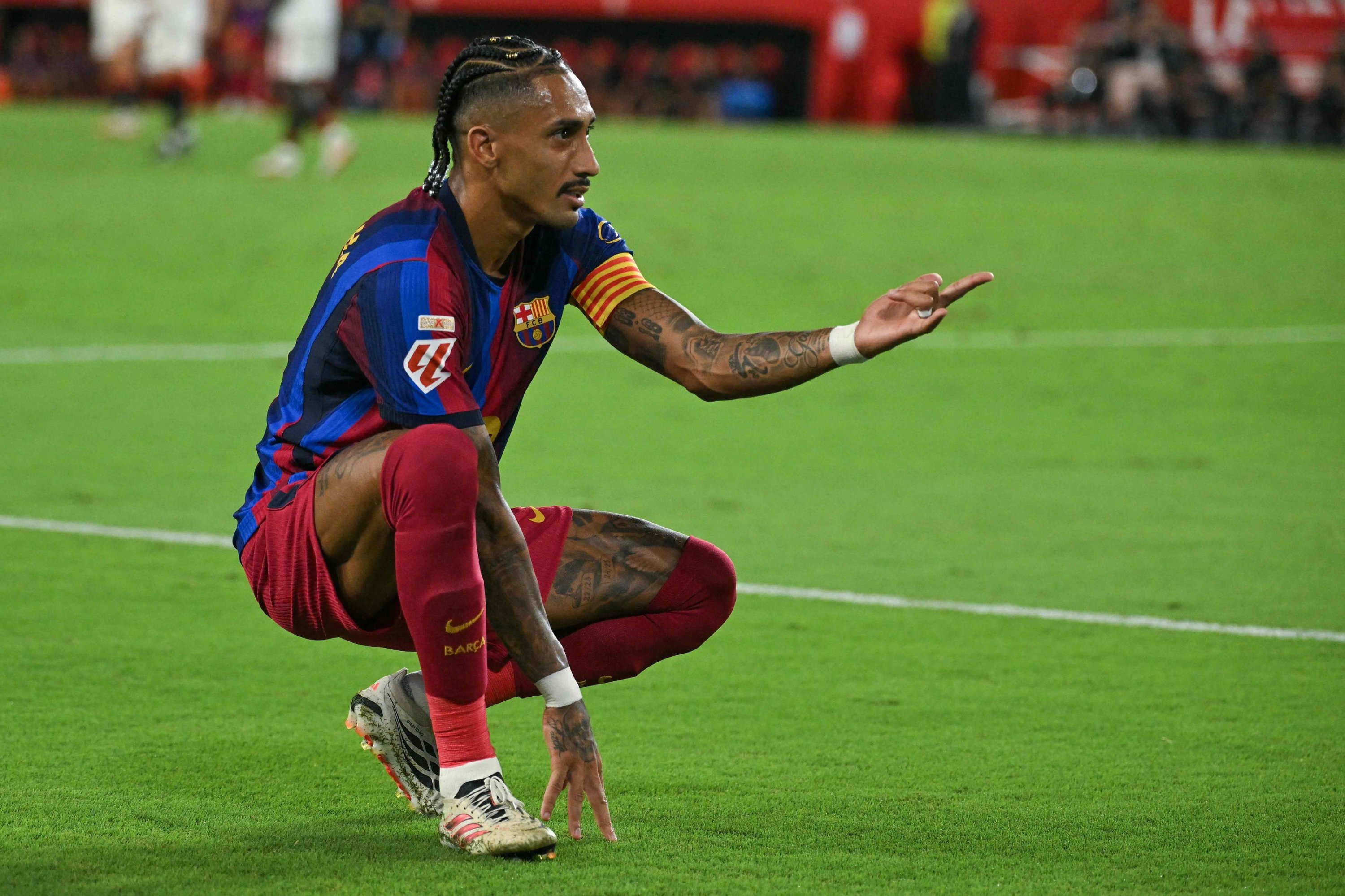
Those qualities make him particularly suited to Flick’s high-intensity football.
Raphinha presses aggressively, tracks back when possession is lost and attacks space behind defensive lines, while his movement allows Barcelona to create openings for other attackers. His contribution therefore extends well beyond his goals and assists.
This season, Flick has taken that versatility a step further by increasingly using him through the middle.
Rather than operating as a traditional No. 9 who waits between the center backs, Raphinha frequently drops deeper, pulls defenders away from their positions and then attacks the space that opens behind them. It gives Barcelona another player capable of creating chances as well as finishing them.
His hat trick against Sevilla illustrated that versatility perfectly. He scored with his right foot, won his aerial duel for the second and finished with his left for the third, showing how many different ways he can hurt a defense.
That tactical flexibility has also helped explain why Flick has placed so much trust in him.
Raphinha was named Barcelona’s skipper, becoming the first Brazilian to wear the armband as the first captain in the club’s history.
The appointment represented another extraordinary turn in a career that has repeatedly defied expectations.
His journey to the Camp Nou was hardly that of a conventional superstar.
Raphinha grew up in Restinga, a working-class neighborhood of Porto Alegre, and did not emerge from one of Brazil’s famous academies. He played community football before joining Avaí at 18, relatively late for a player who would eventually become one of Europe’s leading attackers.
His breakthrough came in Portugal, where Vitória Guimarães gave him an opportunity after former Barcelona midfielder Deco spotted him at the Copa Sao Paulo youth tournament.
Raphinha later moved to Sporting CP and then Rennes before joining Leeds United in 2020. His performances in the Premier League eventually earned him his move to Barcelona, where the expectations were considerably greater.
His early struggles under coach Xavi Hernandez only added to the pressure.
He is famously quoted as saying that he already knew his minutes under the former Blaugrana midfield maestro would almost always end around the 60th minute.
Rather than allowing those doubts to define him, Raphinha gradually turned them into motivation.
His breakthrough season under Flick changed his status within Barcelona, while his leadership and consistency have since made him one of the club’s most important players.
There are still reasons to wait before declaring Raphinha the best player in the world.
Barcelona’s opening schedule before the international break has been relatively favorable, and the club's toughest tests will come against stronger domestic opponents and in the Champions League.
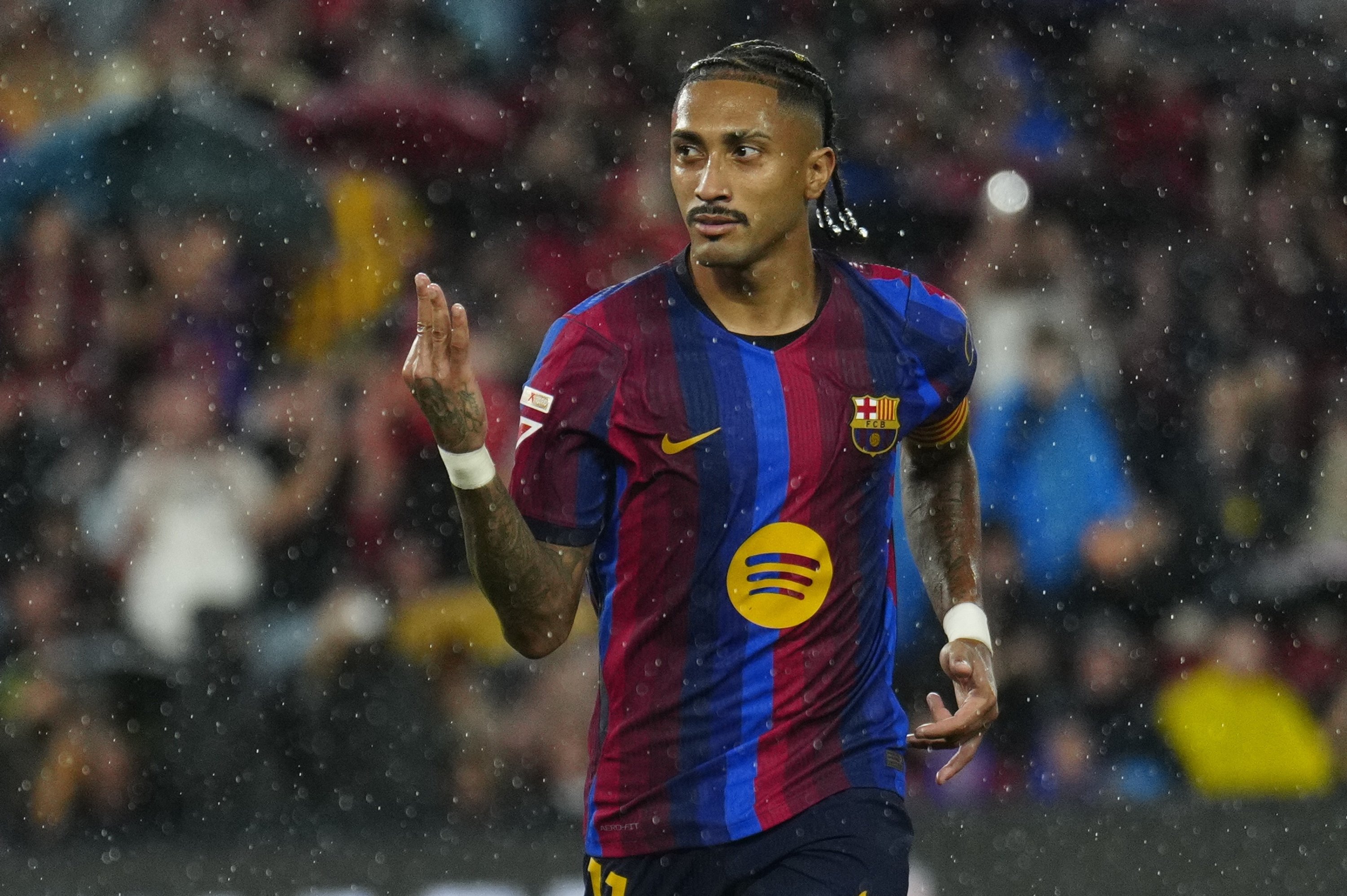
Raphinha’s injury history is another consideration, particularly because his current role requires repeated high-intensity runs and more physical battles through the middle.
Europe will ultimately provide the biggest test.
Barcelona have not won the Champions League since 2015, and performances during the decisive knockout rounds often have a major influence on individual reputations and awards. Raphinha has already shown that he can perform on big European nights, but another deep run would give him an opportunity to strengthen his case on the biggest stage.
Brazil will provide another challenge as well.
With the national team going through a period of transition, Raphinha is increasingly becoming one of its senior attacking figures. His ability to reproduce his Barcelona form for Brazil could further shape how he is viewed internationally.
It is also worth noting that he is away on international duty with La Selecao and will travel more than 3,500 miles, a demanding trip that could disrupt his momentum and place additional strain on his body.
For now, though, the numbers speak loudly.
Raphinha has gone from a player Barcelona were willing to sell to the club’s captain and leading scorer. He has followed a career-best season with a blistering start to the current campaign, despite being left off the Ballon d’Or shortlist.
His story has never been about being the obvious superstar.
It has been about refusing to disappear.
For years, football kept asking whether Raphinha was good enough for Barcelona. After six goals in three days, 12 league goals in seven matches and a perfect hat trick against Sevilla, the question has changed.
Raphinha is no longer trying to prove that he belongs.
He is making people reconsider how high he belongs.