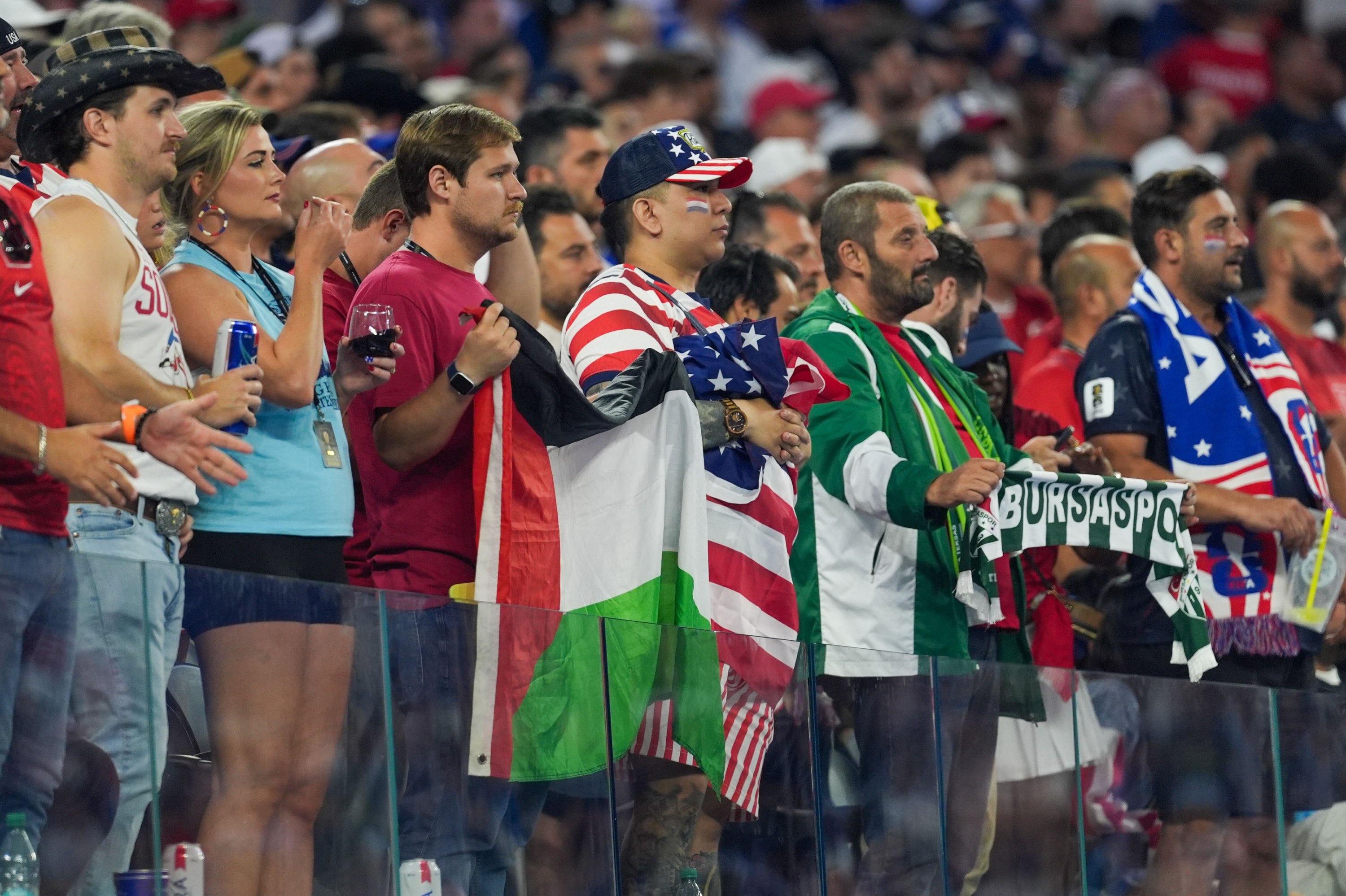
Support for Palestine has become one of the defining off-field scenes of the 2026 FIFA World Cup, with fans from across the globe using football's biggest tournament to display Palestinian flags, chant pro-Palestinian slogans and call for action over the war in Gaza.
Throughout the tournament in the United States, Canada and Mexico, demonstrations have unfolded both inside stadiums and in public gathering places before matches, as supporters from competing nations have transformed fan zones and terraces into stages for political expression.
Palestinian flags have appeared in nearly every phase of the tournament, while fans have repeatedly called for the freedom of Palestine and joined the global "Show Israel the Red Card" campaign, which urges football authorities to take action against Israel over the war in Gaza.
Support for Palestine was visible during Türkiye's 3-2 victory over the United States in the teams' final Group D match.
A Turkish supporter stood behind one of the goals waving a large Palestinian flag throughout the game, with television cameras capturing the fan several times during the live broadcast.
The Round of 32 match between Germany and Paraguay also featured visible displays of solidarity.
A family of three, including a child, waved Palestinian flags from the stands throughout the match.
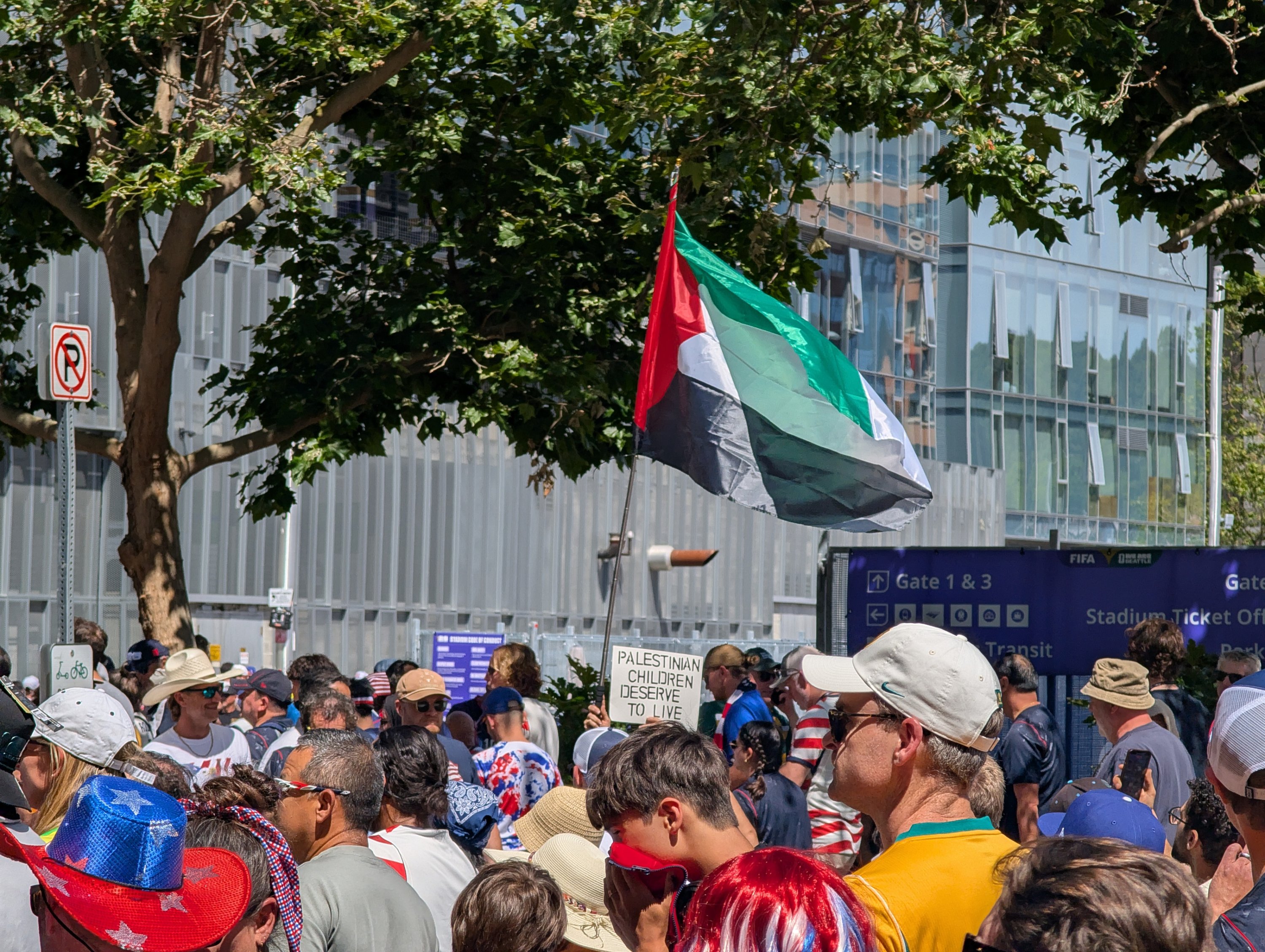
One supporter, identifying himself as a Palestinian American, told Anadolu Agency (AA) that the World Cup had become an opportunity to publicly express support for his homeland.
"We are Palestinian American citizens. We are celebrating for Palestine throughout the World Cup. They will never stop us. Free Palestine!" he said.
Morocco's supporters have consistently been among the tournament's most vocal backers of Palestine.
Before Morocco's opening Group C draw against Brazil, hundreds of fans gathered in New York's Times Square, waving Palestinian flags and chanting "Free Palestine" before marching toward the stadium.
Inside New York New Jersey Stadium, which will host the World Cup final, Moroccan supporters again unfurled Palestinian flags behind one of the goals and continued their demonstrations throughout the match.
The same scenes were repeated during Morocco's Round of 32 meeting with the Netherlands.
Supporters of Bosnia and Herzegovina also displayed Palestinian flags during their match against Switzerland in Los Angeles.
Among the banners in the stands was one reading, "Support for Palestine from Sarajevo."
Many Bosnian supporters drew parallels between their country's experience during the 1992-95 Bosnian War and the suffering of Palestinians, making their demonstration one of the tournament's most symbolic displays of solidarity.
Support for Palestine continued during Bosnia and Herzegovina's match against Qatar.
One Qatari supporter, wearing a traditional Palestinian keffiyeh and face paint, waved Palestinian flags throughout the match, adding to the growing number of displays seen across the tournament.
A Palestinian flag was also visible before France's opening Group I victory over Senegal.
Before kickoff at New York New Jersey Stadium, a French supporter held a Palestinian flag in the stands as fans entered the venue.
Ahead of Brazil's Round of 32 clash with Japan, thousands of Brazilian supporters marched toward the stadium.
Among them, one fan carried a Palestinian flag while joining the procession.
Outside the stadium hosting Egypt's match against Iran in Seattle, a woman dressed as the Statue of Liberty called for "freedom" for both Palestine and Lebanon while displaying the flags of the two nations.
Palestinian flags were also visible inside the stadium during the match between the two Middle Eastern teams.
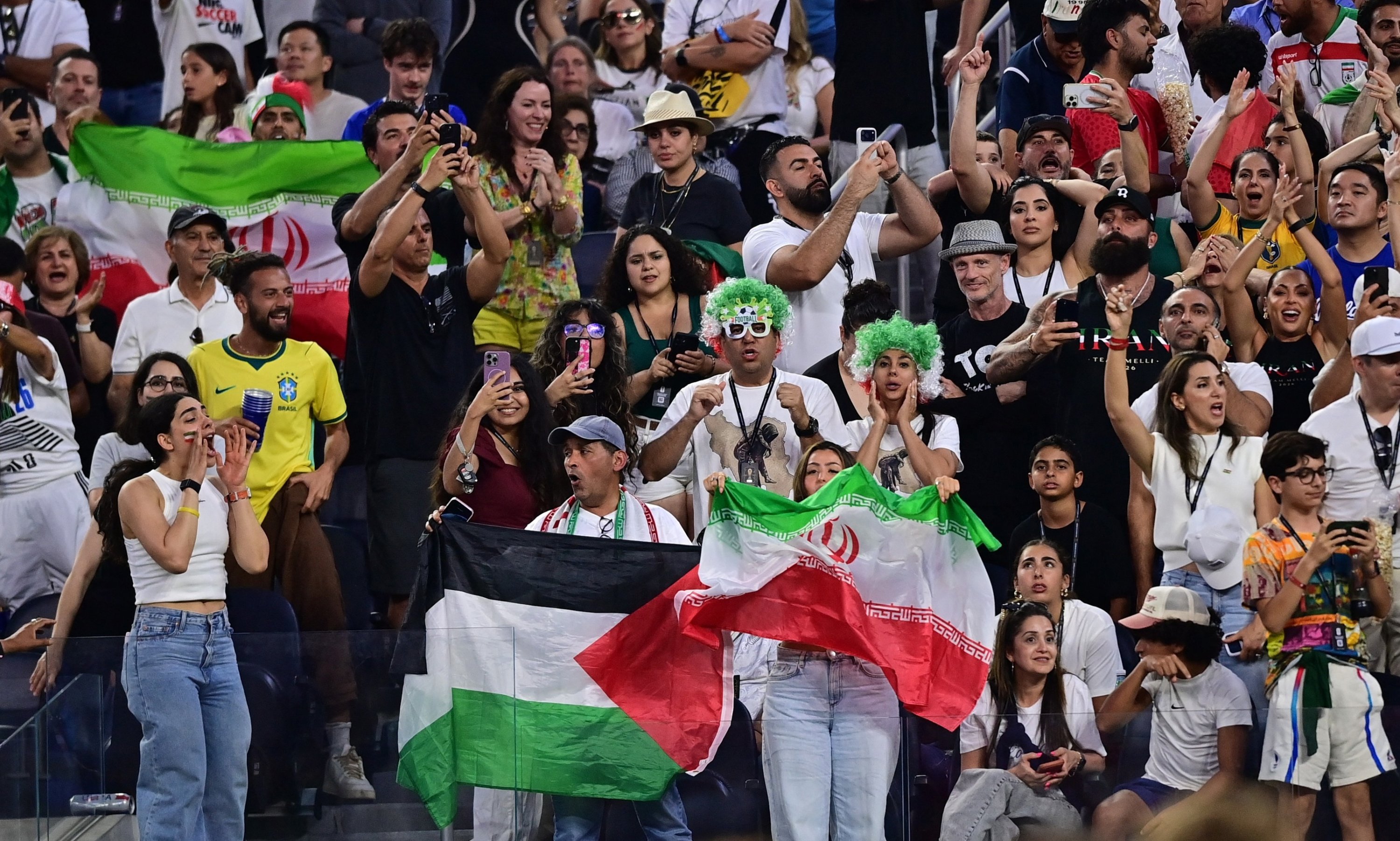
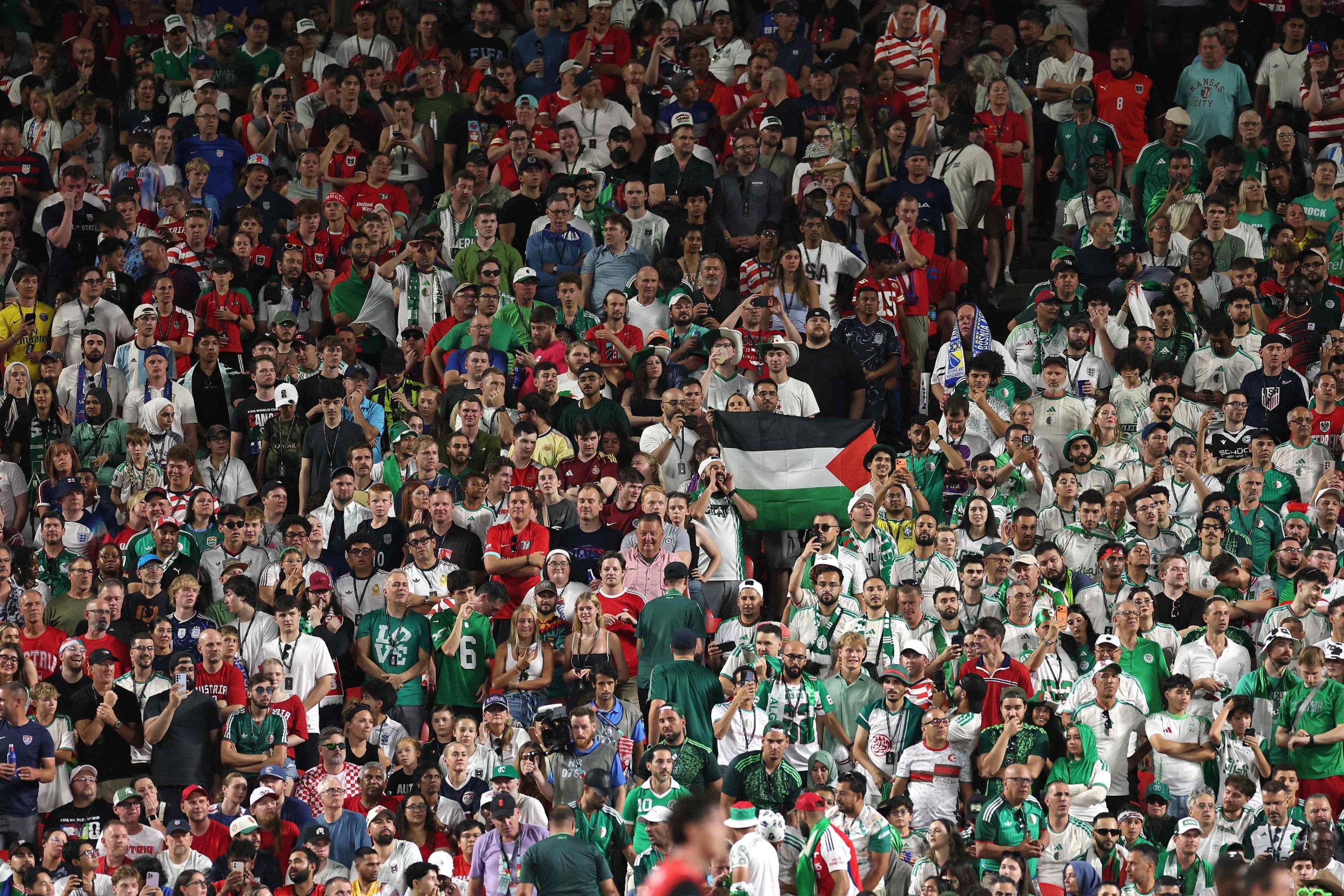
Expressions of solidarity with Palestine have come from supporters representing countries across Europe, Africa and Asia.
Fans from Türkiye, Spain, Scotland, Bosnia and Herzegovina, Morocco, Senegal, Algeria, Egypt, Iran and several other nations have displayed Palestinian flags or voiced support during matches and fan events throughout the tournament.
Neither Palestine nor Israel qualified for the 2026 World Cup.
Palestine fell short during Asian qualifying after playing many of its home qualifiers at neutral venues because of security concerns.
Israel also failed to reach the tournament after being eliminated during qualification amid growing international calls from some supporters and advocacy groups for its suspension from international sport.
The World Cup has also amplified the "Show Israel the Red Card" campaign, with supporters from multiple countries calling on football's governing bodies to take action against Israel over the war in Gaza.
Campaign supporters argue that athletes and sporting institutions in Gaza have suffered severe losses during the conflict, citing the deaths of more than 1,000 athletes, most of them footballers, and the destruction of hundreds of sports facilities.