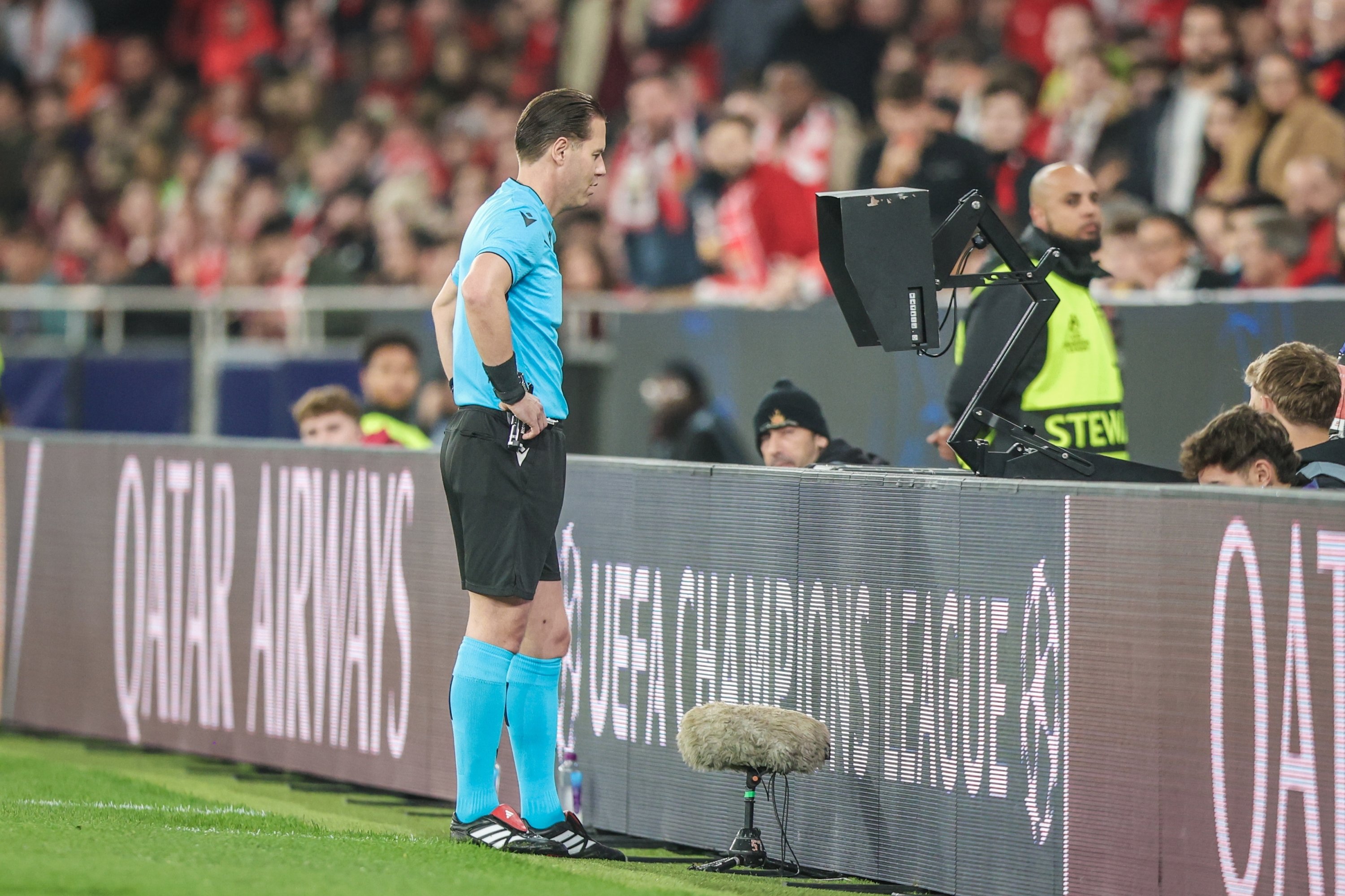
Video Assistant Referee (VAR) has transformed football by allowing officials to review key incidents that could change the outcome of a match.
Introduced to reduce major refereeing errors, the technology has improved decision-making in crucial situations, but it continues to fuel debate over delays, subjective interpretations and the limits of video review.
VAR operates under a strict protocol established by the International Football Association Board (IFAB), which sets the Laws of the Game.
Its guiding principle is “minimum interference, maximum benefit,” meaning video officials should intervene only when there is a clear and obvious error or a serious missed incident in a specific category.
The technology does not replace the referee or provide a means to review every disputed decision. The referee on the pitch remains in control and makes the final call.
VAR is designed to correct significant mistakes without disrupting the game unnecessarily. Under the protocol, the referee must make an initial decision on the field, even if that means allowing play to continue. Officials cannot postpone a decision while waiting for video assistance.
The original ruling stands unless the review identifies a clear and obvious error or a serious missed incident within the permitted categories. The VAR team can recommend a review, but only the referee can formally initiate one.
Accuracy takes priority over speed, so there is no fixed time limit for a review. However, officials are expected to complete checks as efficiently as possible to minimize interruptions.
Players and team officials must also respect the process. Surrounding or attempting to influence the referee, entering the video operation room or entering the referee review area without authorization can result in disciplinary action. Excessively making the TV-review gesture can earn a yellow card, while entering the video operation room can lead to a red card.
If play continues after an incident that is later reviewed, most disciplinary decisions made in the intervening period remain in place, subject to limited exceptions involving situations such as stopping a promising attack or denying an obvious goal-scoring opportunity.
VAR is not automatically available to every competition. Tournaments and leagues must meet FIFA's implementation requirements and obtain written approval before using the system.
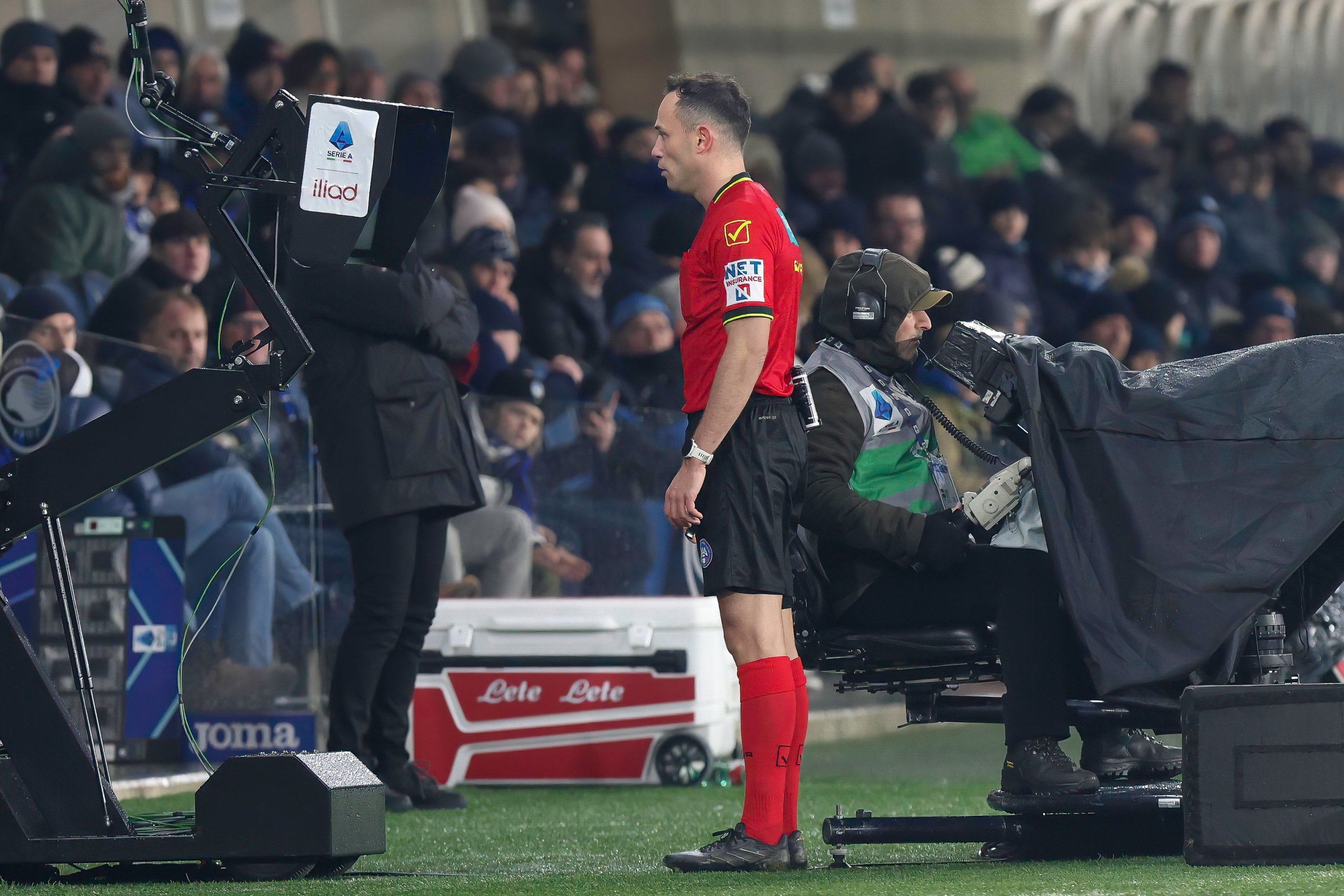
Under the IFAB protocol for competitions beginning on or after July 1, 2026, VAR covers a limited number of match-changing situations. The main categories are goals, penalty decisions, direct red cards and cases of mistaken identity. Certain competitions can also use additional review options.
1. Goals and no-goal decisions
VAR can review whether a goal should stand or be disallowed. Officials examine potential attacking offences in the buildup, including offside, handball and fouls.
They can also check whether the ball went out of play before the goal, whether it crossed the goal line completely and whether a goalkeeper, penalty taker or another player committed a reviewable offence during a penalty kick.
The purpose is to ensure that a goal is awarded or disallowed according to the Laws of the Game, including when an infringement occurred several seconds before the ball entered the net.
2. Penalty or no-penalty decisions
VAR can intervene when a penalty has been incorrectly awarded or when a clear penalty offence has been missed.
Reviews can establish whether an infringement occurred inside or outside the penalty area, whether the ball was already out of play and whether an attacking offence took place in the buildup to the incident.
Officials can also review a penalty decision when the initial call was based on an incorrect interpretation of what happened.
3. Direct red-card incidents
VAR can review potential direct red cards involving serious foul play, violent conduct, biting, spitting, and offensive, insulting or abusive actions. It can also examine incidents in which a player may have denied an obvious goal-scoring opportunity.
A significant protocol change for the 2026-27 season allows reviews of clearly incorrect second yellow cards that result in a red card. Previously, ordinary second-yellow decisions were outside VAR's scope.
However, VAR cannot introduce a second yellow card that the referee failed to award in the first place. Its authority in this area remains limited to the specified reviewable situations.
4. Mistaken identity
If the referee cautions or sends off the wrong player from the offending team, VAR can help correct the player's identity.
The review does not automatically reopen the underlying offence. Officials can reconsider that incident only if it independently falls within another permitted review category.
5. Incorrectly awarded corner kicks
Some competitions have expanded VAR's scope to include clearly incorrect corner-kick decisions. This option is permitted only when the correction can be made immediately without delaying the restart.
The 2026 FIFA World Cup adopted the option, while the Premier League did not include it in its 2026-27 protocol.
Additional trial provisions used at the 2026 World Cup also allow certain attacking offences committed before the ball is in play at a corner or attacking free kick to be reviewed when they directly affect a subsequent goal, penalty or disciplinary sanction.
These expanded options are not universal. Their availability depends on the competition's approved protocol.
VAR does not provide a general appeal system for every refereeing decision. Ordinary fouls outside the penalty area are not reviewable unless they meet the threshold for a direct red card.
Throw-ins, goal kicks and most other routine restart decisions are also outside its scope once play has restarted.
Officials cannot use VAR to award an ordinary second yellow card that was missed, nor can they revisit every disputed challenge simply because replay footage is available.
These restrictions are central to the system's design, although they are also a major source of frustration for players, coaches and supporters.
The review process follows a defined sequence, beginning with the referee's decision on the pitch and ending with a final ruling.
Step 1: The referee makes the initial decision
The referee and assistant referees officiate the match as they normally would, making decisions based on what they see in real time.
The referee must make an initial call, including allowing play to continue when appropriate. VAR does not take over the decision-making process.
Step 2: The VAR team conducts an automatic check
A team of video officials monitors the match from a video operation room, which may be based inside the stadium or at a centralized facility.
The team typically includes a VAR, one or more assistant VARs and replay operators. They examine every potential or actual goal, penalty incident, direct red-card situation and case of mistaken identity.
Using multiple camera angles and different replay speeds, they look for clear and obvious errors or serious missed incidents.
Most checks are completed without interrupting play. If the video officials find no reason to intervene, the original decision stands. The VAR may tell the referee that a check is complete, but no formal review is necessary.
Step 3: The VAR recommends a review
If the footage suggests that a significant error may have occurred, the VAR communicates the findings to the referee through a headset.
To prevent unnecessary background conversations from distracting the referee, the VAR communicates with the on-field official through a controlled system.
The recommendation does not itself change the decision. The referee must decide whether to initiate a formal review.
Step 4: The referee reviews the incident
If play is still underway, the referee normally waits for an appropriate stoppage before beginning the review. The official then makes the familiar TV signal by outlining a rectangle with both hands.
There are two main types of review.
VAR-only review: This is generally used for factual decisions that can be established from the footage, such as an offside position, the location of an offence inside or outside the penalty area, whether the ball went out of play or the point of contact in a challenge. The referee can accept the information supplied by the VAR without visiting the pitchside monitor.
On-field review: This is generally used when an incident requires a subjective judgment. Examples include whether a challenge was excessively forceful, whether contact constituted a foul or handball offence, and whether an offside player interfered with an opponent.
The referee visits the referee review area, watches the selected footage and makes the final decision.
Slow-motion footage is useful for establishing factual details, including positions and points of contact. Normal-speed replays are preferred when judging the intensity of a challenge or whether an action should be considered an offence.
Step 5: The referee announces the final decision
After completing the review, the referee signals again and communicates the outcome.
Many competitions require officials to announce decisions over the stadium public-address system, although straightforward factual offside decisions may be exempt from the announcement requirement.
The referee then applies or adjusts any disciplinary sanctions and restarts play according to the Laws of the Game.
Even when the VAR recommends a review and supplies the relevant footage, the final decision remains with the referee on the pitch.
VAR relies on a network of broadcast and dedicated cameras that provide different views of incidents. Major tournaments can use more than 20 camera angles, including super-slow-motion and ultra-slow-motion footage.
Replay operators select the relevant angles and provide them to the VAR team, allowing officials to examine incidents from multiple perspectives.
Two other technologies play important roles in modern refereeing: semi-automated offside technology and goal-line technology.
Semi-automated offside technology
Semi-automated offside technology (SAOT) helps officials assess tight offside decisions more quickly and consistently.
The system uses dedicated tracking cameras to follow players' movements and identify relevant points on their bodies. Depending on the implementation, systems may use approximately 12 to 30 cameras, tracking numerous body points several times per second.
Some systems also use a sensor inside the match ball to help identify the precise moment it was kicked.
The technology automatically proposes the relevant kick point and generates calibrated offside lines. The VAR team then verifies the information before confirming the decision to the referee.
SAOT has reduced the time needed for many close offside checks, although the technology does not eliminate the need for human oversight, particularly when officials must determine whether a player interfered with an opponent.
Goal-line technology
Goal-line technology operates separately from VAR. It determines whether the entire ball has crossed the goal line and sends an immediate signal to the referee.
The system helps resolve one of football's most decisive questions without requiring a lengthy video review.
Although both technologies support referees, they serve different purposes. Goal-line technology provides a direct answer about whether the ball crossed the line, while VAR reviews a broader range of incidents under the IFAB protocol.
VAR emerged from work by the Royal Netherlands Football Association under its Refereeing 2.0 project. Informal testing began in the early 2010s, with the first live trial using the modern system taking place in July 2016 during a match between PSV and FC Eindhoven.
Australia's A-League became the first top-flight league to adopt VAR fully in 2017, followed by Major League Soccer.
In March 2018, IFAB formally approved VAR for optional use in competitions. An independent analysis of nearly 1,000 matches had indicated that decision accuracy for reviewable incidents increased from about 93% to 98.8%, with relatively little time lost to reviews.
The system made its World Cup debut at the 2018 tournament in Russia, marking a major turning point in the use of video technology in football.
Several major European leagues subsequently introduced VAR. The Bundesliga and Serie A were among the early adopters, while the Premier League implemented the system for the 2019-20 season.
Since then, the technology has continued to evolve. Changes to offside technology, referee announcements, review procedures and the range of permitted interventions have sought to improve accuracy and reduce unnecessary delays.
Despite improving the accuracy of decisions in the situations it covers, VAR remains one of football's most contentious developments. Its critics argue that the technology has introduced new problems even as it has helped correct major refereeing mistakes.
Subjective decisions remain subjective
Video footage can establish where a player was standing or whether contact occurred, but it cannot always settle questions of interpretation.
Whether a challenge constitutes a foul, whether a handball offence has occurred or whether an offside player interfered with an opponent may still depend on the referee's judgment.
The requirement for a clear and obvious error adds another layer of interpretation. Officials must decide not only what happened but also whether the original ruling was sufficiently wrong to justify intervention.
Reviews can interrupt celebrations, delay restarts and leave players and supporters waiting for a decision.
Although SAOT and procedural changes have shortened many checks, lengthy reviews remain possible, particularly when incidents involve several players or require subjective judgments.
For supporters, the uncertainty can diminish the spontaneity that makes football compelling.
Communication does not always satisfy fans
Referee announcements, published audio in some competitions and explanations through official match centers have improved transparency.
However, supporters and clubs may still struggle to understand why a decision was reached, particularly when stadium announcements provide only a brief explanation.
The images shown during a review may also differ from the footage available to broadcasters or supporters, leaving some questions unresolved in the moment.
VAR depends on human interpretation, and officials can still miss important details, misread an incident or reach the wrong conclusion.
A review may fail to account for a player's impact on an opponent, for example, even when the relevant footage is available.
High-profile mistakes attract intense scrutiny because the technology is expected to prevent major errors. When it does not, confidence in the system can suffer.
Some mistakes remain outside VAR's scope
The protocol deliberately excludes many incidents, including ordinary fouls, missed second yellow cards and certain restart decisions.
As a result, an error can influence a match without being eligible for review. This creates a distinction between mistakes the technology can correct and those it must leave untouched.
Expanding the system's scope could address some of these problems, but it could also lead to more interruptions and a broader role for video officials.
Football authorities continue to adjust the system in response to criticism. Changes have focused on making reviews quicker, improving explanations and determining which additional incidents justify intervention.
The Premier League, for example, has emphasized a high threshold for overturning the referee's original decision, efforts to reduce delays and improvements to the experience for supporters inside stadiums.
Other developments include mandatory referee announcements, more efficient offside checks and selective expansion of reviewable incidents.
The introduction of reviews for clearly incorrect second yellow cards that result in dismissals is one example of the protocol evolving. Optional corner-kick corrections and limited reviews of certain attacking offences before set-piece restarts represent further attempts to address significant errors without turning VAR into a tool for reviewing every decision.
However, not every competition adopts every available option. The scope of VAR can therefore differ between leagues and tournaments, even when they operate under the same overarching framework.
During a top-level match, the VAR team monitors the action continuously from a video operation room equipped with multiple screens and replay systems.
Most checks happen in the background and are completed within seconds, allowing play to continue. When officials identify a potential clear and obvious error, the referee receives a recommendation and may initiate a formal review at the next appropriate stoppage.
The process becomes visible when the referee makes the TV signal, consults the pitchside monitor if necessary and communicates the final decision.
For players, coaches and supporters, the wait can be tense, especially when a goal or penalty is under review. For officials, the challenge is to balance accuracy with the need to preserve the rhythm of the match.
Ultimately, the referee on the pitch retains authority over the decision and the conduct of the game.
VAR has permanently changed how football's biggest decisions are made and scrutinized. It has helped reduce major errors involving goals, penalties and dismissals, while creating fresh debates over consistency, transparency and the role of technology in a sport defined by its pace and emotion.
Its continued development will depend on whether football authorities can improve the speed and clarity of reviews without undermining the referee's authority or interrupting matches unnecessarily.
The underlying principles remain unchanged: VAR has a limited scope, intervention requires a clear and obvious error or a serious missed incident, and the referee retains the final say.