The 2026 FIFA World Cup will arrive not just as an expanded global tournament, but as a generational shift, with Gen Z talent moving from supporting roles to central figures on football’s biggest stage.
Set to run from June 11 to July 19 across the United States, Canada and Mexico, the first 48-team World Cup will widen the spotlight like never before.
The scale of the tournament means more matches, more minutes and more pressure moments for players still in their early 20s, turning what was once a veterans’ stage into a proving ground for the sport’s new elite.
History already shows how quickly youth can define a World Cup.
Pele scored in a final as a teenager in 1958. Kylian Mbappe exploded onto the global scene in 2018. Lionel Messi announced himself at 18 in 2006. The pattern is clear: the tournament often belongs to players who are young enough to change its direction, but mature enough to handle its weight.
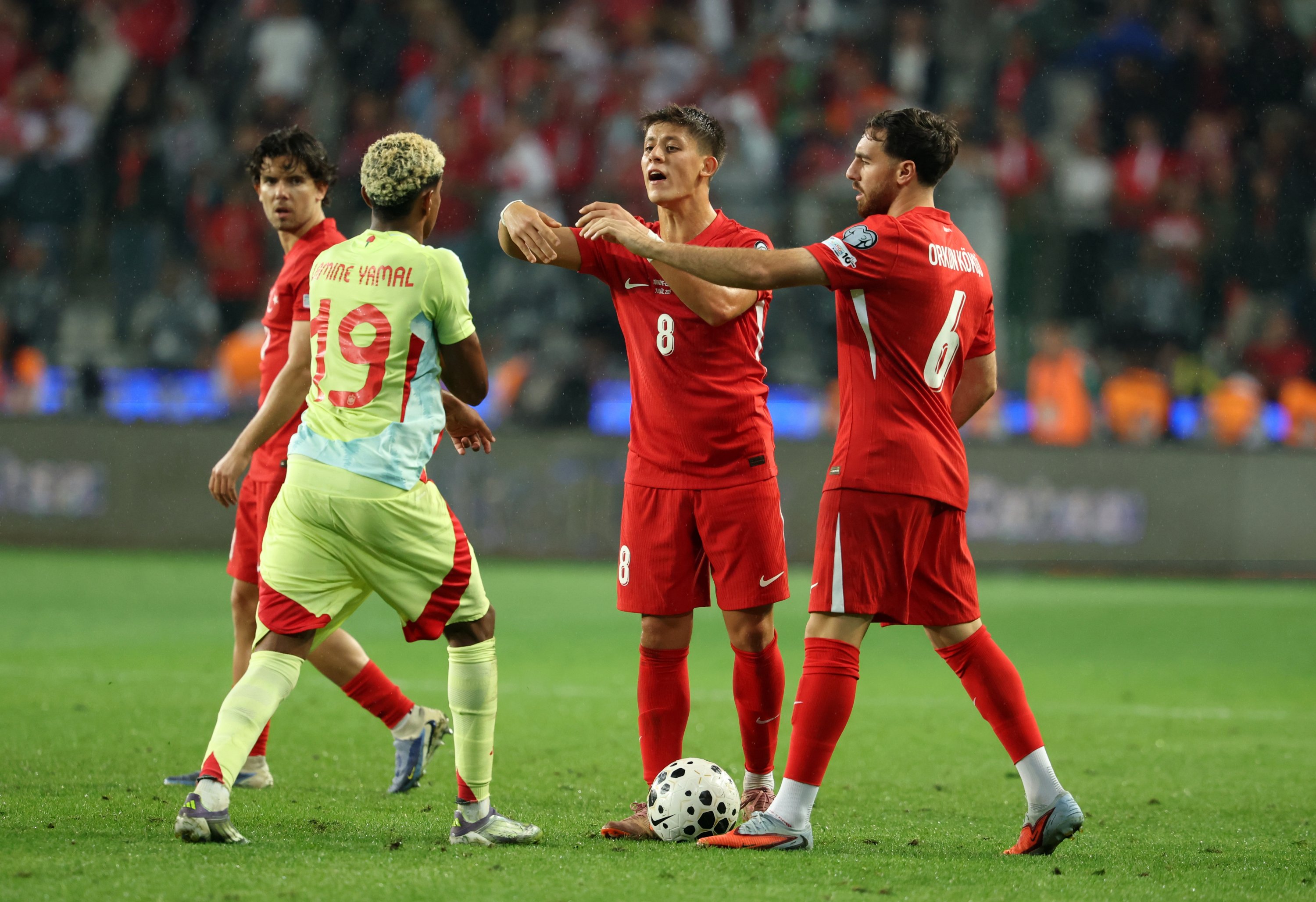
Few teams embody this shift more than Türkiye, returning to the World Cup after 24 years with a squad shaped around youth, energy and technical ambition.
At the center is Arda Güler of Real Madrid, a left-footed playmaker trusted to control tempo, break defensive lines and carry creative responsibility in high-pressure moments. His rise has mirrored Türkiye’s broader resurgence, with expectations now extending beyond potential into leadership.
Alongside him, Kenan Yıldız of Juventus offers direct attacking power from wide areas, combining ball carrying, finishing and versatility across the frontline. Adding another layer is Can Uzun of Eintracht Frankfurt, a forward-thinking midfielder capable of drifting between lines and turning half-chances into goals.
Together, they represent a tactical reset for Türkiye, a side no longer defined by experience alone, but by a young core trained in Europe’s top competitive environments.
If Türkiye’s rise is built on cohesion, Paris Saint-Germain provides something different: a global production line of elite talent spread across multiple national teams.
Warren Zaire-Emery has already become a midfield anchor, combining defensive discipline with controlled progression in possession. Desire Doue adds unpredictability in the final third, capable of breaking structure with dribbling and sharp combinations.
In Portugal’s system, Joao Neves brings relentless energy and positional intelligence, often dictating tempo without needing to dominate the ball.
For Senegal, Ibrahim Mbaye represents raw pace and direct wing threat, the kind of profile that can swing knockout matches in seconds.
PSG’s influence underscores a broader trend: elite clubs are no longer just producing stars, they are exporting tournament-shaping players across multiple national identities.
For Spain, youth is not a future plan but a present reality.
Barcelona's Lamine Yamal has already stepped into a frontline creative role, combining balance, acceleration and decision-making that rarely matches his age. He is expected to be one of the defining attacking figures of the tournament.
At the back, Pau Cubarsi has emerged as a calm defensive organizer, reading danger early and playing out from pressure with composure more often associated with seasoned internationals.
Spain’s balance of control and creativity is increasingly shaped by teenagers who are no longer being eased in, but relied upon.
The Gen Z wave stretches well beyond the traditional European power centers.
Endrick brings explosive finishing and attacking instinct for Brazil.
Nico Paz continues to develop as a creative midfield option capable of dictating rhythm in tight spaces. Germany’s Lennart Karl and Ivory Coast’s Yan Diomande offer pace and direct attacking width, while Algeria’s Ibrahim Maza adds control and vision in midfield transitions.
England’s Kobbie Mainoo already plays with the authority of a long-term midfield fixture for the national setup.
The expanded format is not just increasing participation, it is changing the rhythm of the competition itself. More matches, tighter schedules and deeper squads mean younger players are more likely to be trusted in decisive moments.
Clubs like Real Madrid and FC Barcelona already reflect this shift at the top level, where teenagers are no longer exceptions but structural pieces.