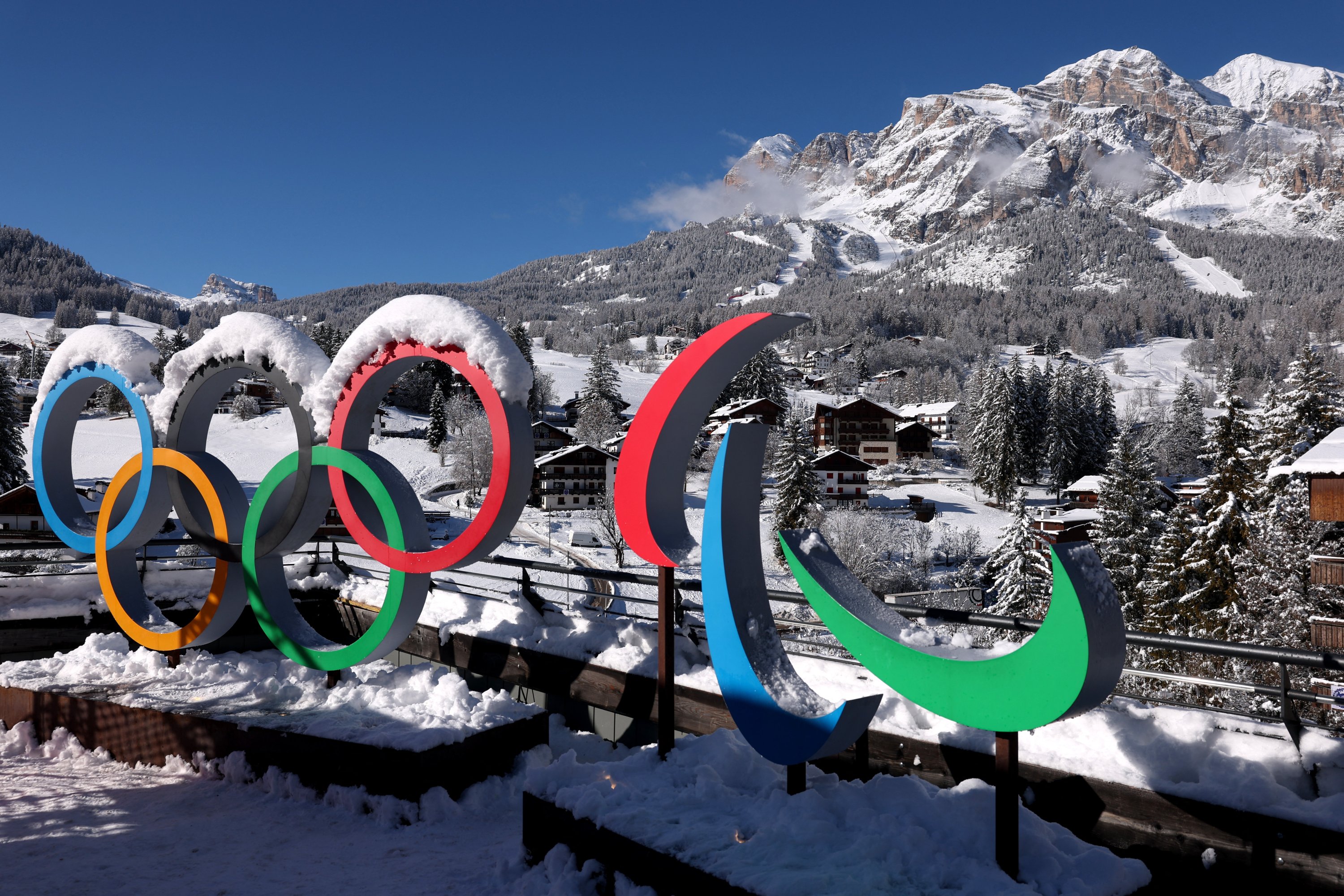
With just weeks to go before the Milano Cortina 2026 Winter Olympics, security planning around the Games has drawn unusual political heat, as U.S. officials confirmed a limited advisory role for American agencies while Italian authorities moved swiftly to reassert full control over operations on their soil.
The Olympics, scheduled for Feb. 6-22, followed by the Paralympics from March 6-15, will unfold across Milan, Cortina d’Ampezzo and several northern Italian venues, marking Italy’s fourth time hosting the Games and the first co-hosted by two cities.
Organizers have leaned heavily on existing infrastructure, including venues dating back to the 1956 Cortina Olympics, framing sustainability as a core pillar of the event.
That sporting narrative, however, was briefly overshadowed in late January after U.S. Immigration and Customs Enforcement confirmed that its investigative branch, Homeland Security Investigations, would support U.S.-related security efforts tied to the Games.
ICE clarified that HSI’s role would be confined to intelligence-sharing and risk vetting, working alongside the U.S. State Department’s Diplomatic Security Service and in coordination with Italian authorities.
“HSI is supporting the Diplomatic Security Service and the host nation to vet and mitigate risks from transnational criminal organizations,” an ICE spokesperson said, stressing that the involvement is advisory and pre-operational, not enforcement-based.
HSI operates separately from ICE’s immigration enforcement arm and focuses on cross-border crimes such as human trafficking, cybercrime, terrorism financing and organized crime.
At global events like the Olympics, its work typically centers on background vetting, threat assessments and intelligence analysis well ahead of competition.
U.S. officials emphasized that HSI agents do not conduct policing duties abroad and have no jurisdiction outside the United States.
All on-the-ground security, they said, remains firmly under Italian command, a long-established framework that mirrors previous Games, including Paris 2024.
Italy’s Interior Minister Matteo Piantedosi dismissed reports suggesting an active ICE presence as “unfounded,” reiterating that Olympic security is exclusively handled by Italian police, military and intelligence services.
The U.S. Embassy in Rome echoed that position, noting that foreign delegations routinely bring passive protective details without operational authority.
Despite those assurances, the revelation triggered sharp criticism from Italian opposition parties, particularly the Democratic Party and the Green and Left Alliance, which pointed to ICE’s controversial reputation in the U.S.
Critics argued that any association with the agency clashes with the Olympic values of inclusion, citing recent U.S. enforcement incidents that have fueled public outrage.
Regional leaders also found themselves clarifying earlier remarks. Lombardy President Attilio Fontana acknowledged protective measures for foreign delegations but later said his comments were hypothetical, not indicative of any formal ICE deployment.

The episode unfolded against a broader political backdrop, with Prime Minister Giorgia Meloni’s right-wing government, closely aligned with President Donald Trump, facing domestic pressure over Italy’s role in U.S.-related security narratives.
Beyond the political debate, officials on both sides describe a familiar but evolving security landscape.
Drone threats, in particular, have become a central concern after their widespread use in the war in Ukraine and a recent surge in unauthorized drone flights over European cities.
“Drones are a massive issue,” said Tim Ayers, director of the Diplomatic Security Service’s Major Events Coordination Division, noting that both illicit filming and worst-case explosive scenarios are now standard planning considerations.
Outdoor mountain venues present unique challenges, with Italian police preparing no-drone zones and surveillance systems in areas where aircraft are harder to detect and easier to conceal.
Legitimate drone use, such as television broadcasts, will be tightly regulated under a credentialing system.
U.S. officials recently convened a high-level drone symposium in Italy, bringing American specialists to brief their Italian counterparts and establish rapid-response communication channels during the Games.
“The Italians have primacy, it’s their country,” Ayers said. “We’re there as a backstop to share information and expertise.”
Security coordination for Milano Cortina has been underway for years. DSS-led interagency teams, drawing support from the FBI, DHS, the Defense Department and the intelligence community, have embedded personnel on the ground since early in the planning cycle.
Becky McKnight, a DSS special agent based in Milan for nearly two years, said much of the work has focused on mapping terrain, transportation bottlenecks and command structures across Olympic clusters.
“Some venues didn’t even exist when we first visited,” she said.
Officials also flagged cyber threats, including disruptions to ticketing and payment systems, as well as protests and opportunistic crime targeting tourists.