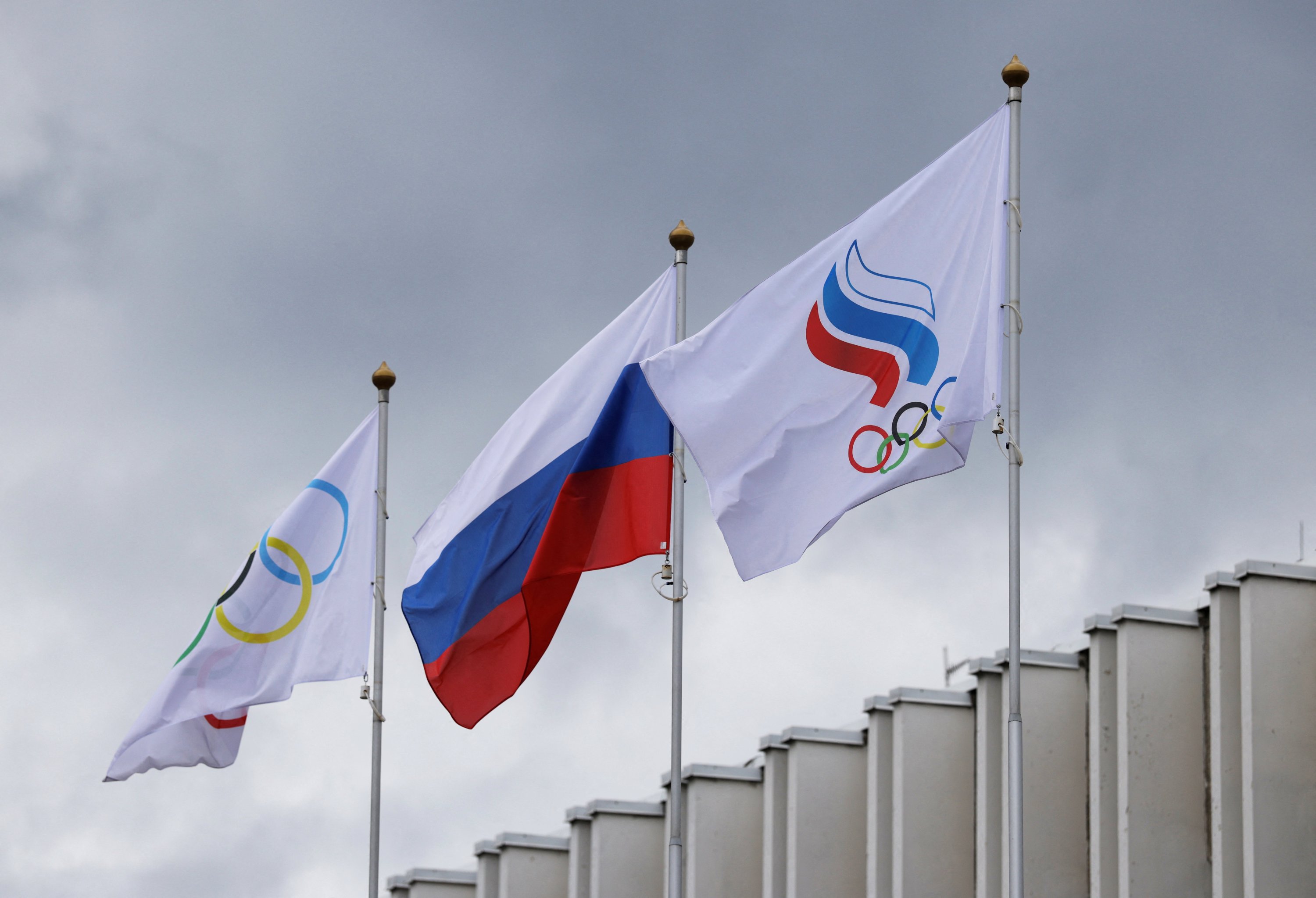
The International Olympic Committee (IOC) pushed back against criticism of its decision to provisionally lift the suspension of the Russian Olympic Committee (ROC) after nine European Union member states urged Brussels to cut funding for international sports organizations that have readmitted Russian and Belarusian athletes.
In a joint letter to European Commissioner for Sport Glenn Micallef, the nine countries called on the European Union to suspend financial support for organizations, including the IOC, World Aquatics and the International Fencing Federation, arguing that they had allowed Russian and Belarusian athletes to return to international competition.
The signatories were Denmark, Estonia, Finland, Latvia, Lithuania, the Netherlands, Poland, Romania and Sweden.
An IOC spokesperson told Reuters that the ROC's suspension, imposed in October 2023, was provisionally lifted earlier this month after the committee removed sports organizations based in Russian-occupied Ukrainian territories from its membership.
Their inclusion had prompted the IOC to impose the suspension.
The IOC said the decision was provisional and did not signal a broader change in its position toward Russia.
"The IOC has to navigate the complex realities and consequences of the current geopolitical context," the IOC spokesperson said Wednesday.
"The IOC must uphold its mission to preserve a values-based and truly global sporting platform that provides hope to the world."
The spokesperson added that the IOC would continue not to hold events in Russia or invite Russian government officials to its events. No decision has been made on the use of Russian flags, colors or the national anthem at future Olympic Games.
The IOC also noted that competitions outside the Olympics fall under the authority of the relevant international federations.
The Olympic body said it had also strengthened the Olympic Charter, requiring National Olympic Committees to ensure athletes selected for the Games are chosen not only on sporting merit but also on their ability to serve as role models who promote a peaceful society through sport.
The nine EU countries said allowing Russian and Belarusian athletes to return to international competition overlooked the hardships faced by Ukrainian athletes, many of whom have been displaced, lost access to training facilities or joined the military.
"Respect for human rights, the rule of law and peaceful relations between nations are among the core principles underpinning international sport," the countries wrote.
They added that arguments that sport can be separated from politics were difficult to sustain given the human toll of the war in Ukraine.