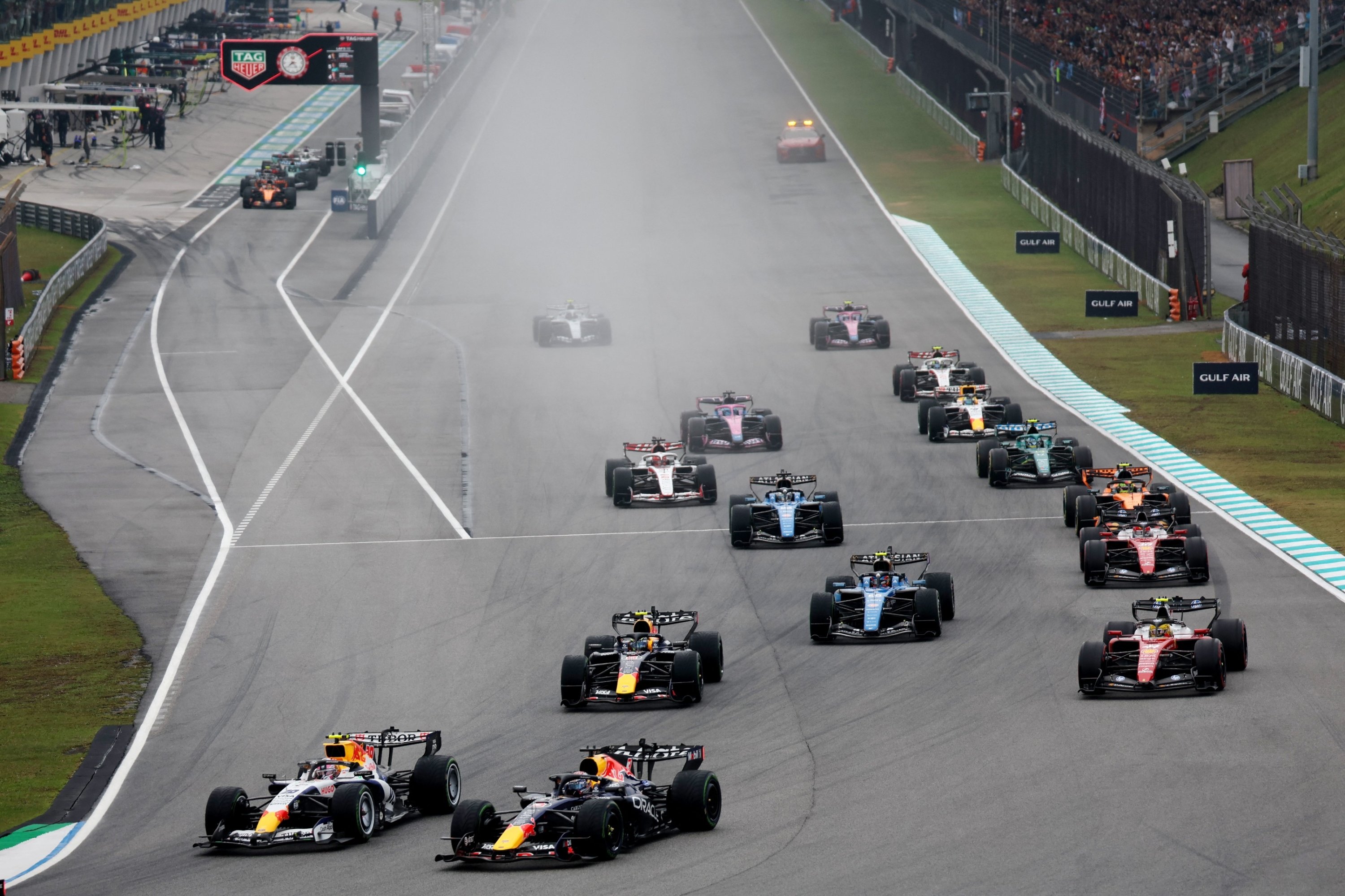
Formula One cars will receive a software update aimed at preventing a repeat of the chaotic scenes in Malaysia, where several drivers were effectively unable to power their cars in wet conditions.
The Bahrain Grand Prix at Malaysia’s Sepang International Circuit was thrown into disarray after F1 officials were forced to abandon the start when several drivers, including Max Verstappen and Lewis Hamilton, encountered power-related problems on the formation lap.
The glitches were linked to the controversial 50-50 split between combustion-engine and battery power, leaving drivers struggling to get their cars moving as rain swept across the circuit.
The grid eventually limped back to the pit lane, and the race got underway after a 53-minute delay. It later emerged that new software had to be downloaded to the cars.
Having pledged a full investigation, governing body the FIA revealed that a "software bug" was at fault and said it plans to introduce updates in the coming races should similar conditions arise.
"The review concluded that some cars running on low engine RPM in certain circuit sectors where a 250kW power reduction was applied experienced a loss of power beyond the original intent and that could not be recovered in those sectors," an FIA statement read ahead of this weekend's Singapore Grand Prix.
"As a result, the configuration established for the Sepang event will be reinstated for the Singapore Grand Prix should similar weather conditions be expected. Additionally, a further update to the wet weather software will be released for the United States Grand Prix on Oct. 25."
The embarrassing issues in Sepang put F1's unpopular 2026 regulations back under the spotlight, with Hamilton and Verstappen likening their problems to the "Lego race" at Silverstone, while Mercedes' George Russell said it "didn't feel very F1."
Williams' Carlos Sainz was even more critical, saying: "(F1) needs to have a hard look at themselves and see how we ended up in this situation.
"It is clear the regulations are extremely complicated for the drivers, for the teams, for the power units and for the manufacturers. Who decided five years ago that this was the direction to go?"