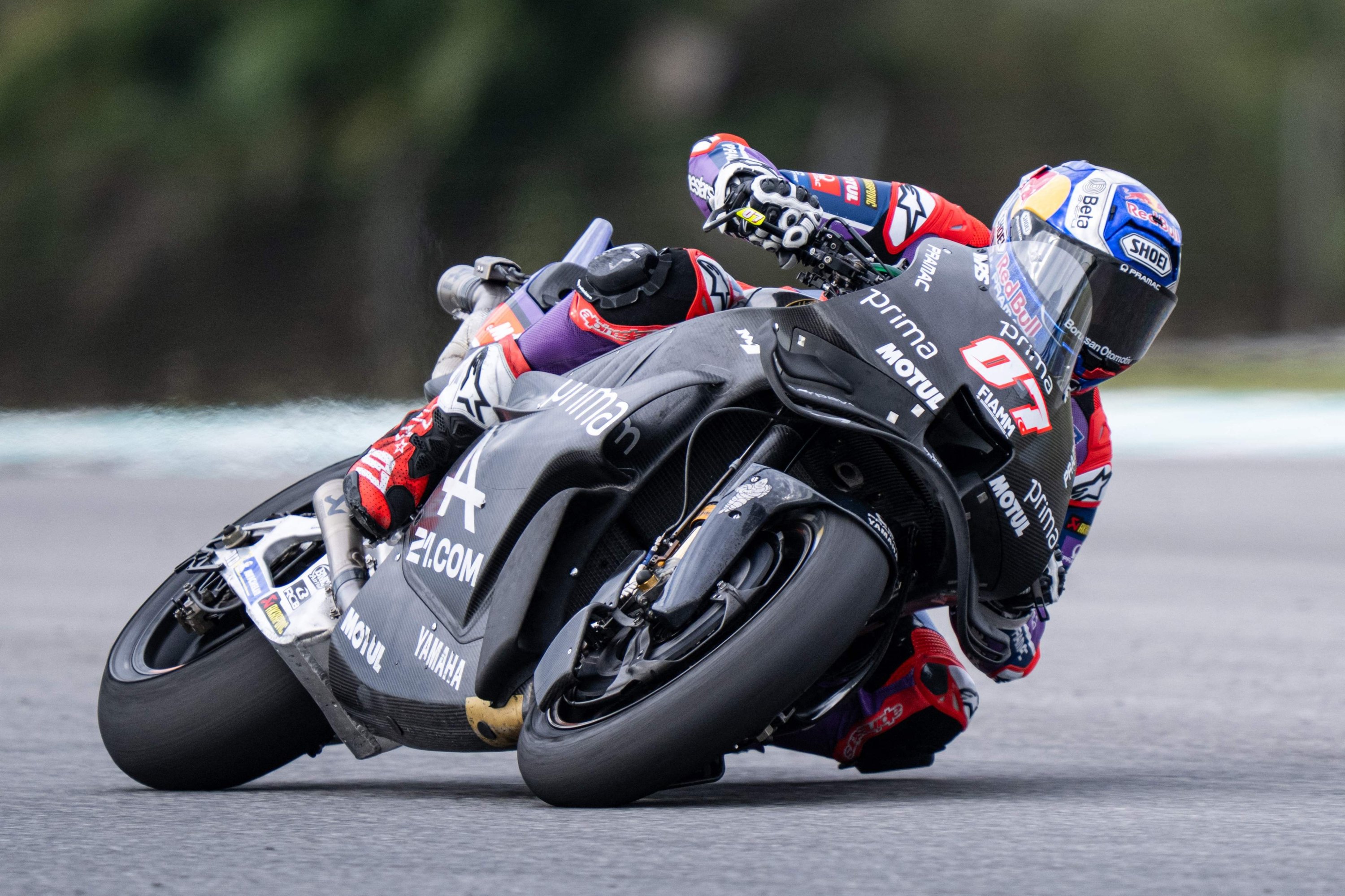
Toprak Razgatlıoğlu arrived in MotoGP with a resume few rookies can match. A three-time World Superbike champion, the Turkish star now begins his long-awaited premier-class journey in 2026 with Pramac Yamaha, trading dominance for discovery as he adapts to the sport’s most demanding machinery.
The early verdict from Sepang is clear: this is a season about learning, not shortcuts.
“Right now, everything is about learning,” Razgatlıoğlu said after pre-season testing at the Sepang International Circuit, a candid assessment of the steep transition from production-based Superbikes to MotoGP’s prototype Yamaha YZR-M1, now running a V4 engine as part of Yamaha’s 2026 evolution.
That learning curve has come with a uniquely personal challenge. At 185 centimeters (6-foot-1), Razgatlıoğlu is among the tallest riders on the grid and MotoGP’s strict aerodynamic regulations have forced Yamaha and its newest rider into careful compromise.
During the Sepang shakedown and the opening phase of the official test, Razgatlıoğlu ran much of his program without rear winglets.
The reason was regulatory, not philosophical. MotoGP rules limit the maximum height of the seat unit when rear wings are fitted and Yamaha’s efforts to tailor the bike to Razgatlıoğlu’s height, including a raised front end and a lower, customized seat, pushed the configuration beyond what the rulebook allows.
The consequence was clear: no rear wings and no aerodynamic assistance under braking.
Even so, the feedback was encouraging. Razgatlıoğlu ended the first full test day 20th overall, then briefly switched back to a higher, more conventional seat unit late in the session. That allowed him to test the rear wings and the difference was immediate.
“The bike stops much better like this,” he said, noting a clear gain in braking stability and confidence. The challenge now is long-term viability. Razgatlıoğlu’s instinctive Superbike style, aggressive, low-seated and built around late braking, clashes with MotoGP’s constraints, where fuel tank placement limits how low a rider can sit and aerodynamic rules restrict flexibility.
“In Superbike, a lower seat always suited me,” he explained. “In MotoGP it’s different. I’m already at the lowest position, but because of the fuel tank and the rules, I can’t use the wings in that setup.”
Adapting his riding style is now unavoidable. Razgatlıoğlu says his braking performance is improving, but MotoGP demands more corner speed and smoother transitions, a departure from the stop-and-go approach that defined his Superbike success.
“Maybe I need to change my style a bit more,” he admitted. “I need more corner speed.”
One of his biggest classrooms has been the track itself and the riders around him. Following reigning world champion Marc Marquez provided valuable insight, particularly in complex sections of the circuit.
“I saw Marc many times today and noticed some things,” Razgatlıoğlu said. “That was very good for me.”
The motivation is obvious. Riding alongside MotoGP’s benchmark only reinforces his long-term ambition.
“If I get stronger, racing and fighting with him one day would be incredible,” he said.