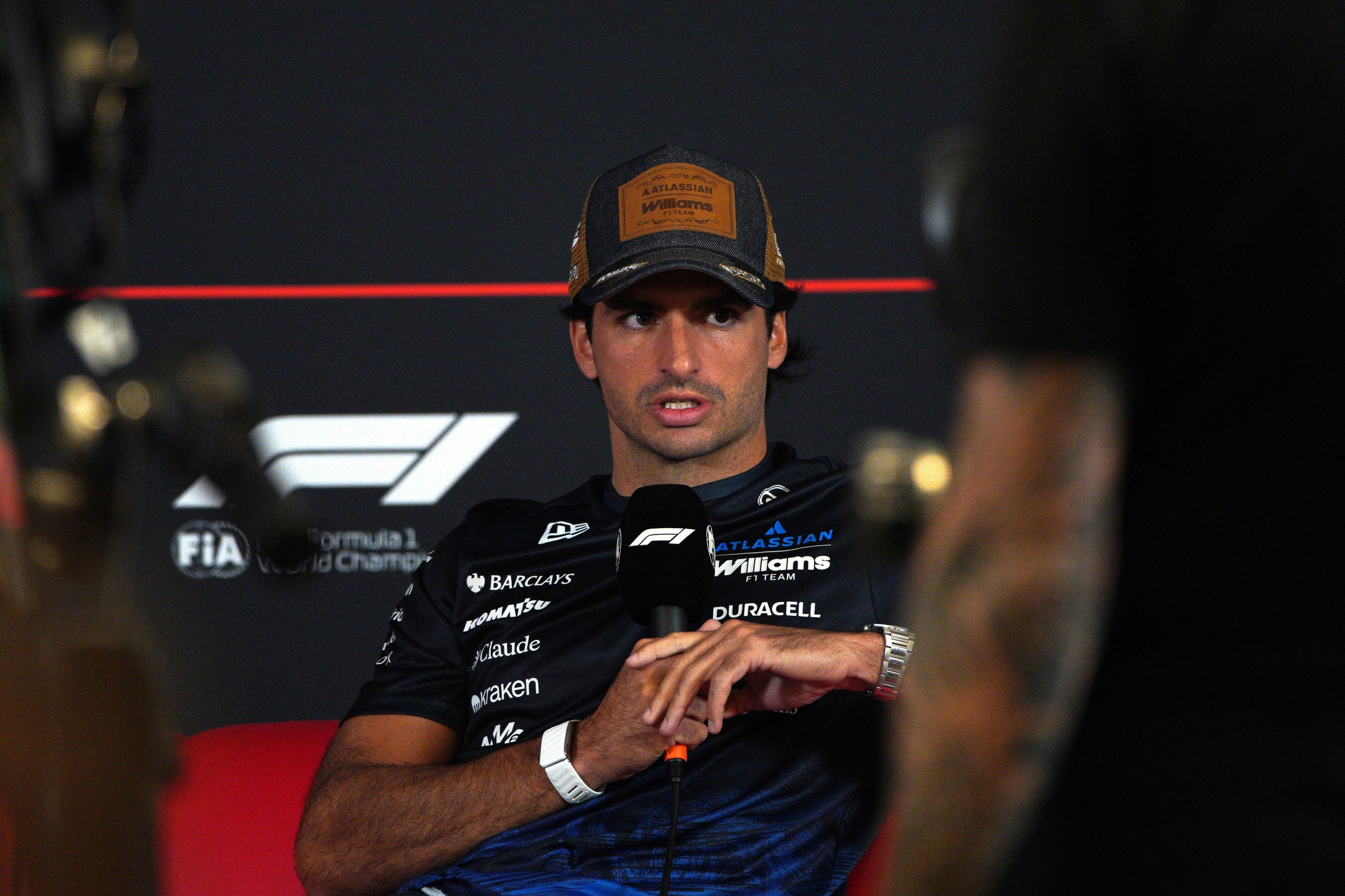
Williams driver Carlos Sainz has questioned whether Formula One can safely conclude its season in the Middle East, warning that escalating regional tensions make it too early to assume the final two races will proceed as scheduled.
Formula One and the FIA, motorsport’s governing body, remain confident that the Qatar Grand Prix on Nov. 27-29 and the Abu Dhabi Grand Prix on Dec. 4-6 will go ahead. Sainz, however, said the situation remains too unpredictable to offer such assurances.
“They seem very convinced that it's going to go ahead,” Sainz said Thursday ahead of this weekend’s United States Grand Prix in Austin, Texas. “I think on my personal side, and not speaking (for the) GPDA, it's very difficult to be convinced right now because there's still plenty of things happening in the Middle East.”
Sainz, a director of the Grand Prix Drivers’ Association (GPDA), pointed to upcoming political developments, including the U.S. midterm elections on Nov. 3, as factors that could rapidly change the security situation.
“There is obviously an election that is going to happen in the U.S. and things that are going to happen on the political side of the world that could affect the next month and a half very suddenly,” he said. “I think it's relatively premature to be so convinced.”
The conflict involving Iran has raised concerns about the safety of sporting events across the region. Formula One already canceled its Bahrain and Saudi Arabian Grands Prix in April because of the war, while the FIA scrapped the final round of the World Rally Championship scheduled for Saudi Arabia from Nov. 11-14.
Despite his reservations, Sainz said drivers would ultimately have to trust Formula One and the FIA to assess the risks and make the final decisions.
“If the FIA and Formula 1 decide that's still safe and a good scenario, I think we as drivers have to go with whatever they say,” he said. “We need to follow their lead and trust in their decision-making.”
He stressed, however, that officials must remain prepared for sudden changes rather than assume the races will proceed regardless of developments.
Red Bull driver Isack Hadjar and McLaren’s Oscar Piastri also said they would trust the governing bodies to prioritize safety.
“It's out of my control,” Hadjar said. “I'll drive on the track I need to drive.”
Piastri said Formula One had managed difficult circumstances in the past and that drivers would rely on officials to make the appropriate decisions. He also joked about the possibility of a last-minute change of venue.
“If we race in Imola,” he said, “we might have to get some snowplows out.”
Imola, in Italy, has emerged as a potential alternative for the season finale if the Abu Dhabi race cannot take place as planned.
FIA President Mohammed Ben Sulayem has expressed confidence that both Middle East races will go ahead safely. Speaking at an FIA event near London this week, he cited his family’s continued presence in the United Arab Emirates as a reason for his confidence, while acknowledging that the future remained uncertain.
“Does this say that there is nothing that is going to happen? I can't predict this,” Ben Sulayem said. “I can only tell you today there is nothing and the two races are going to happen.”
The decision could also affect the championship battle. Mercedes driver Kimi Antonelli leads teammate George Russell by 102 points with six races remaining and could mathematically clinch the title this weekend if he wins and other results fall in his favor.
Canceling either of the final two rounds would reduce the opportunities for his rivals to close the gap. Formula One would prefer to see the championship decided on the track rather than through an announcement following a shortened season.