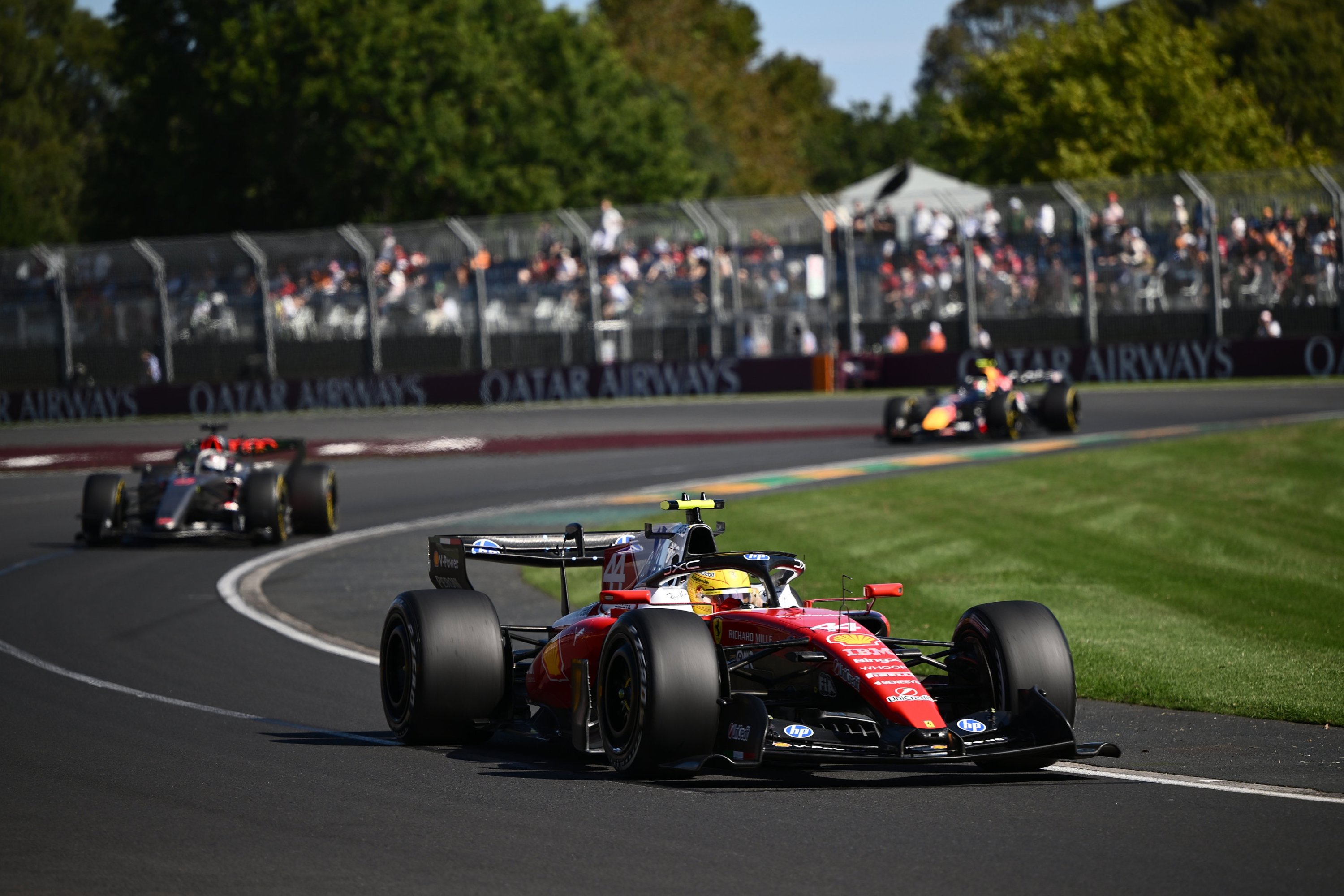
The 2026 Formula One season opened Friday beneath the bright skies of Melbourne, but the first laps of practice at Albert Park came with as many questions as answers.
The milestone 40th Australian Grand Prix marks the start of a radically reshaped era in Formula One.
New technical regulations, a reworked competitive order and growing geopolitical tensions have cast uncertainty over the early months of the championship.
The most pressing concern surrounds the Middle Eastern leg of the calendar.
Races scheduled for Bahrain on April 12 and Saudi Arabia on April 19 remain under scrutiny because of the escalating conflict involving the United States, Israel and Iran.
Closed airspace and security concerns have already forced the FIA to postpone the World Endurance Championship opener in Qatar scheduled for March 26-28.
Formula One and the FIA say they are monitoring developments closely with safety as the priority. A decision on the upcoming races is expected soon.
While politics hover in the background, the paddock’s attention remains fixed on performance. The 2026 season introduces sweeping changes to both chassis and power units, ushering in an era where power is split almost evenly between the 1.6-liter turbocharged V6 engine and electric energy recovered under braking.
The shift demands a new driving style. Energy management and deployment now play a greater role than ever, forcing drivers to rethink their approach to acceleration, cornering and race strategy.
Early indications suggest Mercedes may hold the upper hand.
Charles Leclerc topped the final pre-season test in Bahrain, finishing more than eight-tenths clear of Mercedes rookie Kimi Antonelli. Yet whispers across the paddock suggest Mercedes have not even unleashed the full potential of their engine.
If the Silver Arrows deliver on that promise, George Russell is expected to spearhead the challenge. The British driver enters the weekend with quiet confidence.
“The car is performing as we expected,” Russell said. “The important thing is the correlation between the wind tunnel and the track. That looks good and there are no major scares.”
Ferrari remain a serious contender. Their nimble chassis and smaller turbocharger are designed to deliver quicker response and sharper race starts, a combination that could put them in position for their first Australian Grand Prix victory since 2022.
Seven-time world champion Lewis Hamilton, now rejuvenated at Ferrari, believes the team has made significant progress.
“We got great mileage done in winter testing,” Hamilton said. “There’s been an amazing amount of work back at the factory and we learned a lot from last season.”
But the loudest cheers in Melbourne belong to one driver.
McLaren’s Oscar Piastri carries the hopes of the home crowd and a lingering sense of unfinished business after last year’s championship slipped away to teammate Lando Norris. Piastri led the standings for 189 days between Saudi Arabia and Mexico before a series of costly errors, most notably in Azerbaijan, derailed his title bid.
Local media have pressed him relentlessly on whether he can become the first Australian to win his home race.
“If I had a dollar for every time I got asked that, I’d be a few dollars richer,” Piastri joked. “Every driver wants to win their home race and that’s no different for me.”
On Friday afternoon he gave fans reason to believe.
Piastri topped the timesheets in second practice with a lap of 1 minute, 19.729 seconds, edging Mercedes drivers Antonelli and Russell by just over two-tenths. Hamilton finished fourth, 0.321 seconds off the pace, ahead of Ferrari teammate Leclerc.
Red Bull, expected to be among the contenders, endured a mixed start.
Four-time world champion Max Verstappen admitted the team is still unsure where it stands despite encouraging energy management from the RB22.
“I think we want to be a little bit faster,” Verstappen said. “From Bahrain we weren’t the quickest, so we’ll just see where we are here.”
Verstappen’s Friday reflected that uncertainty. The Dutchman stalled leaving the garage early in second practice and later slid through the gravel at Turn 10 after locking up, missing nearly half the session before returning to post the sixth-fastest time.
Norris, the defending champion, recovered from a troubled morning to finish seventh after a gearbox issue left him only 19th in the opening session.
Russell’s afternoon was hardly calm either. The Mercedes driver locked up at Turn 3 and slid into the gravel, then required repairs after a minor pit lane collision with Racing Bulls rookie Arvid Lindblad.
“This guy’s just hit my front wing,” Russell told his team over the radio.
Hamilton later mirrored Russell’s mistake with a similar slide at Turn 3.
The new hybrid engines, with a far greater share of electric power, have already produced a steep learning curve. Reliability problems and energy management challenges triggered two virtual safety car periods during the opening practice session.
No team appears more troubled than Aston Martin.
Adrian Newey, overseeing his first race weekend as team principal, revealed that vibrations from the Honda power unit could pose a serious problem for drivers Fernando Alonso and Lance Stroll.
The team’s fragile preparation continued in Melbourne.
Alonso missed the opening practice session entirely while Stroll completed only three laps. The pair managed 31 laps combined in the second session, but Alonso finished 20th and Stroll’s fastest time was more than six seconds slower than Piastri’s.
Even new entrant Cadillac experienced early frustration. Sergio Perez, returning to Formula One with the American-backed team, failed to post a lap time in the second session.
As qualifying approaches on Saturday, the 2026 season has already delivered intrigue.
A new technical era, unpredictable performance gaps and global tensions beyond the racetrack have left the sport facing an opening weekend filled with uncertainty.