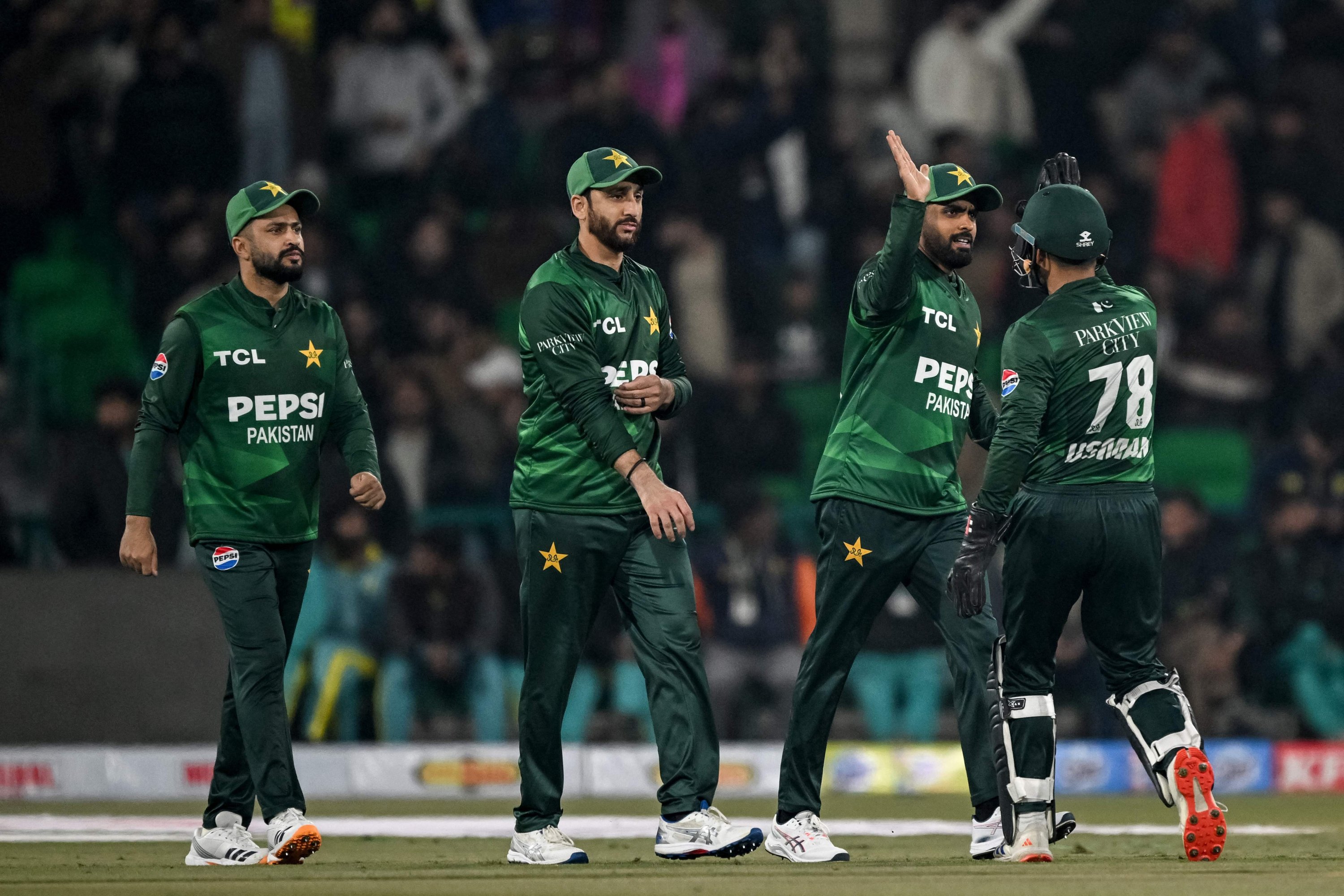
Pakistan’s government has cleared the national team to compete in the upcoming Twenty20 World Cup, but with one major caveat: It must boycott its group-stage clash against archrival India.
India and Sri Lanka are co-hosting the 20-team tournament, which begins Saturday. Because of long-standing political tensions, Pakistan will be based entirely in Sri Lanka, playing all its matches there, including any knockout fixtures.
That arrangement was intended to keep a high-stakes India-Pakistan showdown intact, with the teams scheduled to meet in a Group A match in Colombo on Feb. 15, 2026, traditionally one of the tournament’s biggest draws for fans, broadcasters and organizers.
This time, however, that marquee contest is in doubt.
“The Government of the Islamic Republic of Pakistan grants approval to the Pakistan Cricket Team to participate in the ICC World T20 2026,” the government said Sunday in a post on its official X account. “However, the Pakistan Cricket Team shall not take the field in the match scheduled on Feb. 15, 2026, against India.”
No reason was given for the boycott, but Pakistan Cricket Board chairman Mohsin Naqvi has criticized the International Cricket Council for what he described as “double standards” after it declined to shift Bangladesh’s matches to Sri Lanka.
Bangladesh was subsequently replaced by Scotland in the tournament lineup.
Naqvi had voiced Pakistan’s support for Bangladesh and deferred the decision on participation in the T20 World Cup to the government after briefing Prime Minister Shehbaz Sharif.
The ICC said in a statement that it was awaiting official communication from the PCB regarding the planned boycott, while warning against actions that could harm “the spirit and sanctity” of global events.
“This position of selective participation is difficult to reconcile with the fundamental premise of a global sporting event, where all qualified teams are expected to compete on equal terms per the event schedule,” the ICC said.
“While the ICC respects the role of governments in matters of national policy, this decision is not in the interest of the global game or the welfare of fans worldwide, including millions in Pakistan.”
The ICC said its priority remains the successful staging of the T20 World Cup and that it “expects the PCB to explore a mutually acceptable resolution that protects the interests of all stakeholders.”
It also said it “hopes that the PCB will consider the significant long-term implications for cricket in its own country,” noting that any disruption could affect the broader global cricket ecosystem.
Pakistan opens its campaign against the Netherlands on Saturday in Colombo, then faces the U.S. on Feb. 10 and Namibia on Feb. 18.
India would be awarded two points if Pakistan forfeits the match.
An India-Pakistan clash typically draws massive global interest and is a major source of revenue for the ICC through broadcasters and sponsors.
The two countries have not played a bilateral series in 14 years, though they have regularly been grouped together at ICC tournaments.
Pakistan captain Salman Ali Agha, who led the team to a 3-0 sweep of Australia in a three-match T20 series Sunday in Lahore, said the players would abide by government directives.
“It’s not our decision. We can’t do anything about it,” Agha said. “We will do whatever our government and the PCB chairman say.”
Political tensions between the rivals spilled onto the field last year when India’s players declined to shake hands with Pakistan’s team during three Asia Cup matches, including the final, in the United Arab Emirates.