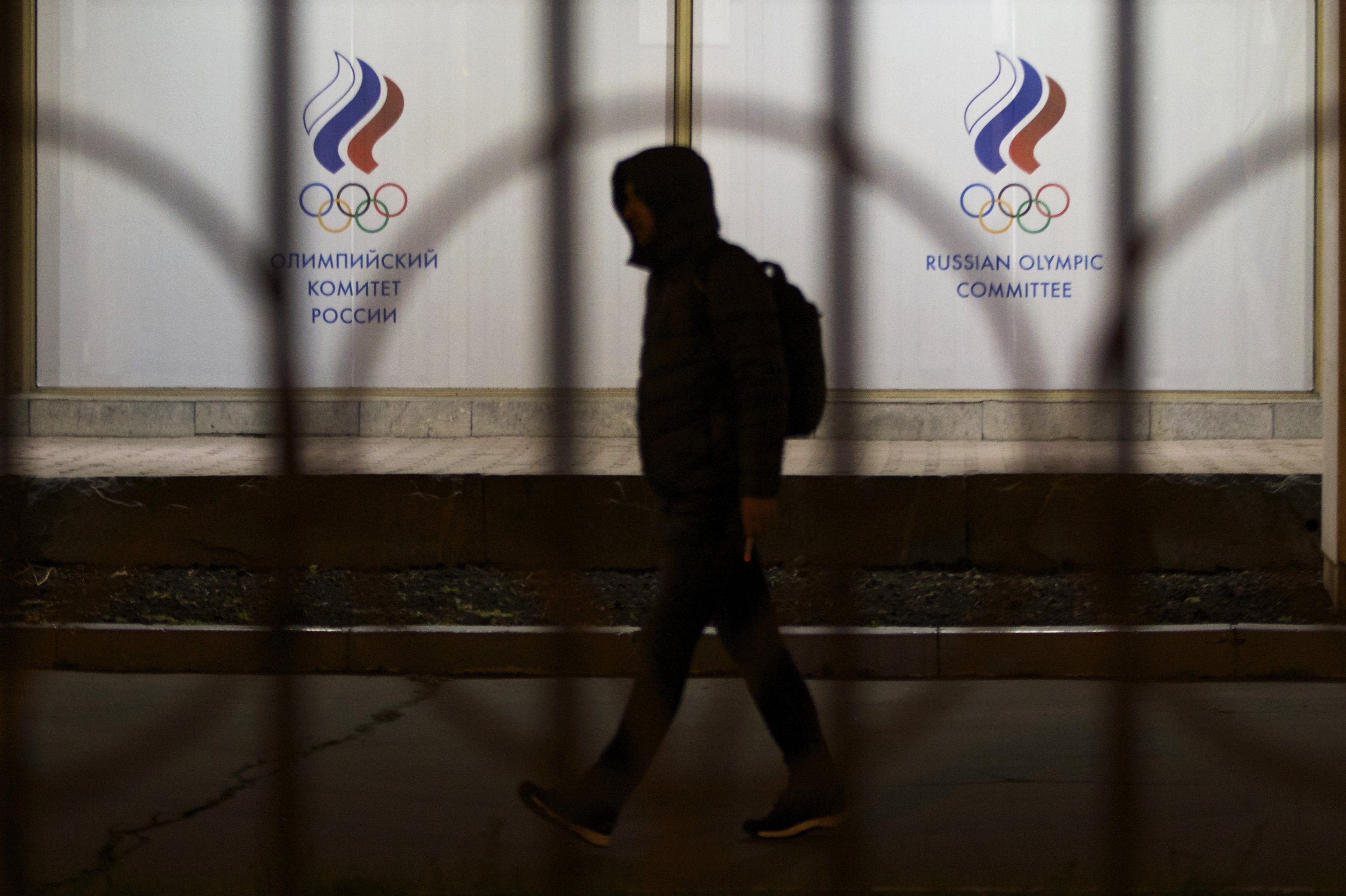
The Russian Olympic Committee (ROC) announced cash payments to 116 athletes barred from competing at the Milano-Cortina 2026 Winter Olympics under International Olympic Committee (IOC) restrictions, highlighting the ongoing clash between geopolitics and sport.
The decision came during an ROC executive committee meeting and was unveiled Tuesday by Mikhail Degtyarev, Russia’s Minister of Sport and ROC president, in a session with the 13 Russian competitors who were allowed to participate as Individual Neutral Athletes.
The 2026 Winter Games, held from Feb. 6 to 22 in Milan and Cortina d’Ampezzo, took place amid continued fallout from Russia’s full-scale invasion of Ukraine in February 2022.
Following the conflict, the IOC recommended barring Russian and Belarusian athletes and officials from international competitions, citing violations of the Olympic truce and the need to protect the integrity of global sport.
The IOC’s stance hardened in October 2023 with the suspension of the ROC, particularly after it incorporated sports organizations from Russian-occupied regions of Ukraine.
Under IOC rules, Russian and Belarusian athletes could not compete under their national flags, anthems, or team designations.
Only those vetted for neutrality, demonstrating no active support for the war, no military affiliations, and compliance with anti-doping standards, were cleared to compete individually.
In Milan-Cortina, this included 13 Russian athletes and seven Belarusians across eight sports, from figure skating to the Olympic debut of ski mountaineering, all competing under the neutral AIN designation with a teal flag and unique anthem.
The 13 Russian competitors represented a dramatic drop from previous Winter Games, where delegations numbered in the hundreds.
Many athletes who had qualified or were in contention were blocked by the IOC, prompting the ROC’s decision to offer financial compensation.
Degtyarev framed the payouts as a measure to support athletes affected by what he called “treacherous political decisions,” promising to defend their rights in court if necessary and to restore full national participation in future competitions.
Among the small Russian contingent, ski mountaineer Nikita Filippov stood out, winning a silver medal in the inaugural men’s sprint event, the only Russian medal at the Games and the first for an Individual Neutral Athlete.
Despite competing without national symbols, Filippov received support from spectators and marked a rare podium appearance amid restrictive measures.
The ROC did not disclose the size of the bonuses, and the IOC has yet to comment on the compensation plan.
Restrictions remain for Russian and Belarusian athletes, though IOC officials have hinted at possible national reinstatement by the 2028 Los Angeles Summer Olympics, contingent on compliance with Olympic principles.