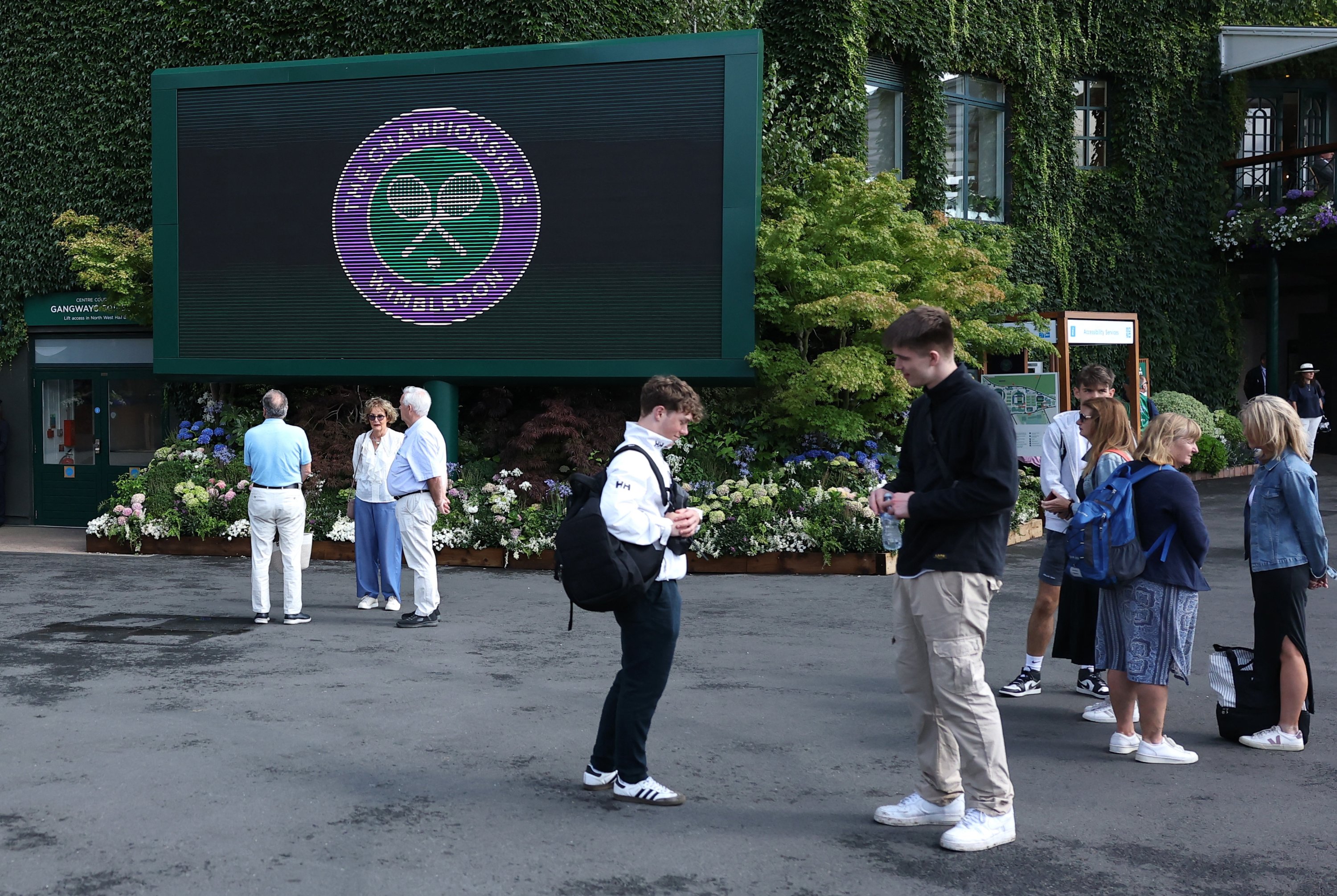
Wimbledon is ready to serve up its most dramatic transformation in decades – a sweeping expansion plan featuring a new 8,000-seat stadium with a retractable roof, 38 additional grass courts, and an on-site qualifying tournament to match its Grand Slam rivals.
But as the tennis world applauds, nearby residents are firing back with legal volleys of their own.
Backed by major champions like Novak Djokovic – who calls the proposal a "win-win" – and Carlos Alcaraz – who calls it "a great idea" – the All England Club’s $270 million project would stretch across a former golf course acquired in 2018.
The aim? Modernize the world’s oldest major while boosting attendance and revenue.
The expansion would move qualifying matches from Roehampton – three miles away and limited to 8,000 fans total – to the main site, allowing for 8,000 spectators per day during that critical opening week. It also promises more practice space and increased fan access to star players.
“We must evolve both on and off the court,” said All England Club chair Debbie Jevans. “The demand for our tickets is off the charts.”
Wimbledon lags behind its peers in attendance: the 2024 edition drew under 500,000 visitors, while the Australian Open topped 1.1 million with over 115,000 fans during qualifying alone. Roland Garros welcomed 80,000 for its qualifier sessions.
But not everyone is thrilled.
A vocal opposition group, Save Wimbledon Park, is dragging the plan into Britain’s High Court for a two-day judicial review. Residents argue the land – once a golf course – is protected green space, intended for community recreation, not massive stadiums and concrete sprawl.
“They’re turning it into an industrial tennis complex,” said Susan Cusack of the group. “We love tennis, but we also love the trees and open space.”
Opponents have raised more than $270,000 to fund their legal challenge and accuse the club of constant overdevelopment.
In response, Wimbledon promises community benefits: seven of the new courts will be open to locals, and two public parks – including a 23-acre green space – are part of the blueprint.
If the court clears the project, construction is expected to stretch over eight years – likely too late for 38-year-old Djokovic to grace the new grass.
Still, the Serbian great is firmly in favor.
“It’s great for the community, for London, for our sport,” Djokovic said. “If it doesn’t go through, it’ll be a shame.”
Alcaraz agrees. “Having qualifying close to where we play? It’s a great idea.”
Belinda Bencic, who debuted at Wimbledon in 2014, applauded the club’s effort to invest in players’ needs.
Whatever the verdict, Djokovic says Wimbledon’s status is untouchable.
“As it is, it’s already a sacred tournament,” he said. “This is only a bonus – something that elevates it further.”