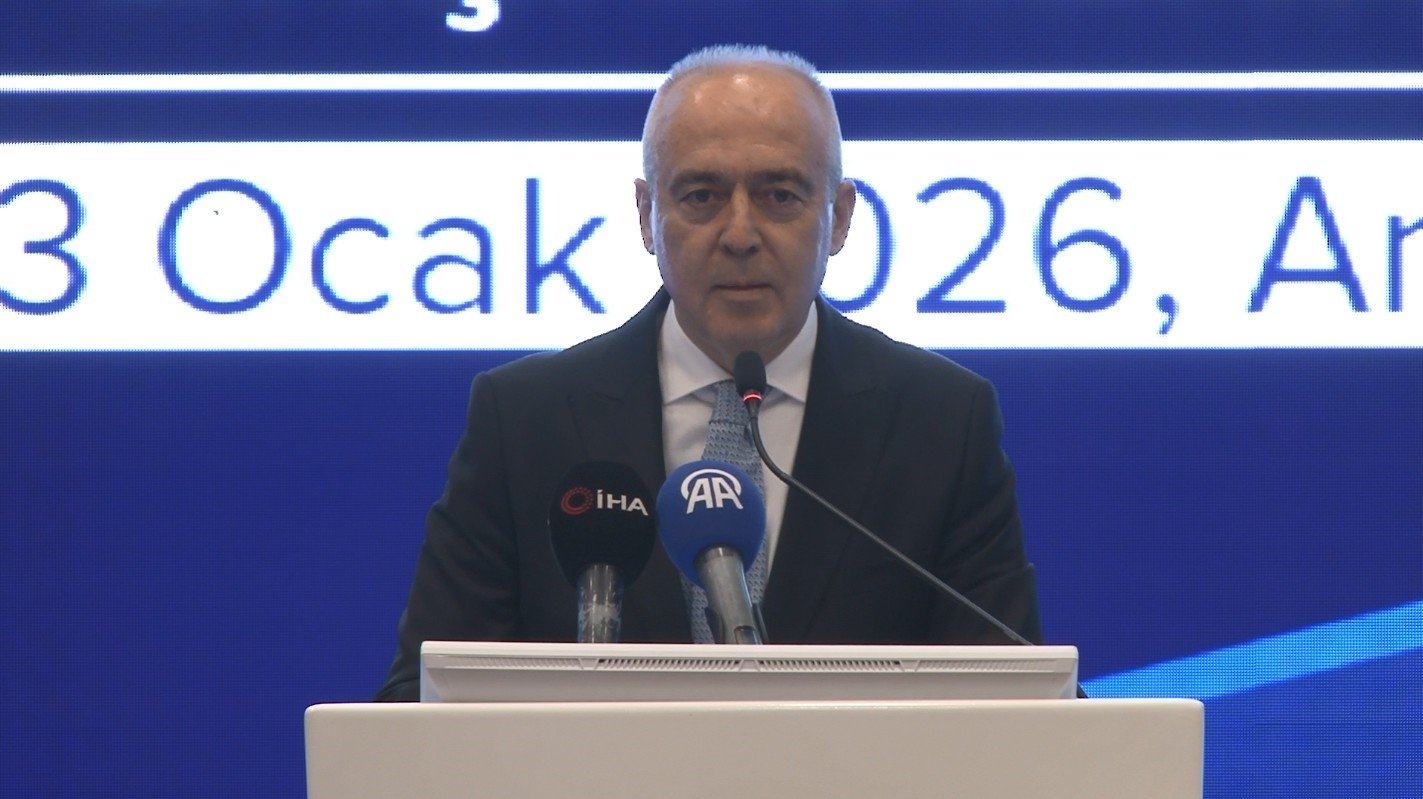
The Turkish Cycling Federation is laying the groundwork for a sweeping structural overhaul aimed at strengthening grassroots development and aligning local operations with international standards, federation president Emin Müftüoğlu said during a key administrative summit in Ankara.
Speaking at the “Provincial Representatives and Board Chairs Meeting,” organized to assess the sport’s administrative framework and outline 2026 objectives, Müftüoğlu emphasized that sustainable success in cycling must be built from the provinces upward, not dictated solely from the center.
Held at a hotel in Ankara, the meeting brought together federation executives, board chairs, provincial representatives, athletes and invited guests.
Proceedings began with the national anthem, followed by opening remarks that underscored the growing importance of local governance within Turkish cycling.
Müftüoğlu described provincial representatives as the federation’s “eyes, ears and strongest field presence,” stressing their role as a bridge between Ankara and the country’s cycling ecosystem.
From clubs and coaches to athletes, schools and local authorities, he said, effective communication at the provincial level is essential for national policies to succeed on the ground.
“Decisions taken at the center only matter if they work in the field,” Müftüoğlu said. “No matter how strong the federation is in Ankara, success cannot be sustainable without strong local representation.”
Drawing on his experience as a member of the UCI Management Committee and president of the Balkan Cycling Union, Müftüoğlu said the federation aims to convert its international standing into tangible domestic progress.
The core objective, he added, is to merge global standards with Türkiye’s local realities.
That vision is now taking shape through a new administrative model that will introduce regional representation alongside existing provincial structures.
Müftüoğlu said the reform will create a more coordinated, inclusive and responsive system, one he believes will redefine how cycling is governed across the country.
“Success begins in the provinces,” he said. “Infrastructure, clubs, school sports and local leagues are all shaped locally. If we want strong elite athletes, we must first build strong foundations.”
Müftüoğlu also pointed to Türkiye’s growing international credibility, noting that the Balkan Cycling Union’s upcoming general assembly in Istanbul will welcome top global officials who had long stayed away from the region.
“They are starting to see a different cycling family in Türkiye,” he said. “Now we must work harder to justify that trust.”