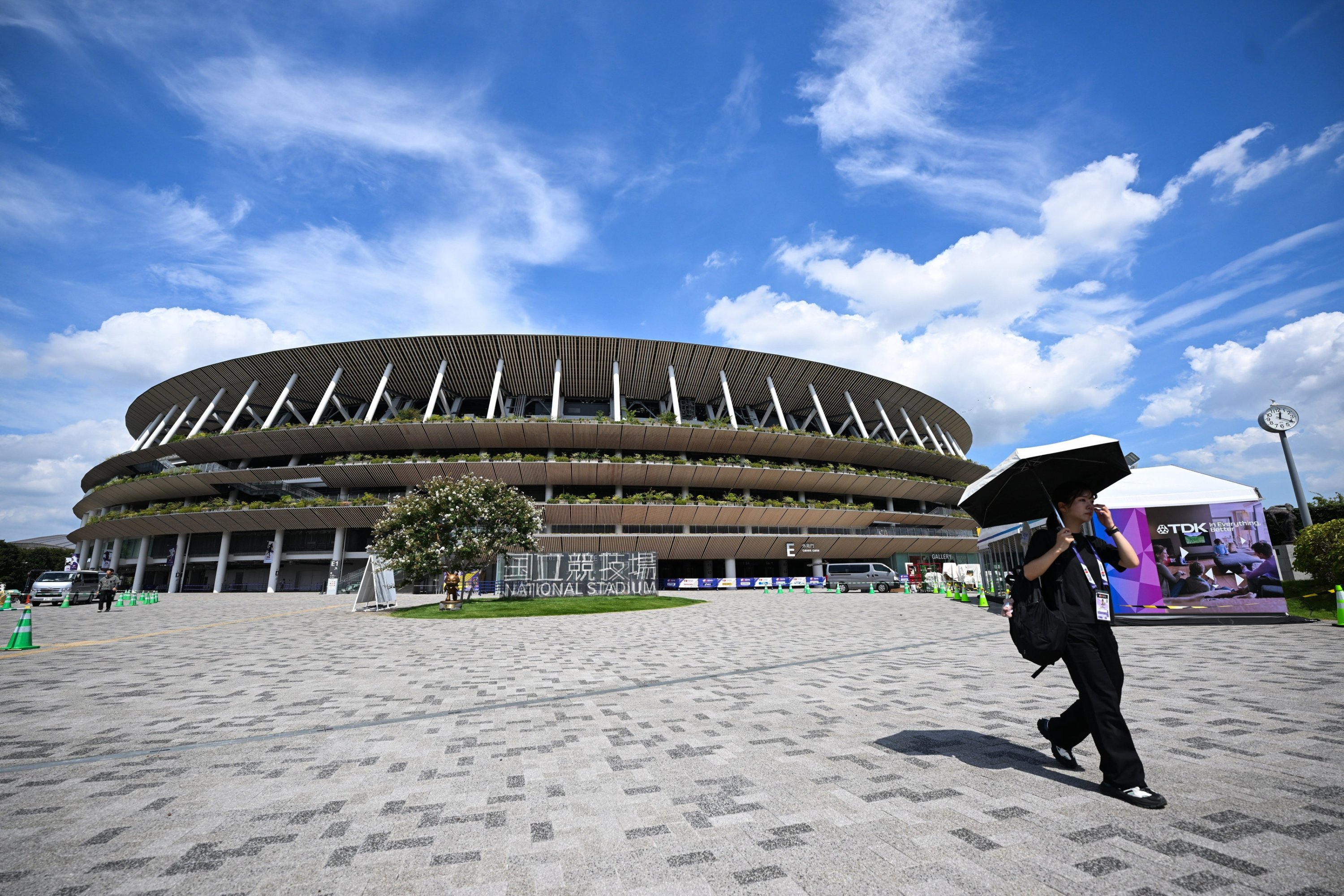
The marathons and 35-kilometer race walks at the World Athletics Championships in Tokyo will start 30 minutes earlier than planned due to health risks from unseasonably hot weather, organizers said Thursday.
The energy-draining race walks will open the championships on Saturday morning, followed by the women’s marathon on Sunday and the men’s on Monday.
Temperatures have reached 33 degrees Celsius (91 degrees Fahrenheit) this week, and with the heatwave expected to continue, officials moved the road race starts to 7:30 a.m.
“Due to expected elevated heat conditions that could pose a health and safety risk to competing athletes, all road events on the first three days will start 30 minutes earlier than scheduled,” a joint statement from the organizers and World Athletics said.
“The start time for the road events had originally been set at 8 a.m. in consideration of climate conditions, operational aspects, and maximizing spectator attendance.”
World Athletics president Sebastian Coe acknowledged in Tokyo on Tuesday that the high temperatures would be a challenge for athletes.
Marathon and race walk events at the pandemic-delayed 2021 Tokyo Olympics, held from July 23 to Aug. 8, were moved to the cooler northern city of Sapporo because of heat concerns.
However, this time they have remained in Tokyo, where temperatures in mid-September “have remained at those of mid-summer,” the statement noted.
“The decision has been communicated to the athletes as early as possible to allow them to prepare and adjust to the new start time,” it said.
Fears over the heat in Doha at the 2019 world championships resulted in the marathons beginning at midnight, with the walks half an hour earlier.
Japan’s average temperature between June and August was 2.36 degrees Celsius above the standard value, making it the hottest summer since records began in 1898, the Japan Meteorological Agency said. It was the third consecutive summer of record-high temperatures.
Coe said after Tuesday’s World Athletics Council meeting that the future risks of global warming had been discussed.
“These are not transient; they’re here to stay,” he said. “Governments have not stepped up to the plate, and sport is going to have to take some unilateral judgments and decisions here.
“And we have reflected in the past: if we are committed to athlete welfare, then we should probably be openly committed to that,” he added.
In-stadium competition start times on each of the first three days remain unchanged.