Daily Sabah logo

Politics
Diplomacy Legislation War On Terror EU Affairs Elections News Analysis
TÜRKİYE
Istanbul Education Investigations Minorities Expat Corner Diaspora
World
Mid-East Europe Americas Asia Pacific Africa Syrian Crisis Islamophobia
Business
Automotive Economy Energy Finance Tourism Tech Defense Transportation News Analysis
Lifestyle
Health Environment Travel Food Fashion Science Religion History Feature Expat Corner
Arts
Cinema Music Events Portrait Reviews Performing Arts
Sports
Football Basketball Motorsports Tennis
Opinion
Columns Op-Ed Reader's Corner Editorial
PHOTO GALLERY
JOBS ABOUT US RSS PRIVACY CONTACT US
© Turkuvaz Haberleşme ve Yayıncılık 2025

Daily Sabah - Latest & Breaking News from Turkey | Istanbul

  • Politics
    • Diplomacy
    • Legislation
    • War On Terror
    • EU Affairs
    • Elections
    • News Analysis
  • TÜRKİYE
    • Istanbul
    • Education
    • Investigations
    • Minorities
    • Expat Corner
    • Diaspora
  • World
    • Mid-East
    • Europe
    • Americas
    • Asia Pacific
    • Africa
    • Syrian Crisis
    • Islamophobia
  • Business
    • Automotive
    • Economy
    • Energy
    • Finance
    • Tourism
    • Tech
    • Defense
    • Transportation
    • News Analysis
  • Lifestyle
    • Health
    • Environment
    • Travel
    • Food
    • Fashion
    • Science
    • Religion
    • History
    • Feature
    • Expat Corner
  • Arts
    • Cinema
    • Music
    • Events
    • Portrait
    • Reviews
    • Performing Arts
  • Sports
    • Football
    • Basketball
    • Motorsports
    • Tennis
  • Gallery
  • Opinion
    • Columns
    • Op-Ed
    • Reader's Corner
    • Editorial
  • TV
  • TÜRKİYE
  • Istanbul
  • Education
  • Investigations
  • Minorities
  • Expat Corner
  • Diaspora

Turkish scientist’s work shows spinach can speed up wound healing

by DAILY SABAH

ISTANBUL Sep 24, 2021 - 3:47 pm GMT+3
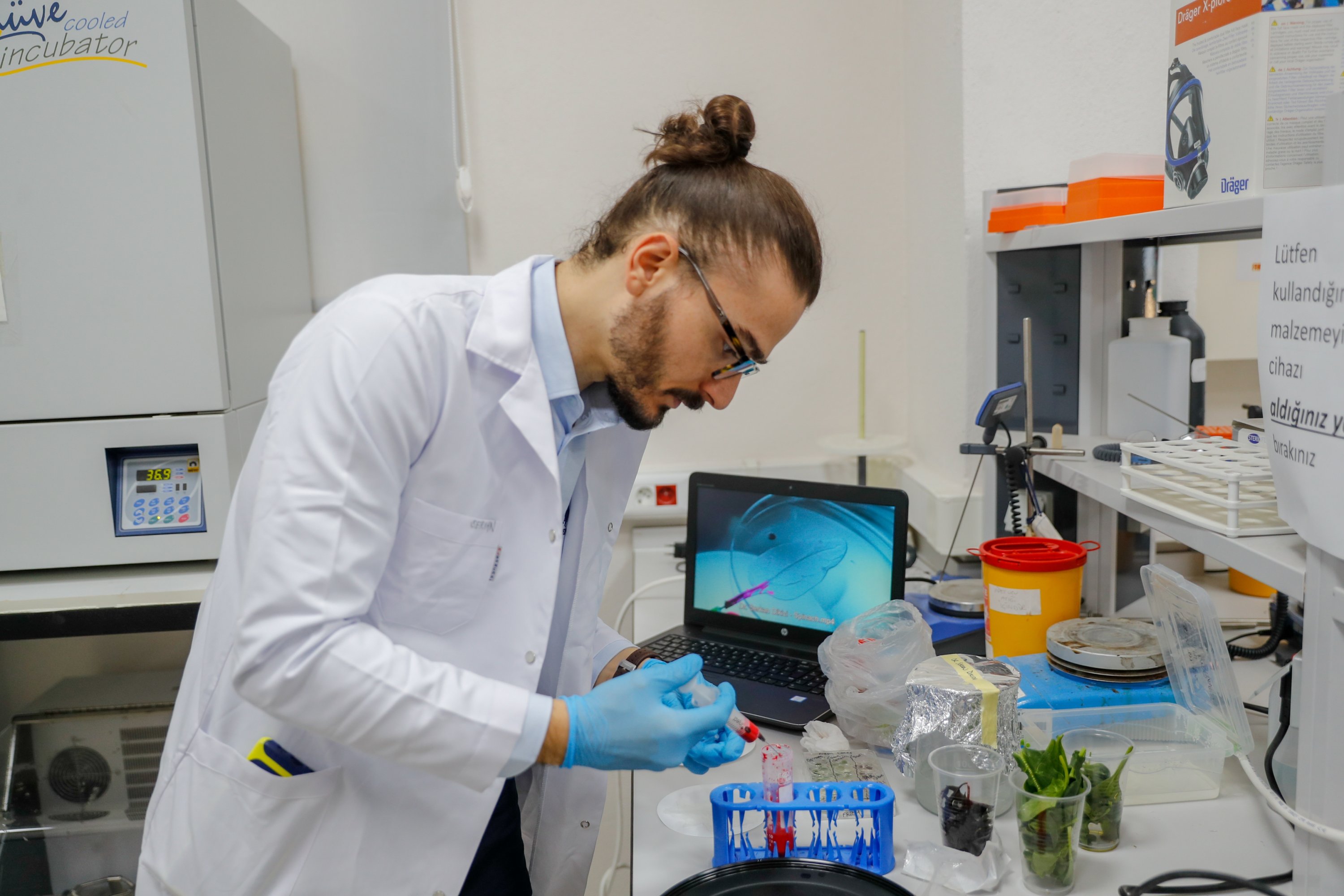
Serkan Dikici works on spinach leaves in the laboratory, in Izmir, western Turkey, Sept. 24, 2021. (AA Photo)
by DAILY SABAH Sep 24, 2021 3:47 pm

Spinach does not give you instant muscles as it did to Popeye, though its healthy properties are highly valued. Now, a Turkish researcher has added a new one to them. According to assistant professor Serkan Dikici, baby spinach, in its decellularized form, can accelerate the healing of wounds.

Dikici, who works at the bioengineering department of Izmir Institute of Technology, won a doctoral researcher award in the United Kingdom for his study.

The young scientist attended Sheffield University as a Ph.D. student in tissue engineering and for his Ph.D. study, he chose the development of biomaterials for healing of chronic wounds, to replace or reduce the use of guinea pigs in this field. His study with decellularized spinach leaves found that the leaves can be “tolerated” by the body and can be used in a diverse array of clinical trials, particularly on the recovery of wounds.

Dikici told Anadolu Agency (AA) Friday that he continues working on the field in Izmir, researching clinical use of spinach, whose leaves can be replicated as biomaterials mimicking the three-dimensional structure of veins. “When I started my study, the use of spinach was something new and we tested if it is appropriate for use in the human body first. Now we are certain that they are tolerable if decellularized. This study helps us to develop artificial veins and developing grafts to help in the recovery of chronic wounds. It also has multiple uses in tissue engineering. Plant tissues have more advantages than animal tissues. They are low-cost and do not create ethical concerns like animal tissues do. Moreover, it does not have the risk of transferring zoonotic diseases to humans,” he explained.

“Spinach and leaves of other plants would be more prevalent for use in clinical studies. My study was based on their use in the treatment of chronic diabetic ulcers. Along with spinach, we used leaves from two more plants to research their decellularization potential. Now we are at the stage of conducting experiments with human cells. We will have an animal trial,” he added and noted that the study was planned to be completed in December 2022.


  • shortlink copied
  • KEYWORDS
    spinach turkish tissue engineering wounds biomaterial
    The Daily Sabah Newsletter
    Keep up to date with what’s happening in Turkey, it’s region and the world.
    You can unsubscribe at any time. By signing up you are agreeing to our Terms of Use and Privacy Policy. This site is protected by reCAPTCHA and the Google Privacy Policy and Terms of Service apply.
    No Image
    Water lilies dot Beyşehir Lake in Turkey's Konya
    PHOTOGALLERY
    • POLITICS
    • Diplomacy
    • Legislation
    • War On Terror
    • EU Affairs
    • News Analysis
    • TÜRKİYE
    • Istanbul
    • Education
    • Investigations
    • Minorities
    • Diaspora
    • World
    • Mid-East
    • Europe
    • Americas
    • Asia Pacific
    • Africa
    • Syrian Crisis
    • İslamophobia
    • Business
    • Automotive
    • Economy
    • Energy
    • Finance
    • Tourism
    • Tech
    • Defense
    • Transportation
    • News Analysis
    • Lifestyle
    • Health
    • Environment
    • Travel
    • Food
    • Fashion
    • Science
    • Religion
    • History
    • Feature
    • Expat Corner
    • Arts
    • Cinema
    • Music
    • Events
    • Portrait
    • Performing Arts
    • Reviews
    • Sports
    • Football
    • Basketball
    • Motorsports
    • Tennis
    • Opinion
    • Columns
    • Op-Ed
    • Reader's Corner
    • Editorial
    • Photo gallery
    • DS TV
    • Jobs
    • privacy
    • about us
    • contact us
    • RSS
    © Turkuvaz Haberleşme ve Yayıncılık 2021