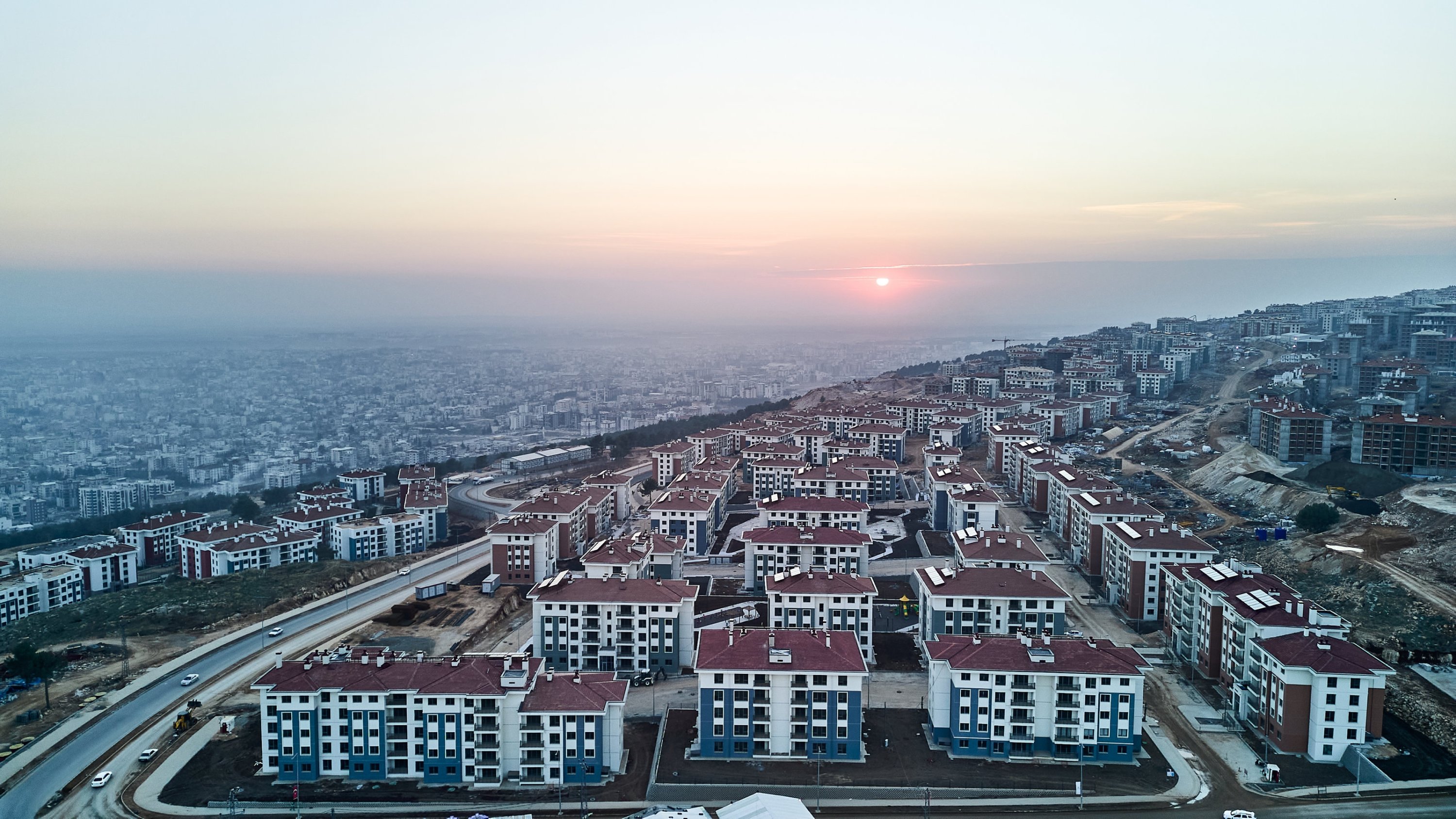
Dear readers, this story is a blend of hope and tragedy. Let me take you back to Feb. 6, 2023, when two powerful earthquakes struck southeastern Türkiye, with their epicenter in Kahramanmaraş. Now, two years later, we reflect on how these cities have transformed in the aftermath of the disaster.
As part of this reflection, the Presidency's Directorate of Communications organized a program marking the second anniversary of the earthquakes, bringing together 100 national and international journalists. Among them were 50 foreign journalists from 11 countries, including Germany, Iraq, Italy, Azerbaijan and Bulgaria.
The disaster caused widespread destruction across 11 provinces in Türkiye, including Hatay, Gaziantep, Adıyaman and Malatya, among others. More than 50,000 people lost their lives and millions were displaced. Thousands of buildings collapsed, including homes, hospitals and historical sites. The earthquakes marked one of the deadliest disasters in Türkiye’s history.
I woke up that morning in Istanbul in complete shock. Today, I am writing after visiting three of the most severely impacted cities: Adıyaman, Kahramanmaraş and Hatay.
Our first destination was Adıyaman, where the earthquakes caused the collapse of 5,953 buildings, claiming the lives of more than 8,000 people, injuring over 17,000 and leaving seven individuals still missing. Two years later, the city steadily returns to normal as reconstruction efforts continue.
Adıyaman Governor Osman Varol held a news conference on Feb. 3 to provide an update on the province’s recovery and rebuilding efforts. Speaking on disaster preparedness, he stated that a total of 803 individuals, including civil servants, Disaster and Emergency Management Authority (AFAD) volunteers and members of nongovernmental organizations (NGOs), have received earthquake search and rescue training in 2024. He emphasized the importance of enhancing the province’s emergency response capacity to mitigate future risks.
Addressing the province-wide damage assessment, Varol reported that 115,067 buildings were either destroyed, deemed urgently demolishable or classified as heavily or moderately damaged, accounting for 28.7% of Adıyaman’s total building stock. He acknowledged the extensive destruction and reaffirmed the government's commitment to restoring infrastructure and housing in the affected areas.
Providing an update on temporary housing efforts, the governor noted that 55 container cities have been established to accommodate displaced residents. More than 25,000 urban container homes have been set up, housing 76,832 people, while an additional 48,380 individuals currently reside in rural container settlements. He underscored that ensuring adequate living conditions for those affected remains a top priority.
To help disaster victims meet their basic needs and support the local economy, a total of 16,648 people have been provided with a financial aid card, which includes a monthly allowance of TL 4,500 ($125). Varol stated that this initiative has played a crucial role in stabilizing the economic conditions of families impacted by the disaster.
Speaking about the reconstruction process, he announced that 29,987 urban housing units have been built throughout the province. Additionally, 3,121 homes have been self-built by citizens, while other 2,909 houses have also been incorporated into the housing stock.
He assured residents that reconstruction efforts are progressing rapidly and that authorities remain committed to ensuring long-term recovery, stability and the complete revitalization of Adıyaman.
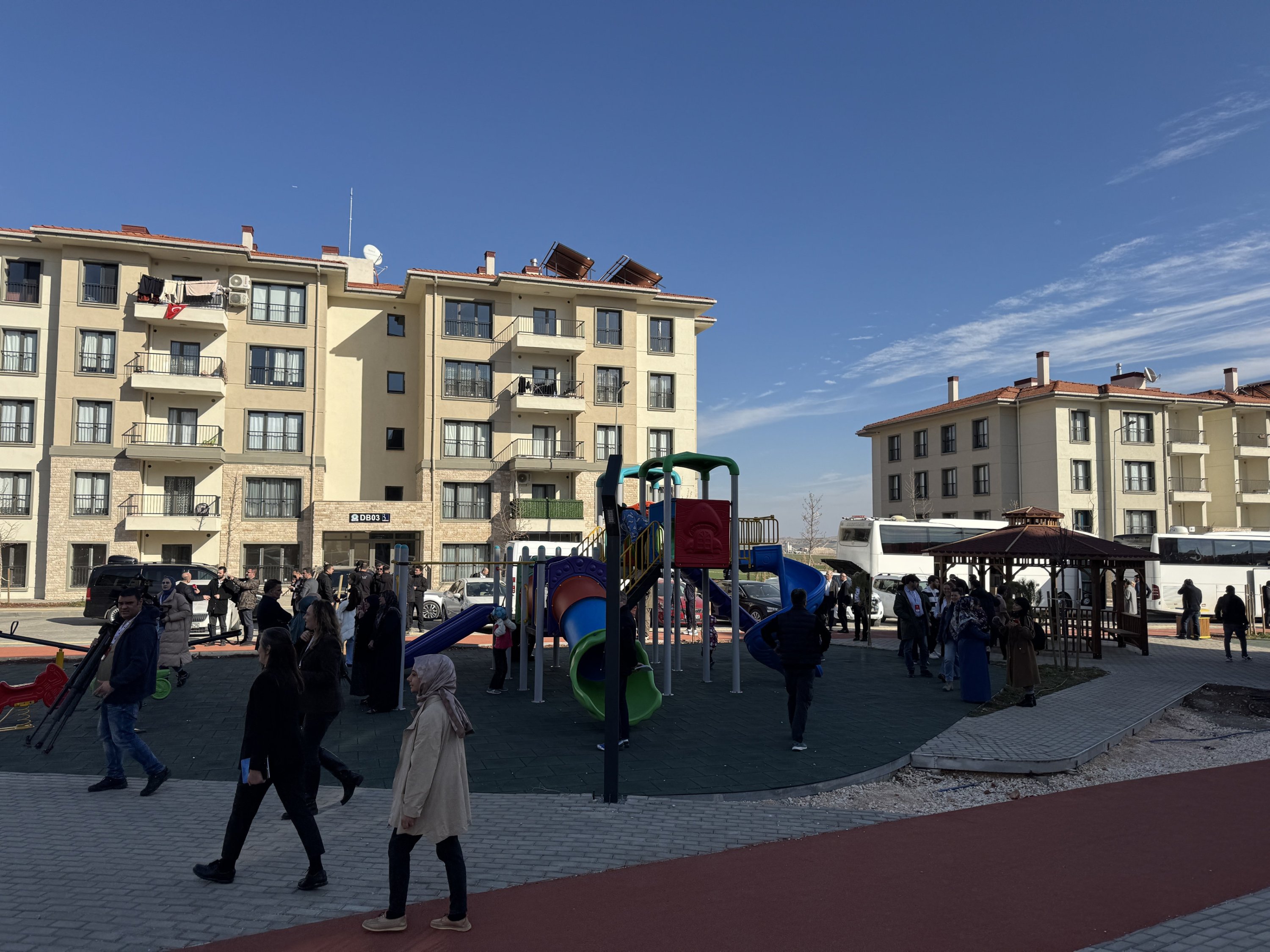
After the news conference, we had the opportunity to visit newly built residential projects for citizens who lost their homes in the earthquakes. It was an uplifting experience to witness the newly constructed houses, which are bringing hope and new life to many people who had lost everything and thought they would never have a warm home again. While not all buildings are completed yet, the governor announced that by the end of this year, the residents who were granted homes will be able to move in and construction will be finished.
Later, we visited Adıyaman’s earthquake-damaged Ulu Mosque and Mor Petrus-Mor Paulus Syriac Orthodox Church, both of which are undergoing restoration under the supervision of the General Directorate of Foundations, part of the Ministry of Tourism. Şengül Koncagül, head of the Department of Artistic Works and Construction Affairs, provided valuable insights into the ongoing restoration efforts.
Koncagül shared that, of the 678 historical buildings managed by the General Directorate of Foundations across 11 earthquake-affected provinces, 371 sustained damage. In Adıyaman alone, 15 foundation-owned historical structures were evaluated, 12 of which were affected by the earthquake. She confirmed that restoration contracts for 10 of these buildings have been finalized and the reconstruction work is progressing rapidly.
Our second destination for the program was Kahramanmaraş, a city famous for its rich history, cultural heritage and traditional maraş ice cream.
On Feb. 4, Kahramanmaraş Governor Mükerrem Ünlüer held a news conference with both national and international journalists. In his speech, he stated that a significant reconstruction process had been carried out in the city following the devastating earthquakes.
"Despite such difficult conditions, we have managed to significantly rebuild the city in two years," he said. He also emphasized that restructuring efforts continue in areas such as housing, infrastructure, education and health care.
Professor Orhan Tatar, general director of earthquake and risk reduction at the AFAD, provided a detailed overview of the devastation caused by the earthquakes and the extensive recovery efforts undertaken in the past two years.
Tatar explained that several major earthquakes struck Türkiye, with magnitudes of 7.7, 7.6 and 6.5, followed by 67,669 aftershocks. The disaster affected an area of 120,000 square kilometers (46,332 square miles), impacting 14 million people across 18 provinces and 179 districts. The tremors, which released 30 quadrillion joules of energy, were described as being 2,000 times stronger than the Hiroshima atomic bomb.
Damage assessments revealed 2.38 million buildings and 6.6 million independent units inspected, with 671,581 homes, 113,814 businesses and 25,507 barns classified as moderately or severely damaged. Over 60,000 buildings either collapsed or were marked for urgent demolition.
Tatar mentioned that the AFAD, in coordination with national and local authorities, mobilized 650,000 personnel, including 74,033 police officers, 65,105 gendarmerie officers and 3,362 watchmen, to maintain security and assist affected communities. The response effort also involved 35,250 search and rescue personnel, with 93 countries sending 11,488 international rescuers.
Temporary housing was a priority, with 350 tent cities established and 1 million tents deployed, sheltering 2.5 million people in the immediate aftermath. Additionally, 220,000 containers were provided, housing 707,000 earthquake survivors. Currently, 649,632 people remain in container settlements.
He also said that the government has prioritized permanent housing solutions, completing 201,431 homes and 149 businesses, while 452,983 independent units are under construction.
Tatar said that search and rescue capacity has expanded, with 100,000 trained personnel and 1,187 seismic monitoring stations now operating across the country.
We took a brief tour of some newly built residential projects, where the buildings were constructed to high standards. Residents were visiting their new homes while children played happily in the designated areas, gradually returning to their normal lives.
However, outside these newly developed areas, parts of the city remained in ruins. Many buildings stood empty, awaiting demolition due to severe earthquake damage, while others were partially destroyed and bore the scars of the disaster.
I couldn’t help but wonder how many times people had laughed, shared moments and created memories in these homes, which were now reduced to silent reminders of one of the most devastating tragedies in the country’s history.
Our third destination was Hatay, located in southern Türkiye, near the Mediterranean coast, known for its vibrant cultural heritage and culinary traditions. As we arrived in the city at night, I noticed something that filled me with hope: newly opened bridal shops with bright displays set up inside the ruins of destroyed buildings. This small yet powerful symbol of resilience was a reminder that life continues even in the face of tragedy.
It was heartening to see such signs of recovery, and with Türkiye designating 2025 as the "Year of the Family," witnessing these efforts firsthand made me feel optimistic about the future.
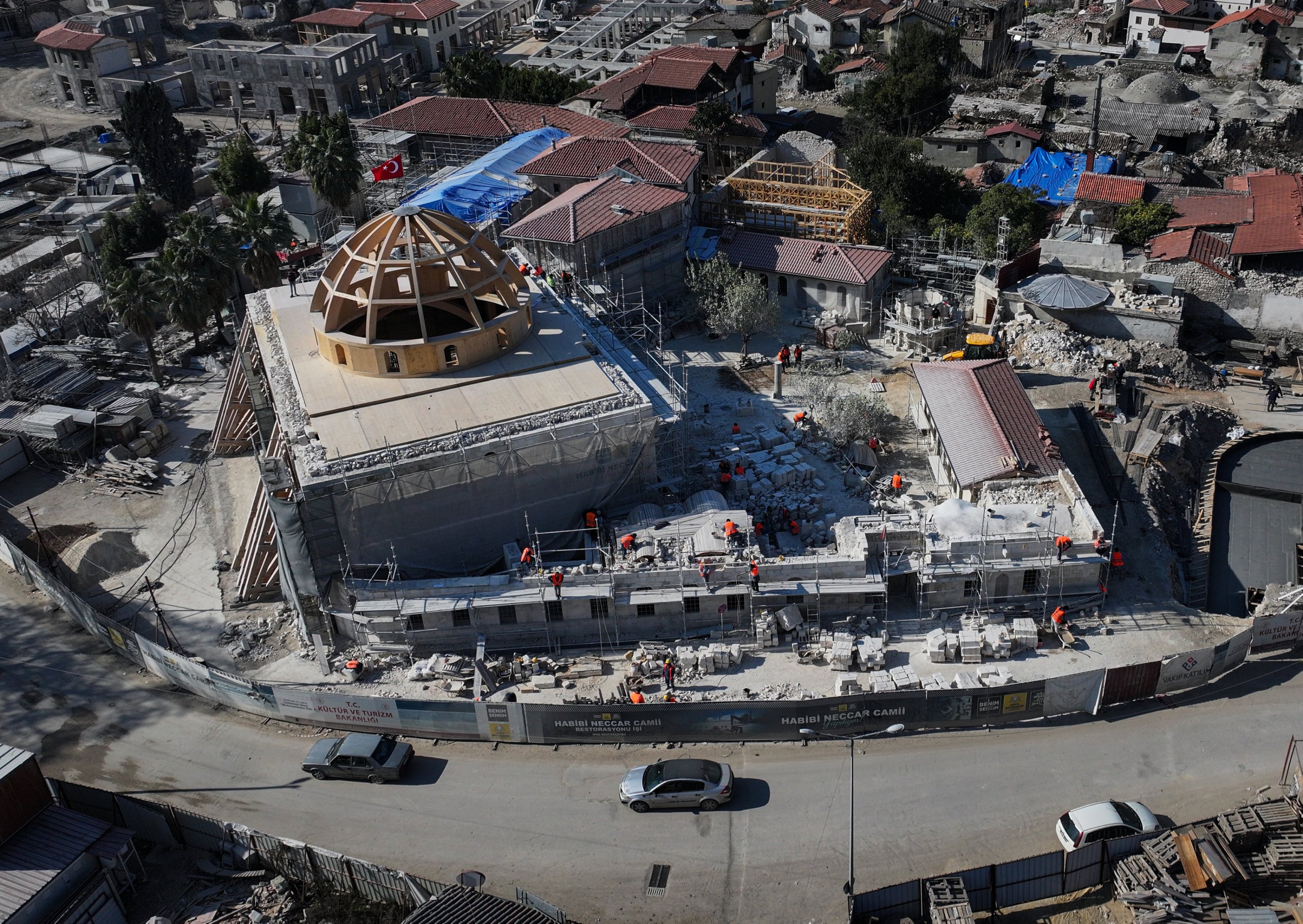
In the morning, we visited the Habib-i Neccar Mosque, one of the oldest and most historically significant mosques in the region. Dating back to the seventh century, the mosque has witnessed centuries of change, including the addition of a fountain in its courtyard in the 19th century. Unfortunately, the mosque was severely damaged in the recent earthquakes. Structural damage was significant, including the collapse of parts of its minaret.
Restoration efforts are ongoing to preserve its historical and cultural significance while ensuring it is rebuilt to withstand future seismic events.
On Feb. 5, Hatay Governor Mustafa Masatlı provided a detailed update on the province’s recovery efforts following the devastating earthquakes. He emphasized that the entire province, with its 15 districts and a population of 1,686,043, was affected, with seven districts suffering the most severe destruction: Antakya, Defne, Iskenderun, Kırıkhan, Hassa, Samandağ and Arsuz.
The earthquake left behind 327,245 damaged units and 88,367 destroyed buildings, including 3,000 unregistered structures. As a result, Hatay has witnessed the largest property rights allocation in the history of the republic, with 177,591 individuals recognized as rightful beneficiaries of the reconstruction efforts.
To support those affected, the government has provided extensive financial aid through the AFAD, totaling TL 23.1 billion over the past two years. Governor Masatlı explained that this includes TL 3.1 billion in rent assistance, TL 1.7 billion in housing support and TL 1.3 billion allocated for container cities.
Additionally, 208,255 people have received relocation assistance, and prefabricated workplaces are still under construction to help businesses resume operations. Rent support has been structured to provide TL 5,000 for tenants and TL 7,500 for homeowners. Masatlı reaffirmed that by the end of 2025, all eligible citizens will be relocated to permanent housing.
Hospitals suffered significant damage during the earthquakes, leading to a major crisis in health care services. The government has invested TL 16.2 billion into health care infrastructure to rebuild and expand medical facilities. Several new hospitals have already been opened, including the 140-bed Defne State Hospital, the 300-bed Iskenderun State Hospital, the 140-bed Payas State Hospital, and emergency hospitals in the districts of Yayladağı, Samandağ and Erzin.
The education sector was also hit hard, with 210 schools either heavily damaged or destroyed. However, significant progress has been made in restoring the education system, with 129 new schools opened and 116 schools currently under construction.
Furthermore, 398,338 students have received educational support to ensure their learning continues without disruption. Masatlı stressed that these efforts aim to provide students with safer and better-equipped schools, helping to rebuild a stronger education system for the future.
After that, we visited the Hatay Training and Research Hospital in the Antakya district. This 550-bed capacity hospital was built on 129,000 square meters of land, following the earthquakes. Dr. Sıtkı Sönmez, director of health for Hatay, explained that they are visiting container cities to provide mental and psychological support. He emphasized that the individuals who have been rescued need assistance in this area to help them cope with the aftermath of the disaster.