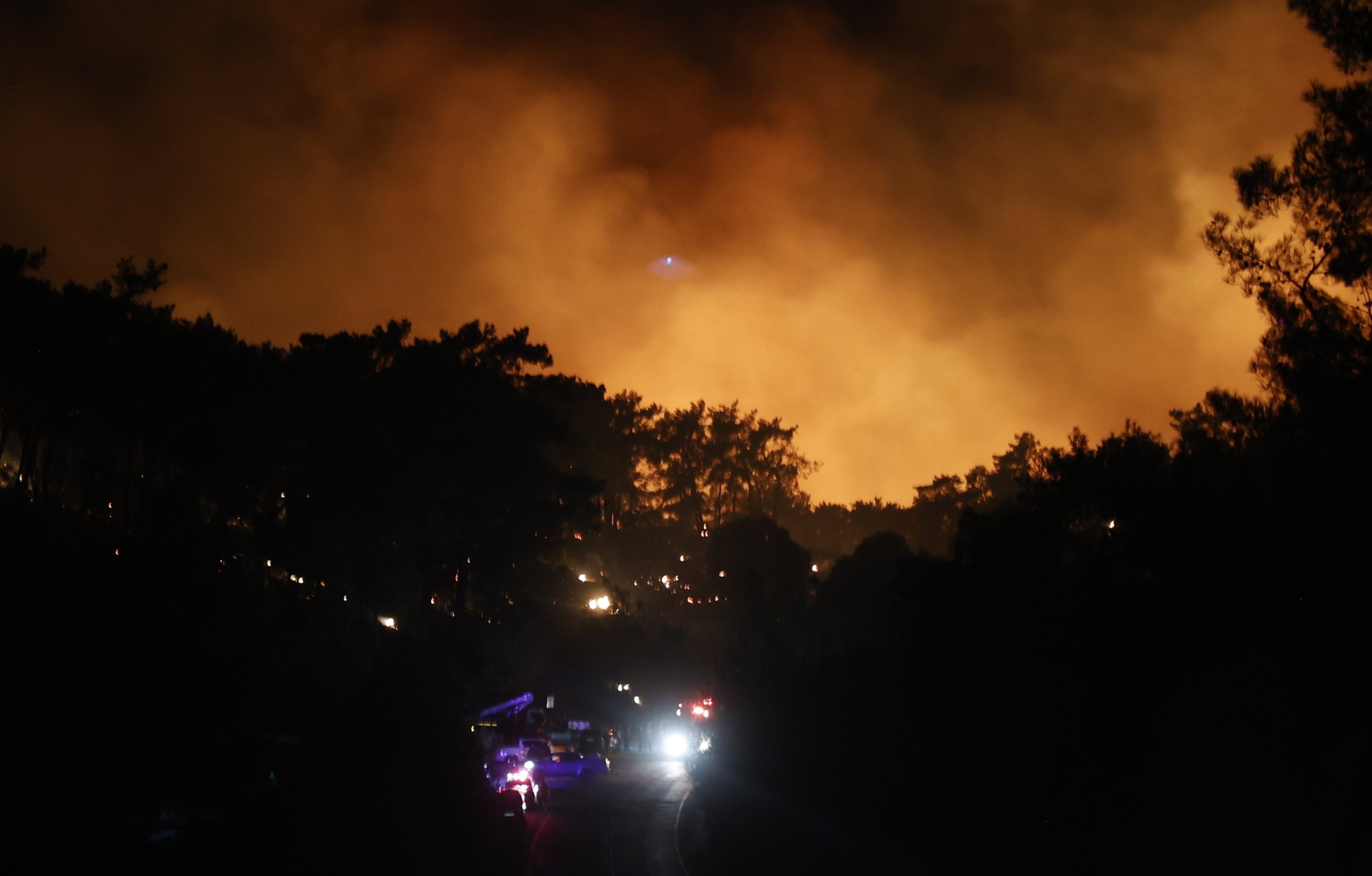
Türkiye is witnessing one of its most severe forest fire seasons in recent years, with large areas of forest and rural land already affected. Associate professor Serhun Sağlam, a faculty member at Istanbul University-Cerrahpaşa’s Faculty of Forestry, provided detailed insights into the scale, risks and causes of forest fires in 2025, highlighting ongoing concerns and the importance of preventive measures.
According to Sağlam, over the past decade, Türkiye has experienced 28,000 forest fires and 29,500 rural fires, which together burned a total of 255,000 hectares. In 2025 alone, 6,800 fires were reported, with 2,800 occurring in forests and 4,000 in rural areas, resulting in approximately 80,000 hectares of burned land.
While the number of fires this year has already surpassed that of 2021, the year that holds the record for the largest area burned at 139,503 hectares, the total area burned in 2025 remains smaller, ranking it as the second-highest in the last decade. In comparison, 2024 saw 2,798 forest fires and 4,339 rural fires, which collectively burned a total of 28,107 hectares.
Sağlam emphasized that, although October is only the 10th month of the year, the fire season is far from over and additional fires could further increase the total burned area. “These figures include not only forest fires but also rural fires that spread to forests, as well as forest fires that reached rural areas,” he noted, underlining the interconnected nature of fires in rural and forested regions.
The risk of forest fires remains particularly high in the Aegean and Mediterranean regions until Oct. 15. In contrast, Istanbul and surrounding provinces have experienced cooler temperatures, which have reduced the likelihood of fire outbreaks. However, southern provinces continue to experience elevated temperatures, maintaining a high fire risk. “These numbers may rise further,” Sağlam said, stressing that the fire season is ongoing.
Meteorological conditions play a crucial role in the spread and containment of fires. Sağlam explained that high daytime temperatures and strong winds can help fires start and spread quickly, whereas lower nighttime temperatures and calmer winds can aid firefighting efforts and prevent the rapid expansion of fires. He referred to recent events in Köyceğiz, where 2,500 hectares burned, and in Antalya, where two separate fires occurred, as evidence that the threat remains real despite seasonal changes.
Sağlam also detailed the causes of the 2025 fires. Approximately 50% of forest fires have unknown origins, making it unclear whether they were accidental, natural or intentional. Nevertheless, human negligence remains a leading factor. Carelessness, such as discarding cigarettes from vehicles, accidents near forest edges and mistakes during activities like beekeeping or using smudge sticks near forests, has led to numerous fires.
Additionally, sparks from agricultural machinery have caused several fires that spread from farmlands into forests. Farmers and residents often burn waste without considering the risk of the fire spreading into nearby forested areas. Energy transmission lines and lightning strikes have also contributed to the outbreaks. “This year, fires originating from agricultural lands and spreading to forests were particularly common,” Sağlam stated. He emphasized that human negligence remains the top issue in forest fire prevention, noting that many fires with unknown causes could be either intentional or accidental.
To mitigate the risks, Sağlam stressed the importance of public awareness. He called for regular educational programs in schools and the inclusion of forest fire prevention in the curriculum to teach children and communities about the dangers and responsibilities associated with fire. “Society’s awareness and vigilance are critical to reducing the number and severity of forest fires,” he said.