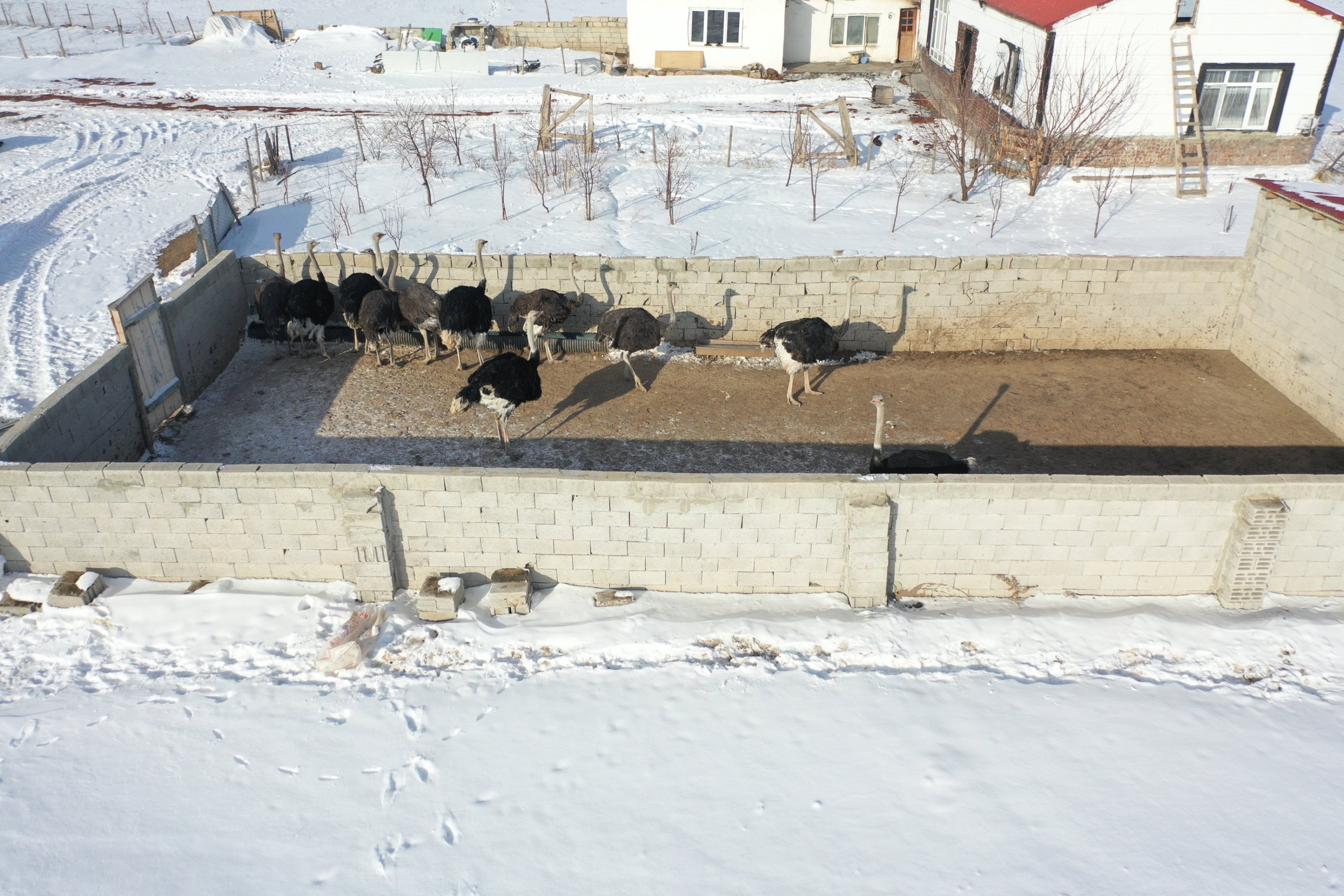
Ostriches, the world’s largest living birds and native to Africa’s scorching Sahara Desert, are proving unexpectedly resilient in the icy highlands of Kars, northeastern Türkiye, one of the country's coldest provinces, where winter temperatures routinely plunge well below freezing.
For nearly two years, the flightless birds have been living in Esenkent village, on the outskirts of Kars city center, adapting smoothly to a climate that can see temperatures drop as low as minus 31 degrees Celsius (minus 87.8 degrees Fahrenheit). Despite the snowbound landscape and long, harsh winters, the ostriches have remained healthy, active and surprisingly playful.
The unusual farming venture is run by Metin Tetik, a father of three who left his decoration business in Istanbul and returned to his hometown to pursue his long-held dream of ostrich breeding. What began as a bold experiment has turned into a successful operation, with the birds now fully acclimated to their snowy surroundings.
“They have no problems with the climate,” Tetik said. “They are spending their second winter here and they have not gotten sick at all. They are very comfortable. They play in the snow and even seem to enjoy the snowfall.”
Although ostriches are native to Africa, Tetik said their strong physical structure allows them to endure extreme cold as long as they are properly cared for. He feeds them the same diet throughout the year, including barley, wheat and crushed grain, and ensures they have constant access to water.
“In their homeland, the climate is completely different, but here in Kars, we raise them in temperatures of minus 20 to minus 25 degrees Celsius without any difficulty,” he said. “Two winters have passed without a single problem. You just need to take good care of them and pay attention to their needs.”
The birds have now reached breeding maturity and have begun mating, raising expectations that egg production will start in the coming summer. Tetik believes the development will mark a new phase for his farm and could encourage similar initiatives in the region.
Local residents have shown growing interest in the unusual sight of giant African birds roaming snow-covered fields, and the project has already drawn attention as an example of how alternative livestock farming can thrive even under extreme climatic conditions.