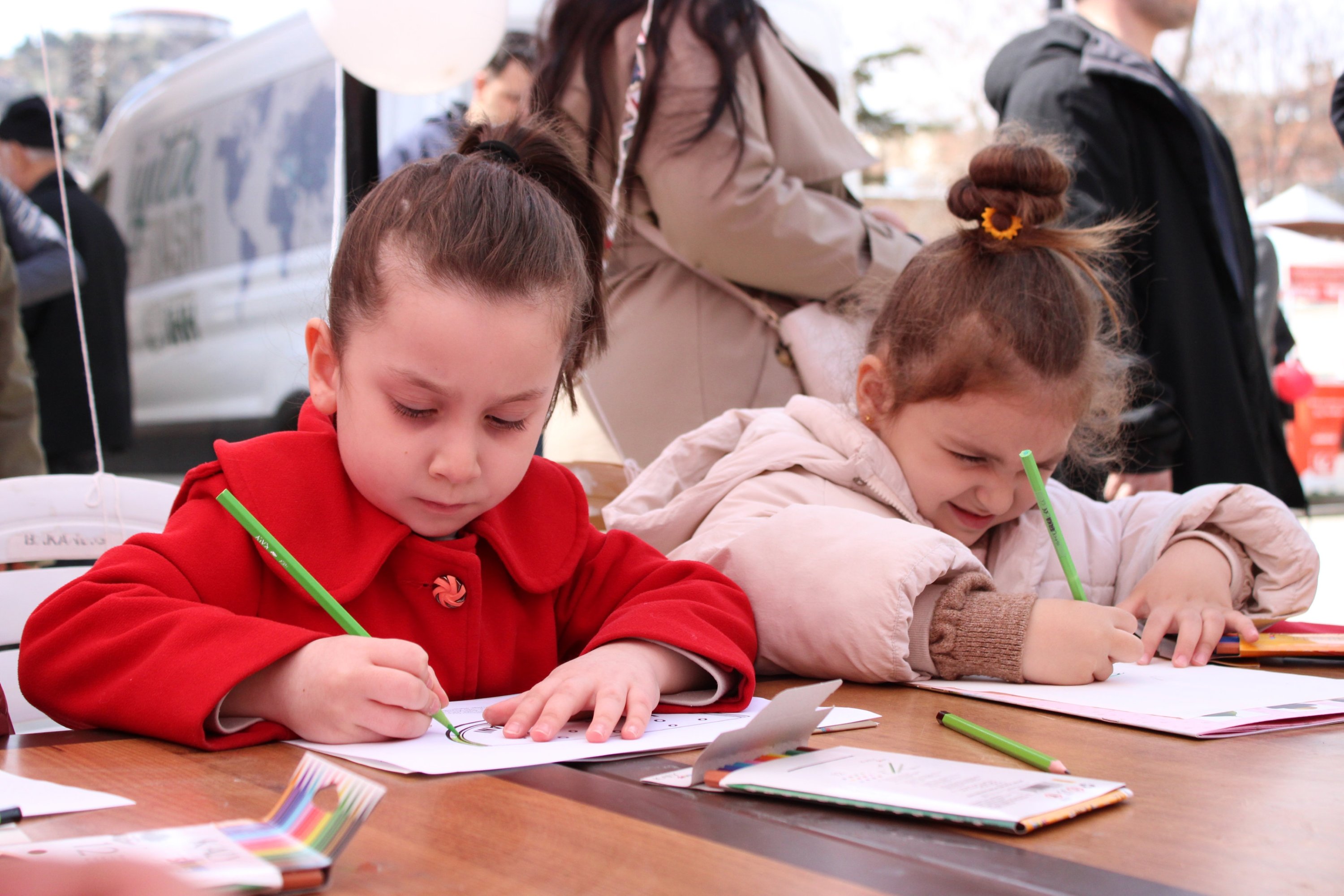
Türkiye’s child population continues to decline in share despite rising in absolute numbers, according to new data released by the Turkish Statistical Institute (TurkStat) in its “Statistics on Children 2025” bulletin.
The findings show that Türkiye had 21,375,930 children as of the end of 2025, accounting for 24.8% of the total population of 86,092,168. While the number of children remains significant in absolute terms, their proportion within the overall population continues a long-term downward trend.
According to TurkStat data, the child population share stood at 48.5% in 1970, falling to 41.8% in 1990, and dropping further to 24.8% in 2025. Population projections suggest this decline will continue steadily, reaching 22.1% in 2030 and falling to 14.5% by 2100.
Within the European Union, the average child population ratio was recorded at 17.6% in 2025. Türkiye’s rate remains higher than the EU average, with the country ranking above most member states in terms of child population share.
At the provincial level, significant regional disparities remain evident in child population distribution across Türkiye. Provinces in southeastern Türkiye recorded the highest child population ratios, with Şanlıurfa leading at 43.3%, followed by Şırnak at 39.2% and Mardin at 36.7%.
At the lower end of the distribution, the provinces with the smallest child population shares are concentrated in Türkiye’s northwestern and eastern regions, reflecting older age structures and lower fertility levels. Tunceli in eastern Türkiye recorded the lowest rate at 15.9%, followed by Edirne (16.9%) and Kırklareli (17.7%) in northwestern Türkiye’s Thrace region.
Household data shows that 41.9% of households in Türkiye include at least one child aged 0-17. This figure rises to 68.2% in Şanlıurfa, highlighting strong regional concentration of younger populations.
The internal structure of the child population is also shifting. In 2025, children aged 10-14 formed the largest group at 30.5%, followed by ages 5-9 at 28.8%, ages 15-17 at 18%, and ages 0-4 at 22.7%. Compared to 2020, the share of the youngest age group has declined, reflecting reduced birth rates.
In 2024, Türkiye recorded 937,559 live births. Of these, 96.7% were single births, while multiple births accounted for a small fraction. The data points to a gradual slowdown in fertility levels, aligning with broader demographic transition trends.
Education indicators show relatively high participation rates. The net enrollment rate for 5-year-olds reached 82.5% in the 2024–25 academic year. Primary school enrollment stood at 95.4%, while secondary education reached 89.1%.
Completion rates also remain strong, with 98.6% in primary education and 81.3% in upper secondary education. However, TurkStat data shows that 36.8% of children are at risk of poverty or social exclusion, significantly above the national average of 27.9%.
Life expectancy continues to rise, with children born today expected to live an average of 78.1 years. Female life expectancy remains higher than males by over five years.
Child welfare indicators present a mixed picture. In 2024, 96,083 children received special needs reports for the first time, while institutional care and foster family systems continue to support over 25,000 children combined.
Meanwhile, custody data shows that 74.6% of children affected by divorce were placed under maternal custody.
Experts note that Türkiye is undergoing a structural demographic transformation, with a steadily aging population and shrinking child share. TurkStat projections indicate that by the end of the century, children will make up less than 15% of the population.
While Türkiye still maintains a higher child population ratio compared to the EU average, the downward trajectory signals long-term implications for education systems, labor markets, and social policy frameworks.