Daily Sabah logo

Politics
Diplomacy Legislation War On Terror EU Affairs Elections News Analysis
TÜRKİYE
Istanbul Education Investigations Minorities Expat Corner Diaspora
World
Mid-East Europe Americas Asia Pacific Africa Syrian Crisis Islamophobia
Business
Automotive Economy Energy Finance Tourism Tech Defense Transportation News Analysis
Lifestyle
Health Environment Travel Food Fashion Science Religion History Feature Expat Corner
Arts
Cinema Music Events Portrait Reviews Performing Arts
Sports
Football Basketball Motorsports Tennis
Opinion
Columns Op-Ed Reader's Corner Editorial
PHOTO GALLERY
JOBS ABOUT US RSS PRIVACY CONTACT US
© Turkuvaz Haberleşme ve Yayıncılık 2025

Daily Sabah - Latest & Breaking News from Turkey | Istanbul

  • Politics
    • Diplomacy
    • Legislation
    • War On Terror
    • EU Affairs
    • Elections
    • News Analysis
  • TÜRKİYE
    • Istanbul
    • Education
    • Investigations
    • Minorities
    • Expat Corner
    • Diaspora
  • World
    • Mid-East
    • Europe
    • Americas
    • Asia Pacific
    • Africa
    • Syrian Crisis
    • Islamophobia
  • Business
    • Automotive
    • Economy
    • Energy
    • Finance
    • Tourism
    • Tech
    • Defense
    • Transportation
    • News Analysis
  • Lifestyle
    • Health
    • Environment
    • Travel
    • Food
    • Fashion
    • Science
    • Religion
    • History
    • Feature
    • Expat Corner
  • Arts
    • Cinema
    • Music
    • Events
    • Portrait
    • Reviews
    • Performing Arts
  • Sports
    • Football
    • Basketball
    • Motorsports
    • Tennis
  • Gallery
  • Opinion
    • Columns
    • Op-Ed
    • Reader's Corner
    • Editorial
  • TV
  • TÜRKİYE
  • Istanbul
  • Education
  • Investigations
  • Minorities
  • Expat Corner
  • Diaspora

Climatic shift cancels migration habits of storks in Türkiye

by Daily Sabah with AA

ISTANBUL Mar 24, 2024 - 3:27 pm GMT+3
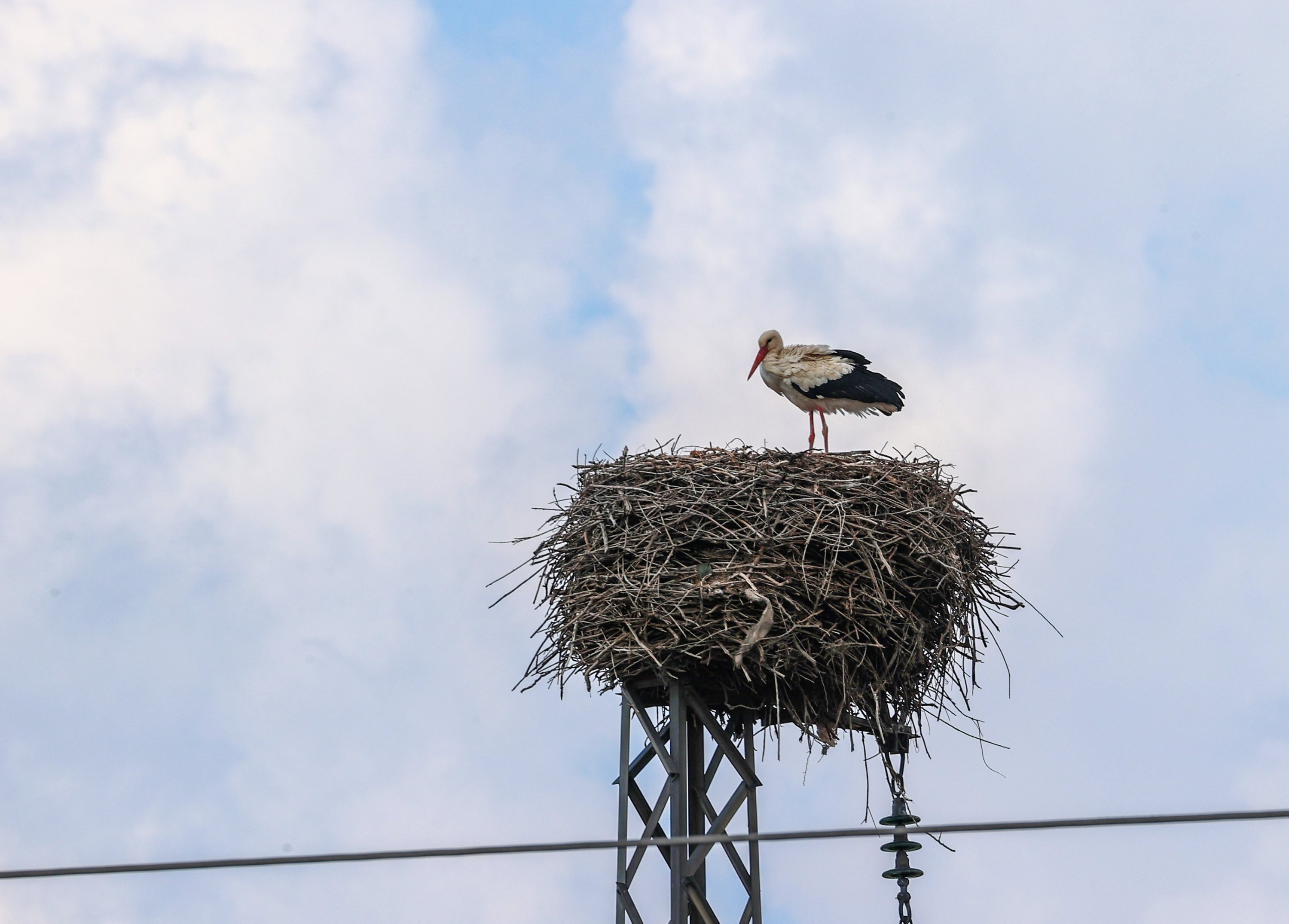
A stork stands in a nest in Tigris Valley, Diyarbakır, southeastern Türkiye, March 22, 2024. (AA Photo)
by Daily Sabah with AA Mar 24, 2024 3:27 pm

Observations on migratory birds in Tigris Valley in Türkiye's southeastern Diyarbakır have shown that global warming has altered the millennia-old seasonal habits of storks.

Anatolian lands, located on the migration route to Africa, Europe and Asia for many bird species, have been the permanent habitat of storks due to the increase in winter temperatures associated with climate change and global warming, according to a recent report by Anadolu Agency (AA).

Storks are one of the many species of birds that migrate through Africa, Asia and Anatolia each year, stopping to rest or breed in Tigris Valley.

In recent periods, the valley has hosted large stork colonies for longer periods, while an increase in the number of chicks in stork nests was also observed.

Dicle University biology professor Ahmet Kılıç, who has been studying the species in the Tigris Valley for over 20 years, told AA that storks, considered "summer migrants" in Anatolia, migrate toward the Nile Valley in autumn.

Reiterating that they have been monitoring migratory birds since 2002, he said, "Storks have gradually stopped migrating."

"At the start, it was only a few. Later, it spread, and it was observed in December 2023 that over 100 are staying in this region."

"This staying can be called adaptation because the cold weather that used to cause storks to migrate is no longer an issue," he said.

"They can find food in this region even in winter, so the stork does not migrate. It was determined that more than 100 storks live here this way," he said.

Stating that the habits encoded in the genetic structure of migratory birds have now changed, Kılıç mentioned that storks used to traverse a distance of some 5,000 kilometers (over 3,000 miles).

Kılıç, expressing that the migration journey is quite arduous, said that storks no longer endure this hardship.

"There has been a change in their instincts. Storks are now staying in our region and are considered a native species. Therefore, the instinctive behavior of migration will change," he noted.

"Their feeding habits will change as they settle for what they find here. The nesting period will change. These changes will also affect the choice of nesting sites and the beginning of incubation," the professor concluded.


  • shortlink copied
  • Last Update: Mar 24, 2024 4:33 pm
    KEYWORDS
    migratory birds türkiye tigris valley storks
    The Daily Sabah Newsletter
    Keep up to date with what’s happening in Turkey, it’s region and the world.
    You can unsubscribe at any time. By signing up you are agreeing to our Terms of Use and Privacy Policy. This site is protected by reCAPTCHA and the Google Privacy Policy and Terms of Service apply.
    No Image
    Top 2022 photos from across world
    PHOTOGALLERY
    • POLITICS
    • Diplomacy
    • Legislation
    • War On Terror
    • EU Affairs
    • News Analysis
    • TÜRKİYE
    • Istanbul
    • Education
    • Investigations
    • Minorities
    • Diaspora
    • World
    • Mid-East
    • Europe
    • Americas
    • Asia Pacific
    • Africa
    • Syrian Crisis
    • İslamophobia
    • Business
    • Automotive
    • Economy
    • Energy
    • Finance
    • Tourism
    • Tech
    • Defense
    • Transportation
    • News Analysis
    • Lifestyle
    • Health
    • Environment
    • Travel
    • Food
    • Fashion
    • Science
    • Religion
    • History
    • Feature
    • Expat Corner
    • Arts
    • Cinema
    • Music
    • Events
    • Portrait
    • Performing Arts
    • Reviews
    • Sports
    • Football
    • Basketball
    • Motorsports
    • Tennis
    • Opinion
    • Columns
    • Op-Ed
    • Reader's Corner
    • Editorial
    • Photo gallery
    • DS TV
    • Jobs
    • privacy
    • about us
    • contact us
    • RSS
    © Turkuvaz Haberleşme ve Yayıncılık 2021