The 31st United Nations Climate Change Conference (COP31) in Antalya turns its focus to energy and transport on Tuesday, with a packed program of discussions on electrification, renewable energy, energy security and low-carbon mobility.
The second day’s program features the Global Electrification Ministerial and Forum in the Blue Zone, alongside sessions on renewable energy investment, modernizing electricity grids, sustainable fuels and zero-emission transport.
The Green Zone, which is open to the public, hosts discussions on clean technology, energy storage, artificial intelligence and climate-resilient cities.
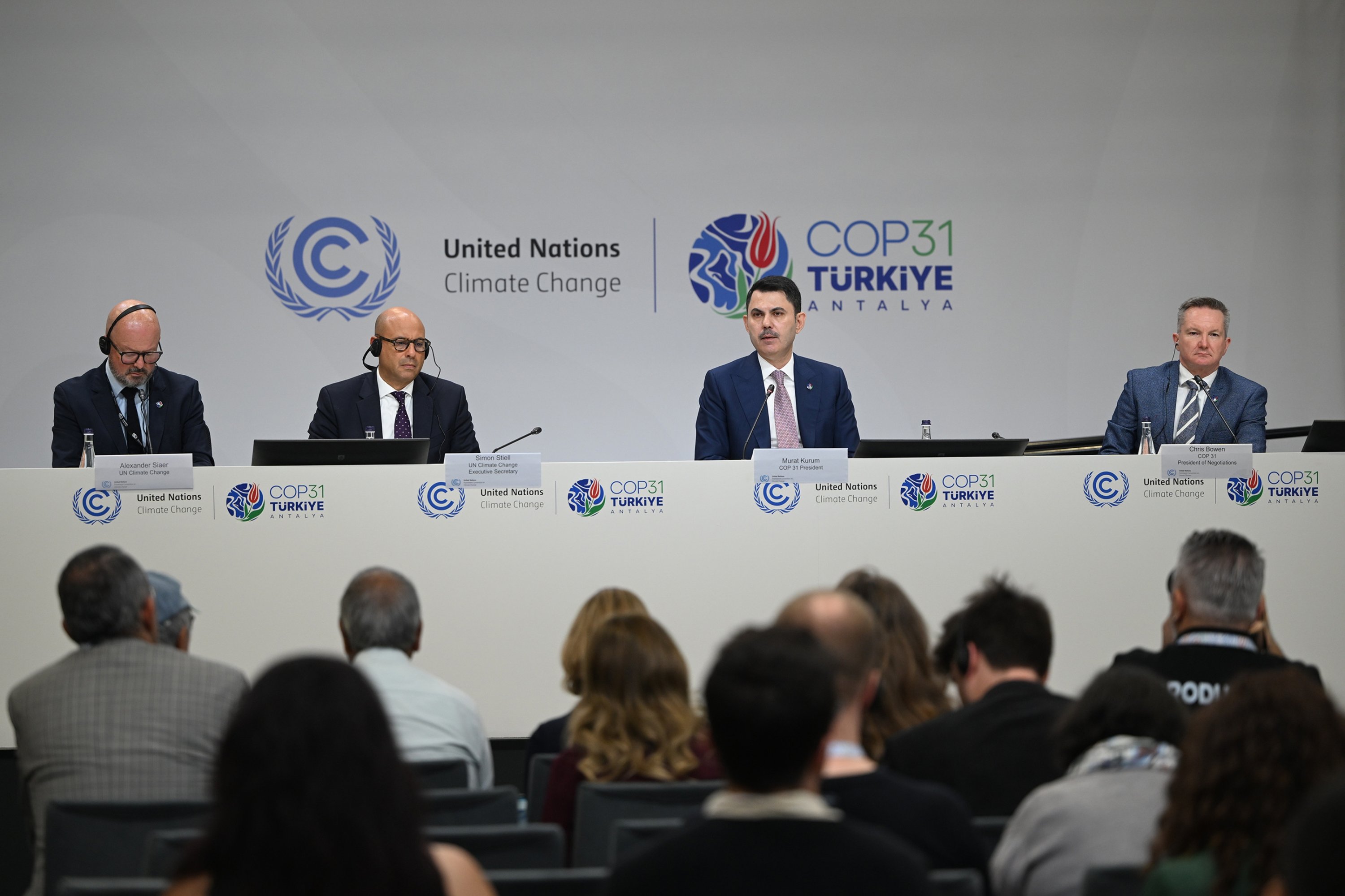
COP31 President-designate and Environment, Urbanization and Climate Change Minister Murat Kurum, COP31 negotiations president and Australian Climate Change and Energy Minister Chris Bowen, and U.N. Framework Convention on Climate Change (UNFCCC) Executive Secretary Simon Stiell addressed a joint press conference in the morning, stressing the need to accelerate climate action amid overlapping global crises.
Bowen praised Türkiye’s preparations and called for faster efforts to tackle climate change.
“Accelerating our work is important. We have only one way to combat the effects of climate change. Türkiye and Australia are working very intensively on this,” Bowen said.
He highlighted the growing challenges posed by natural disasters and the need to expand electrification, describing it as central to addressing the global energy crisis and strengthening energy security.
Stiell called for greater participation in climate action and more support for countries transitioning to clean energy. He said existing technologies could make 30% of energy demand cleaner, adding that these solutions needed to reach more people and countries faster.
He also highlighted a call by around 180 companies for $1.7 trillion in investment to improve electricity systems and pointed to the COP31 Action Agenda’s target of increasing electricity’s share of global final energy consumption to 35% by 2035.
“Friends, there is no quick fix for climate change,” Stiell said, stressing that faster implementation was essential to accelerating progress.
Asked about the U.S.’ absence from COP31, Stiell said subnational governments and nonstate actors in the country continued to show significant engagement in climate action despite decisions at the federal level.
Earlier, former COP presidents issued a joint declaration expressing support for Kurum and calling for continuity between climate conferences and stronger implementation of the Paris Agreement.
The declaration was presented by former COP leaders, including COP21 President Laurent Fabius, Bowen, COP26 President Alok Sharma, COP24 President Michal Kurtyka and COP30 President Andre Aranha Correa do Lago.
Fabius said progress had been made in tackling climate change but remained insufficient. He identified electrification, methane reduction, oceans, climate finance and multilateral cooperation as priorities for COP31, stressing that implementation should be at the center of the conference.
Bowen also underscored the urgency of expanding electrification, saying it could help countries respond to overlapping crises while advancing the 1.5-degree Celsius goal and improving energy security.
Blue Zone focuses on electrification, power grids and clean transport
A key event on Tuesday is the Global Electrification Ministerial and Forum, organized under the COP31 Presidency’s Action Agenda in cooperation with the International Renewable Energy Agency (IRENA) and the International Energy Agency (IEA).
The forum puts electrification at the center of discussions on the energy transition, as countries seek to expand electricity use, improve energy security and accelerate the shift toward cleaner energy systems.
Other Blue Zone sessions examine renewable energy investment, modernizing electricity grids, green energy corridors and offshore wind power, alongside discussions on financing the clean energy transition.
Transport also features prominently, with events exploring the transition from electrification to mobility, sustainable marine fuels and the development of zero-emission transport systems. Further discussions address energy security, the transition away from fossil fuels and the role of international cooperation in turning climate commitments into concrete action.
The Green Zone’s public program complements the high-level discussions with sessions examining how clean energy and technology can be applied across transport, industry and cities.
Events cover sustainable mobility, renewable energy, clean technology and energy storage, as well as the role of artificial intelligence in strengthening electricity grids and improving their efficiency.
Other sessions focus on sustainable aviation fuels and aviation decarbonization, green industrial development and climate-resilient cities. The program also examines how circular economy practices, waste management and resource efficiency can support climate action, alongside discussions on how businesses can contribute to the energy transition.