Daily Sabah logo

Politics
Diplomacy Legislation War On Terror EU Affairs Elections News Analysis
TÜRKİYE
Istanbul Education Investigations Minorities Expat Corner Diaspora
World
Mid-East Europe Americas Asia Pacific Africa Syrian Crisis Islamophobia
Business
Automotive Economy Energy Finance Tourism Tech Defense Transportation News Analysis
Lifestyle
Health Environment Travel Food Fashion Science Religion History Feature Expat Corner
Arts
Cinema Music Events Portrait Reviews Performing Arts
Sports
Football Basketball Motorsports Tennis
Opinion
Columns Op-Ed Reader's Corner Editorial
PHOTO GALLERY
JOBS ABOUT US RSS PRIVACY CONTACT US
© Turkuvaz Haberleşme ve Yayıncılık 2025

Daily Sabah - Latest & Breaking News from Turkey | Istanbul

  • Politics
    • Diplomacy
    • Legislation
    • War On Terror
    • EU Affairs
    • Elections
    • News Analysis
  • TÜRKİYE
    • Istanbul
    • Education
    • Investigations
    • Minorities
    • Expat Corner
    • Diaspora
  • World
    • Mid-East
    • Europe
    • Americas
    • Asia Pacific
    • Africa
    • Syrian Crisis
    • Islamophobia
  • Business
    • Automotive
    • Economy
    • Energy
    • Finance
    • Tourism
    • Tech
    • Defense
    • Transportation
    • News Analysis
  • Lifestyle
    • Health
    • Environment
    • Travel
    • Food
    • Fashion
    • Science
    • Religion
    • History
    • Feature
    • Expat Corner
  • Arts
    • Cinema
    • Music
    • Events
    • Portrait
    • Reviews
    • Performing Arts
  • Sports
    • Football
    • Basketball
    • Motorsports
    • Tennis
  • Gallery
  • Opinion
    • Columns
    • Op-Ed
    • Reader's Corner
    • Editorial
  • TV
  • TÜRKİYE
  • Istanbul
  • Education
  • Investigations
  • Minorities
  • Expat Corner
  • Diaspora

Drought shrinks Türkiye's Lake Tuz, threatening birds, plant life

by Daily Sabah with AA

ISTANBUL Oct 03, 2025 - 2:14 pm GMT+3
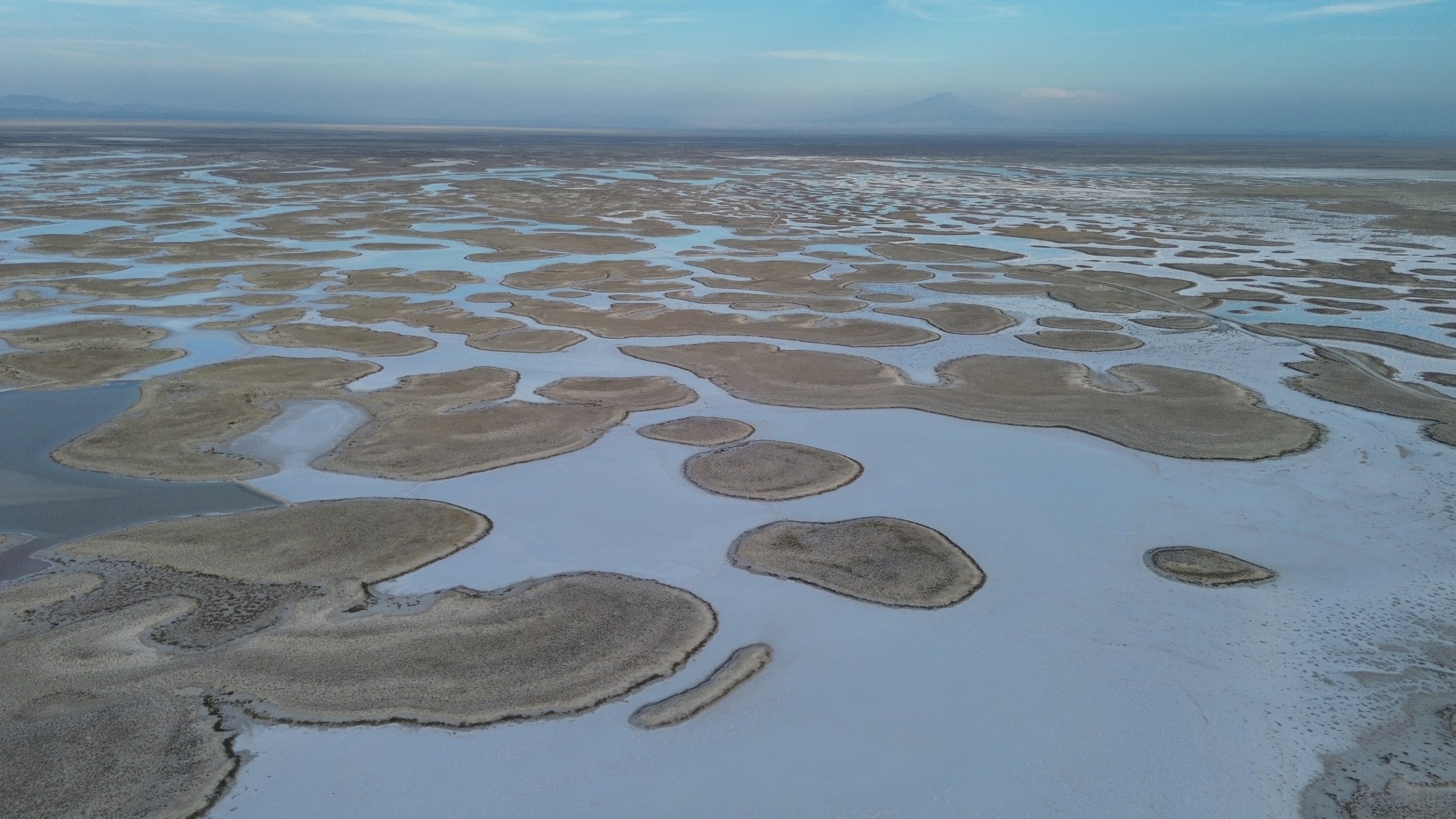
An aerial view of Lake Tuz at the intersection of Ankara, Konya, and Aksaray provinces in central Türkiye, Oct. 3, 2025. (AA Photo)
by Daily Sabah with AA Oct 03, 2025 2:14 pm

Drought at Lake Tuz, Türkiye’s second-largest lake, is severely affecting local wildlife and plant populations, experts say.

Located at the intersection of Ankara, Konya, and Aksaray provinces in central Anatolia, Lake Tuz is one of the country’s most important wetlands for biodiversity. Its basin hosts thousands of birds, including flamingos, and supports a variety of salt-loving endemic plants.

But the lake is shrinking amid rising global temperatures and low rainfall. Recent studies show only about 9,000 hectares of the lake remain covered with water.

Professor Melayib Bilgin, a faculty member in the Environmental Engineering Department at Aksaray University, told Anadolu Agency (AA) that the drought is hitting Türkiye with unprecedented intensity.

“Lake Tuz, located in the Konya Plain, is in one of the country’s driest regions,” Bilgin said. “The almost complete absence of rainfall since spring has reduced the lake from the size of 130,000 football fields to just 13,000.”

Bilgin said visitors to the lake can clearly see the scale of the drought. “Unfortunately, Lake Tuz continues to shrink. It is home to flamingos and many other birds. The number of flamingos and their movements also reflect the severity of the drought. This year, flamingos had to migrate earlier due to food shortages caused by the shrinking lake. Fewer chicks were born, and they left sooner.”

The lake also provides a habitat for numerous other animals and salt-tolerant endemic plants. “The drought caused by low rainfall is seriously threatening biodiversity,” Bilgin said.

He noted that the lake has shrunk so much that it is now possible to walk from Şereflikoçhisar in Ankara to Kulu in Konya and then to Eskil in Aksaray – a situation that poses a significant risk to both the lake and its inhabitants.

Bilgin urged stricter control over groundwater use for irrigation and cautioned against planting water-intensive crops. “Farmers’ contributions to our economy are undeniable, but if groundwater levels drop from 30 meters to 300 meters, this is an alarm bell. Sinkholes in Konya are also caused by uncontrolled groundwater extraction. We must protect our water and leave resources for future generations. Continued overuse will leave nothing for them.”


  • shortlink copied
  • Last Update: Oct 03, 2025 3:27 pm
    KEYWORDS
    lake tuz lakes in turkiye biodiversity
    The Daily Sabah Newsletter
    Keep up to date with what’s happening in Turkey, it’s region and the world.
    You can unsubscribe at any time. By signing up you are agreeing to our Terms of Use and Privacy Policy. This site is protected by reCAPTCHA and the Google Privacy Policy and Terms of Service apply.
    No Image
    Mountaineers from around world flock to Türkiye's Mt. Ağrı
    PHOTOGALLERY
    • POLITICS
    • Diplomacy
    • Legislation
    • War On Terror
    • EU Affairs
    • News Analysis
    • TÜRKİYE
    • Istanbul
    • Education
    • Investigations
    • Minorities
    • Diaspora
    • World
    • Mid-East
    • Europe
    • Americas
    • Asia Pacific
    • Africa
    • Syrian Crisis
    • İslamophobia
    • Business
    • Automotive
    • Economy
    • Energy
    • Finance
    • Tourism
    • Tech
    • Defense
    • Transportation
    • News Analysis
    • Lifestyle
    • Health
    • Environment
    • Travel
    • Food
    • Fashion
    • Science
    • Religion
    • History
    • Feature
    • Expat Corner
    • Arts
    • Cinema
    • Music
    • Events
    • Portrait
    • Performing Arts
    • Reviews
    • Sports
    • Football
    • Basketball
    • Motorsports
    • Tennis
    • Opinion
    • Columns
    • Op-Ed
    • Reader's Corner
    • Editorial
    • Photo gallery
    • DS TV
    • Jobs
    • privacy
    • about us
    • contact us
    • RSS
    © Turkuvaz Haberleşme ve Yayıncılık 2021