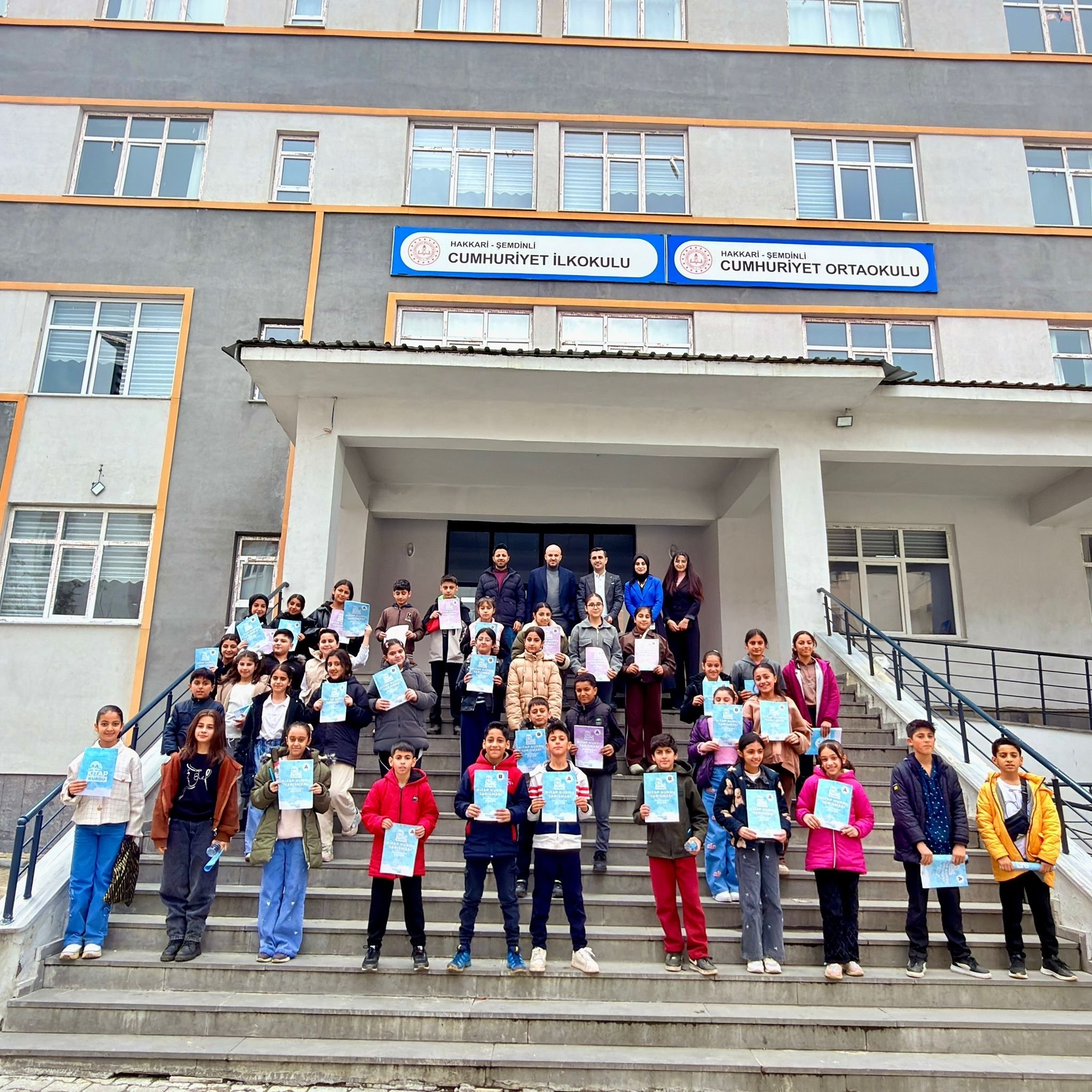
More than 358,000 middle school students across Türkiye took part Sunday in a nationwide reading competition organized by the Türkiye Gençlik Vakfı (TÜGVA), highlighting growing interest in books among young people despite concerns over declining reading habits in the digital age.
A total of 358,485 students from grades five through eight sat for the “Kitap Kurdu” (Bookworm) exam simultaneously at 1,459 schools spanning all 81 provinces and 660 districts, according to organizers. Participation rose nearly 40% compared to last year.
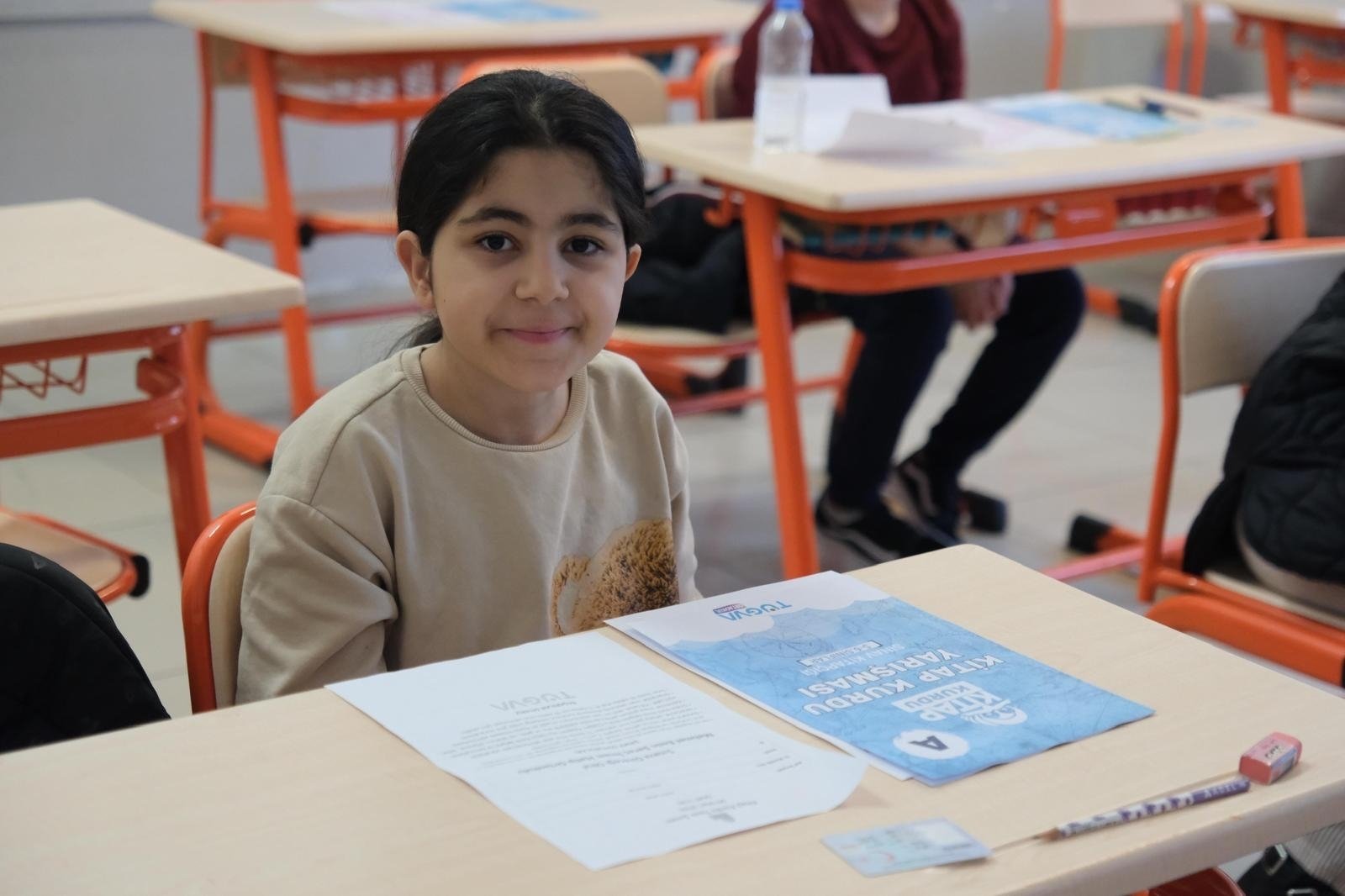
Students prepared for the competition over several months by reading selected novels by Turkish authors, with separate reading lists tailored for younger and older grade levels. The one-hour exam tested their comprehension of the assigned books.
Top-performing students will receive prizes aimed at both recognition and cultural enrichment. The first-place winner will be awarded an umrah pilgrimage with a family member, while the second-place student will receive a Balkans tour. A computer will be given to the third-place finisher, and additional cash prizes and gifts will be distributed to other top-ranking participants. Advisors of the top 10 students will also receive monetary awards.
İbrahim Beşinci, president of TÜGVA, visited a school in Istanbul during the exam and praised the strong turnout, calling it a source of pride. He said the competition’s primary goal extends beyond rewards, emphasizing the importance of cultivating a lasting reading habit among youth.
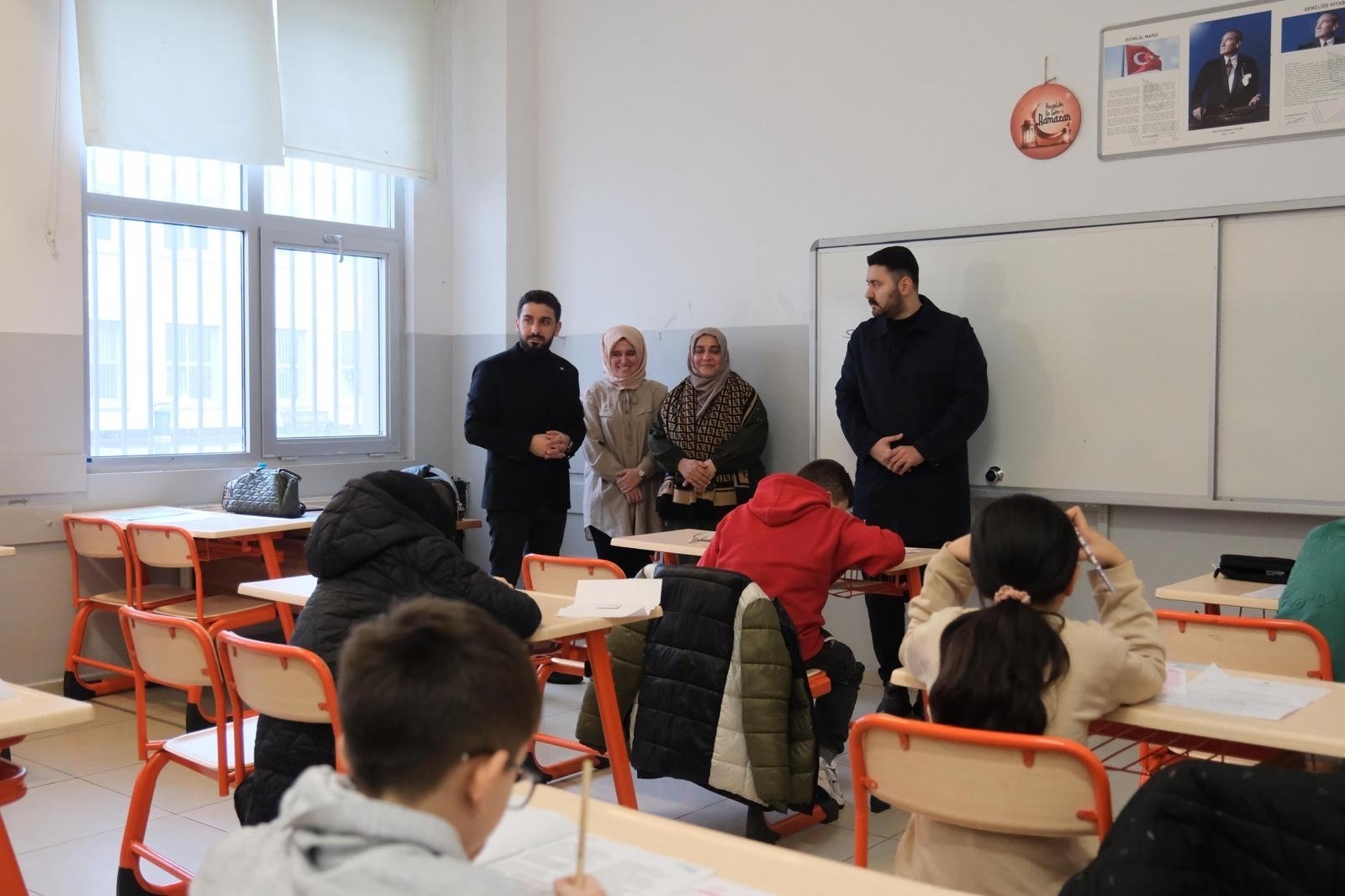
Organizers say the initiative aims to strengthen students’ intellectual development and cultural awareness at an early age, arguing that reading plays a key role in long-term academic and professional success.
Beşinci noted that while modern technology and social media promote rapid consumption of information, books offer a deeper and more enduring form of learning. Encouraging reading at the middle school level, he said, is critical to building lifelong habits.
The nationwide competition is part of broader efforts in Türkiye to promote literacy and educational engagement among younger generations, with organizers pointing to high participation as evidence that students remain eager to read when given the opportunity.