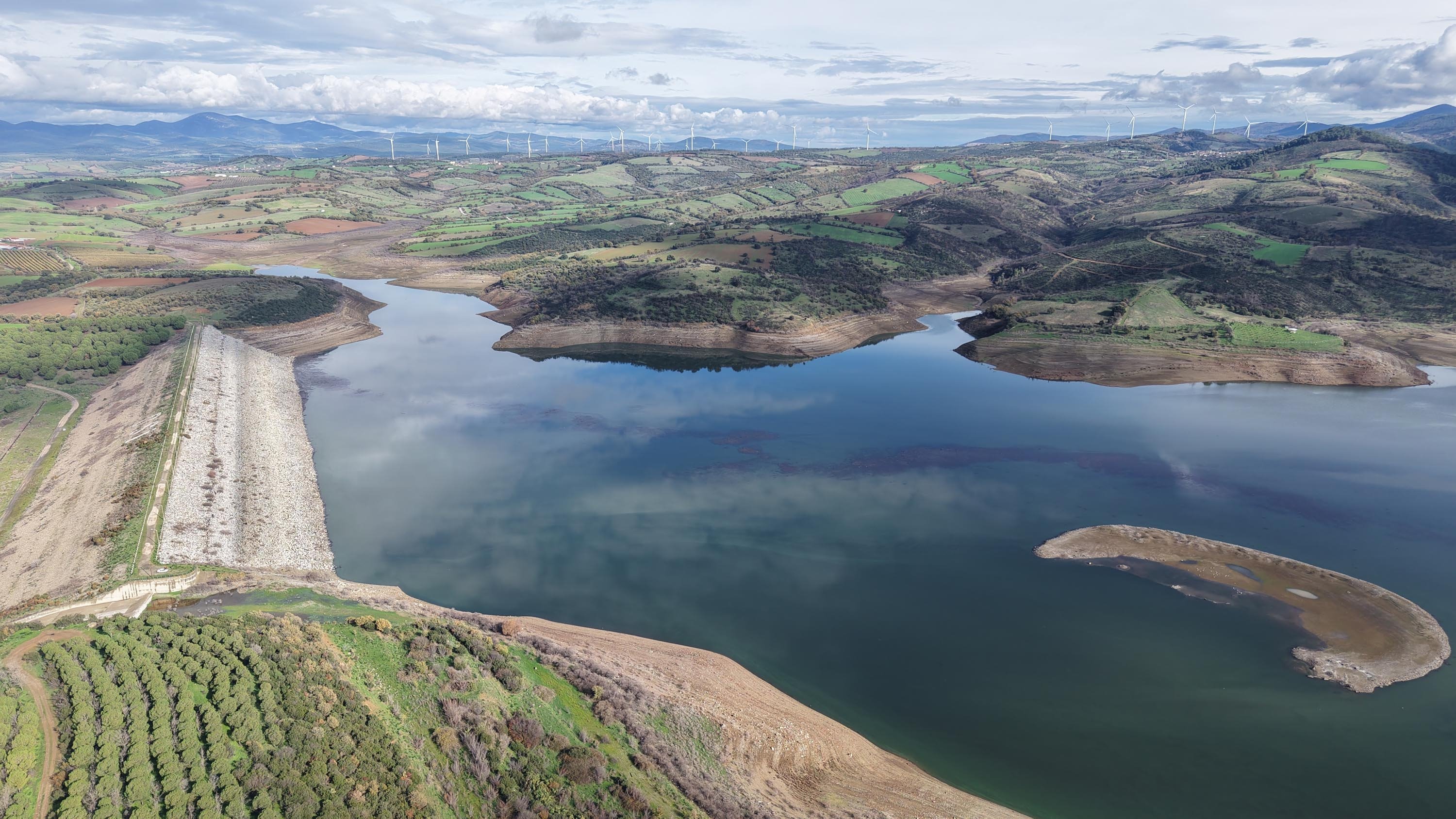
Water levels at two vital reservoirs supplying Çanakkale, northwestern Türkiye, have fallen dramatically amid persistent drought conditions, triggering serious concerns about the city’s ability to meet drinking, irrigation and general water needs in the coming months.
The Atikhisar Dam, which provides the primary source of drinking and utility water to Çanakkale, currently holds only 37% of its 54.1 million cubic meter (14.3 billion gallons) capacity. Even more alarming is the situation at Bayramiç Dam, which draws water from the Kaz Mountains, locally known as Mount Ida and famous in mythology as “Bin Pınarlı Ida” or “the mountain with a thousand springs.” Bayramiç Dam’s water level has plummeted to just 12% of its 96.5 million cubic meter capacity.
Professor Murat Türkeş, a board member of Boğaziçi University’s Climate Change and Policy Implementation and Research Center (iklimBU), highlighted the severity of the issue, emphasizing the continued impact of drought in the region.
“We face a significant problem with the ongoing effects of drought,” Türkeş said. “If sufficient precipitation is not received during winter, spring and the period between late spring and early summer, while evaporation continues due to high temperatures, Çanakkale may struggle to meet drinking water, other usage, and irrigation demands. Water interruptions and precautionary measures may become necessary.”
Türkeş explained that despite some rainfall in late September, October and sporadically through November, these amounts have been insufficient to replenish the reservoirs to safe levels.
“Atikhisar Dam’s 37% capacity is critically low. For residents to feel secure in their water supply, this level needs to reach around 70% by the start of summer. Otherwise, shortages are inevitable.”
The expert described Bayramiç Dam’s situation as even more critical, with the 12% water level classified as a “dead level,” a point at which water extraction for irrigation becomes impossible.
“If these levels persist, irrigation withdrawals from Bayramiç will cease. This underscores the urgent need for integrated, preventative management of forests, water resources, and groundwater systems,” he said.
Türkeş emphasized that the causes of this drought are multifaceted, stemming largely from rapidly changing climate conditions, including rising temperatures, increased evaporation, altered precipitation patterns and human activities such as deforestation, ecosystem degradation, erosion and over-extraction of groundwater.
Large-scale human infrastructure, such as mining, has also disrupted underground aquifers, further exacerbating water shortages.
He stressed the importance of adopting comprehensive water and drought management strategies that account for climate variability and incorporate scientific impact assessments following drought and wildfire events.
“Without these efforts, we risk recurring crises that will only worsen as climate change accelerates,” Türkeş warned.