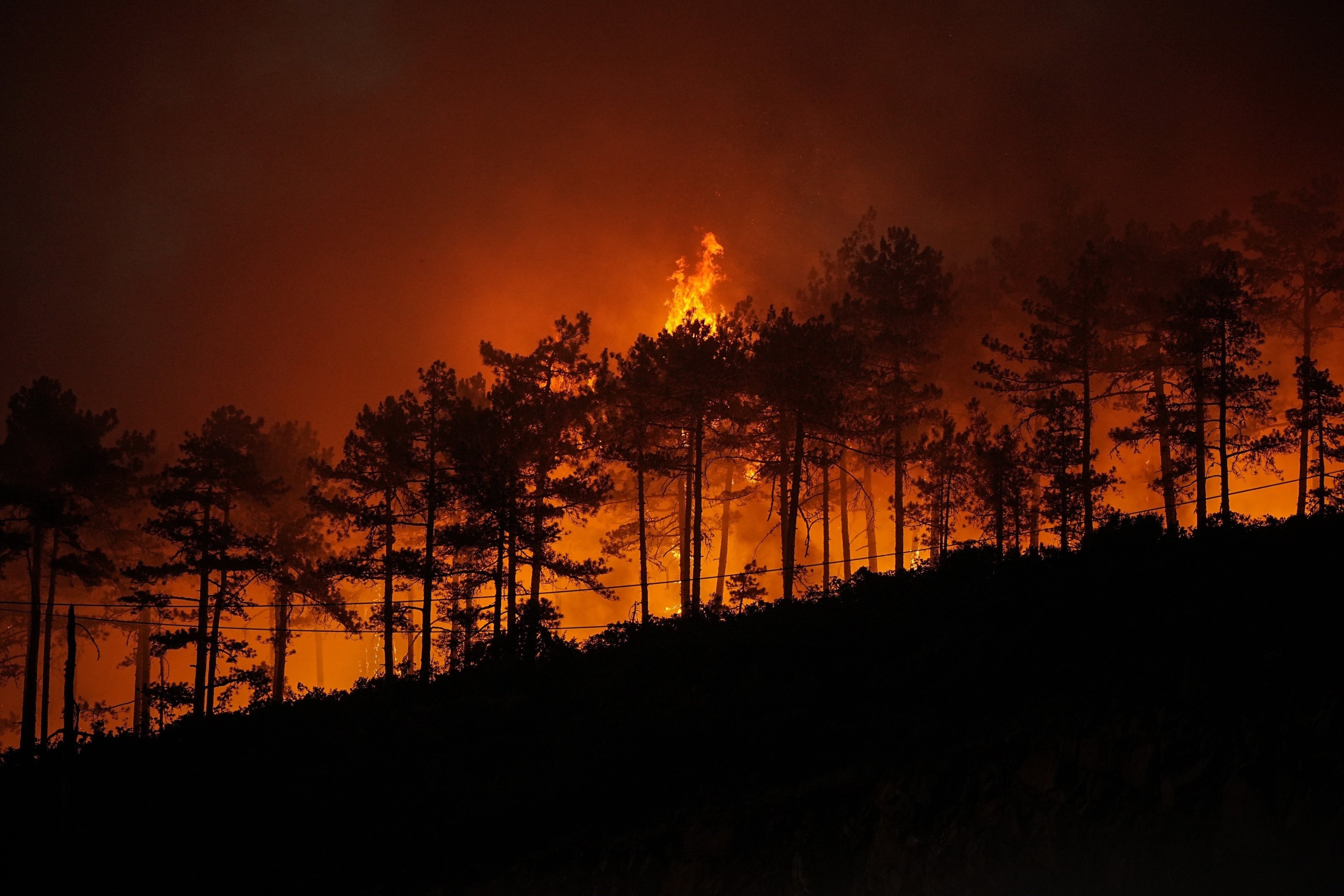
Türkiye recently battled intense wildfires in Bursa, Sakarya, Izmir and other provinces. Although the fires have been brought under control, experts warn that the damage to wildlife and ecosystems will have lasting effects.
Professor Sağdan Başkaya from Karadeniz Technical University’s Faculty of Forestry explains that the impact of forest fires on wildlife varies widely. It depends on the animal species, as well as the fire’s size, intensity and duration.
“Large, widespread, and intense fires seriously harm many wild animals, including those that can normally escape,” Başkaya said. “In contrast, smaller-scale or surface fires allow most large mammals and fast-moving creatures to survive.”
However, small ground-dwelling mammals, such as mice, often cannot escape if the fire penetrates deeply into the soil. Başkaya noted that temperatures exceeding 63 degrees Celsius (145 degrees Fahrenheit) can be fatal to these species.
“Wildlife’s response to fire differs depending on whether they are birds, mammals, fish or reptiles,” he said. “The fire’s size, severity and duration are critical factors. Plant species diversity in the habitat also plays a role.”
A massive fire can seriously damage almost all wildlife, even species capable of fleeing. Small fires, or “cover fires” as Başkaya calls them, allow larger mammals and fast animals to escape, but small mammals that depend on the ground cannot.
Snakes, which often live in rocky cracks, crevices or underground, can also be negatively affected by large fires and slow-moving animals, such as turtles.
Birds usually escape by flying, but if it is nesting season and their nests are in trees, the nests may be destroyed by fire, which causes harm to bird populations.
Birds of prey and insect-eating birds are affected differently by fires; some birds even come to the fire zone during a fire.
For example, birds of prey hunt fleeing animals and insectivorous birds (like swifts) feed on insects stirred up by the fire.
Meanwhile, many other animals panic and try to flee. Başkaya emphasizes the importance of having large, clear areas within forests.
“Instead of planting trees everywhere or fully foresting an area, there should be ‘forest interior clearings’ open spaces covered with meadow plants,” he said.
These clearings serve as natural firebreaks and also provide wildlife with safe areas to flee to. In Türkiye, red pine is the tree species most affected by fires; other species, such as black pine and Scots pine, grow at higher altitudes or in eastern regions.
Red pine is actually one of the most fire-resistant trees; its cones and seeds are highly durable.
Even without human intervention, burned areas often naturally reforest within a few years. “Today, we see many burned regions becoming forested again,” Başkaya said.