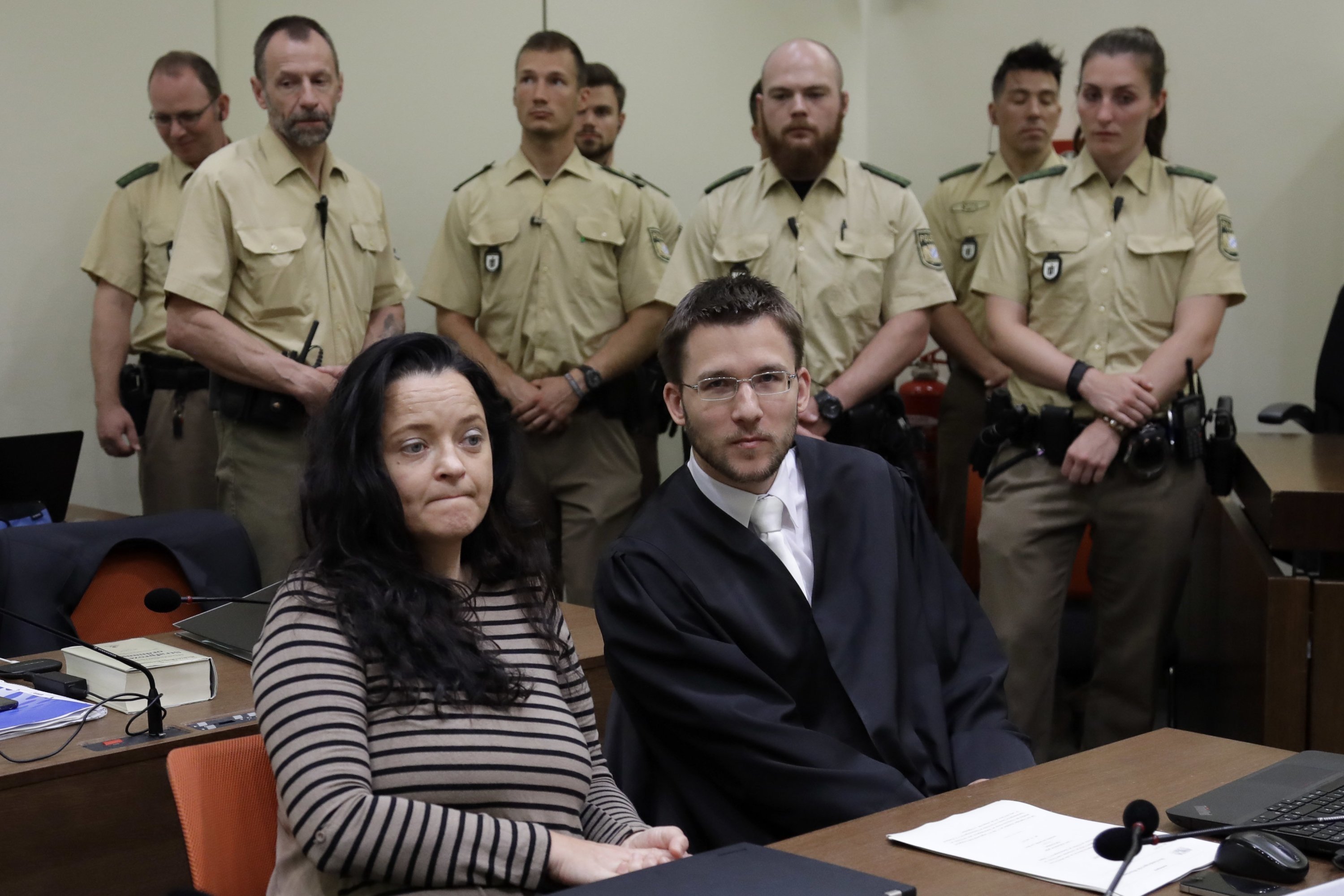
Beate Zschape, the only surviving member of a neo-Nazi terror cell that killed 10 people in Germany between 2000 and 2006, may be eligible for conditional release under what is known as the “right to hope,” a legal provision that allows for parole consideration after 15 years in prison.
Zschape, who was convicted in 2018 and sentenced to life in prison, was a leading figure in the National Socialist Underground, or NSU, which targeted immigrants – primarily Turkish business owners – as well as one Greek national and a German police officer. The group's racially motivated killings went unsolved for years and were initially misattributed to gang violence.
Her attorneys plan to apply for parole in 2026, the earliest possible date under the German legal framework. The court is expected to rule next year on the minimum time she must serve before parole can be considered.
The NSU’s reign of terror ended in 2011 after a failed bank robbery led to the discovery of the group. Two members, Uwe Mundlos and Uwe Böhnhardt, died by suicide. Zschape turned herself in shortly after and was tried alongside four alleged accomplices, who received prison terms ranging from 2.5 to 10 years.
Under Germany’s “Neo-Nazi Exit Program,” inmates may be considered for release if they show remorse, renounce extremist ideologies and demonstrate good behavior in prison. If these conditions are met, Zschape could be released as early as 2033 – or potentially by 2030, when time served before her sentencing is taken into account.
However, there are concerns about her rehabilitation. Media reports suggest she has maintained contact with far-right circles while in prison and has shown little indication of renouncing her radical beliefs.