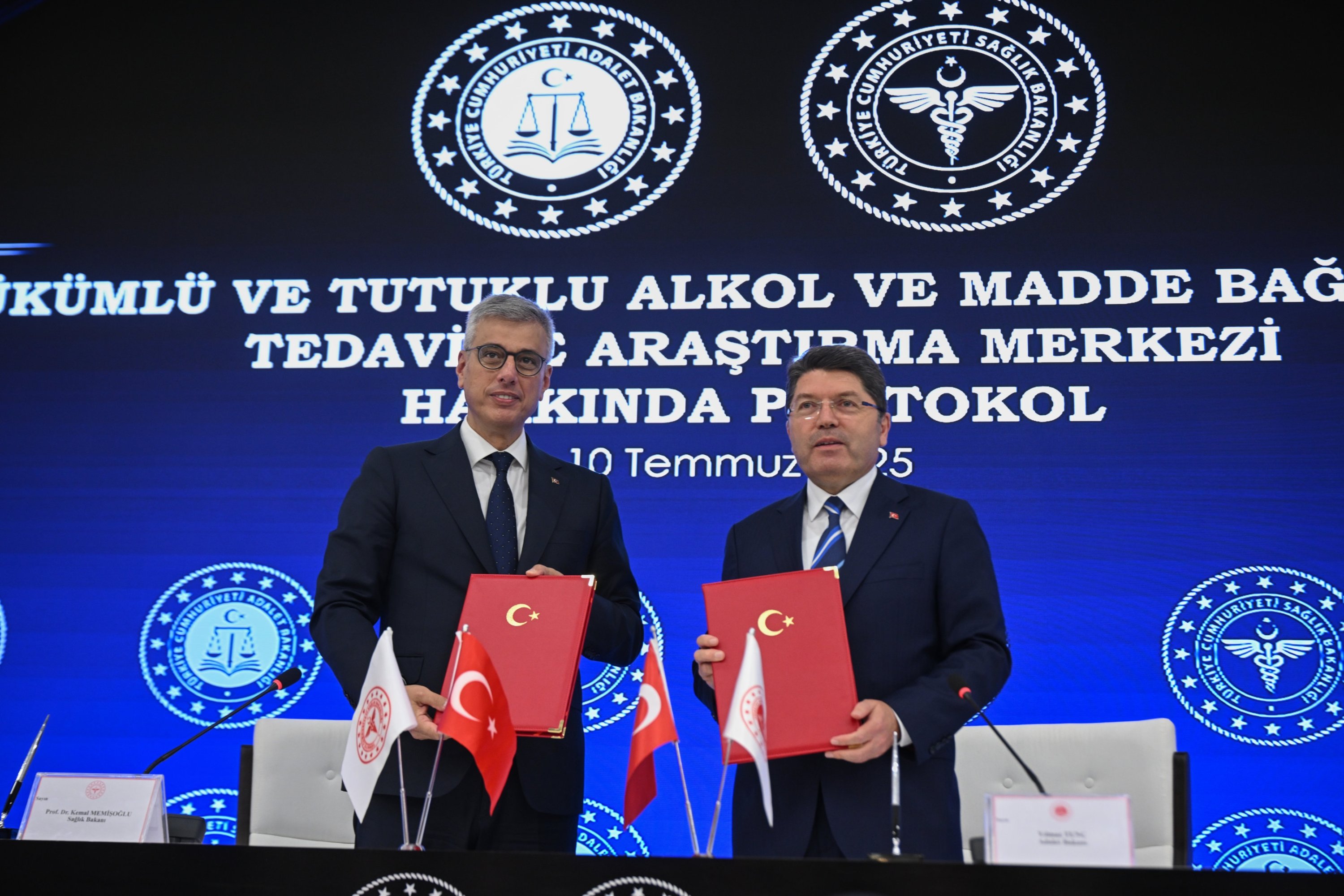
A 10-bed inpatient detox center for convicted individuals struggling with alcohol and substance addiction is being established within the Elazığ Fethi Sekin City Hospital, Health Minister Kemal Memişoğlu announced Thursday. Additionally, a dedicated rehabilitation facility focused on addiction is being launched inside the Bakırköy Women’s Prison in Istanbul.
The announcement came during the signing ceremony of the Cooperation Protocol on the Treatment and Research Center for Convicted and Detained Alcohol and Substance Addicts, signed between the Ministry of Health and the Ministry of Justice.
Speaking at the ceremony held at the Judges’ Lodge in Ankara, Memişoğlu described the protocol as a meaningful step that unites justice and health in the service of humanity.
Memişoğlu emphasized the importance of building a strong health infrastructure specifically for inmates, particularly those convicted due to drug-related offenses. He underscored the need for effective treatment and rehabilitation to prevent repeat offenses.
“With this protocol, we are adapting our robust health care infrastructure toward a model tailored specifically for penal institutions. This marks a concrete and lasting step to ensure inmates benefit from our inclusive health care system,” Memişoğlu said.
He noted that the centers would offer more than just medical treatment; they would provide multidimensional support to help individuals return to healthy lives and reintegrate into society. Türkiye currently offers addiction-related services through 115 Alcohol and Substance Addiction Treatment Centers (AMATEM), 20 Child and Adolescent Substance Abuse Treatment Centers (ÇEMATEM) and 188 Community Mental Health Centers, totaling 1,388 inpatient beds across the country.
Memişoğlu highlighted that treating addiction benefits not just the individual, but also their families and broader society, adding: “Every recovered person strengthens our social immunity. We must also fight the stigma surrounding addiction. Our aim is full integration of recovering individuals into society through both health and social support systems.”
He emphasized that this initiative is not just about health care delivery but also about rebuilding lives: “In 2024, we conducted 3,986,121 medical examinations in prisons and referred over 1.47 million individuals to hospitals for treatment.”
He noted that Türkiye currently has 1,612 prison beds for inpatient treatment, which will rise to 1,764 with ongoing investments. For inmates requiring psychiatric care, 219 beds are available in forensic psychiatric units (THAP). Additionally, specially designed mental health units operate with 227 beds across 10 prisons.
Memişoğlu also highlighted technological advancements in prison health care: “We launched a video consultation system in 51 prisons across 19 provinces, conducting 9,516 video appointments. This helps vulnerable groups access services more easily.”
He tied these efforts to the broader “Century of Türkiye” vision, which aims to build not only a technologically advanced but also a mentally and physically healthy society.
“Strong health policies that prioritize human well-being and adopt a comprehensive approach, especially in combating addiction, are key pillars of this vision,” he said, calling the new protocol a concrete reflection of this national strategy.
Memişoğlu emphasized that society must acknowledge addiction as a medically defined, treatable disease, “Combating addiction is not just a task for patients, it’s a responsibility we all share.”
Memişoğlu pointed out that over 3 million people worldwide die each year due to alcohol and drug use, and more than 8 million lose their lives annually due to tobacco addiction, highlighting the urgent need for action.
“Addiction is a serious threat that weakens all cells of society and breaks social bonds. It is not just a health issue but a national obligation to fight,” he said.
He concluded by noting that the ministry’s efforts extend beyond treatment, focusing on prevention and early intervention.
Memişoğlu added that Türkiye is also tackling modern forms of addiction, such as screen, technology and behavioral addictions, and that services like smoking cessation clinics, the ALO 171 helpline, and field projects with Green Crescent (Yeşilay) remain active and expanding.
He ended his remarks by thanking everyone involved in the protocol, including Minister of Justice Yılmaz Tunç. The event concluded with the formal signing of the cooperation agreement.