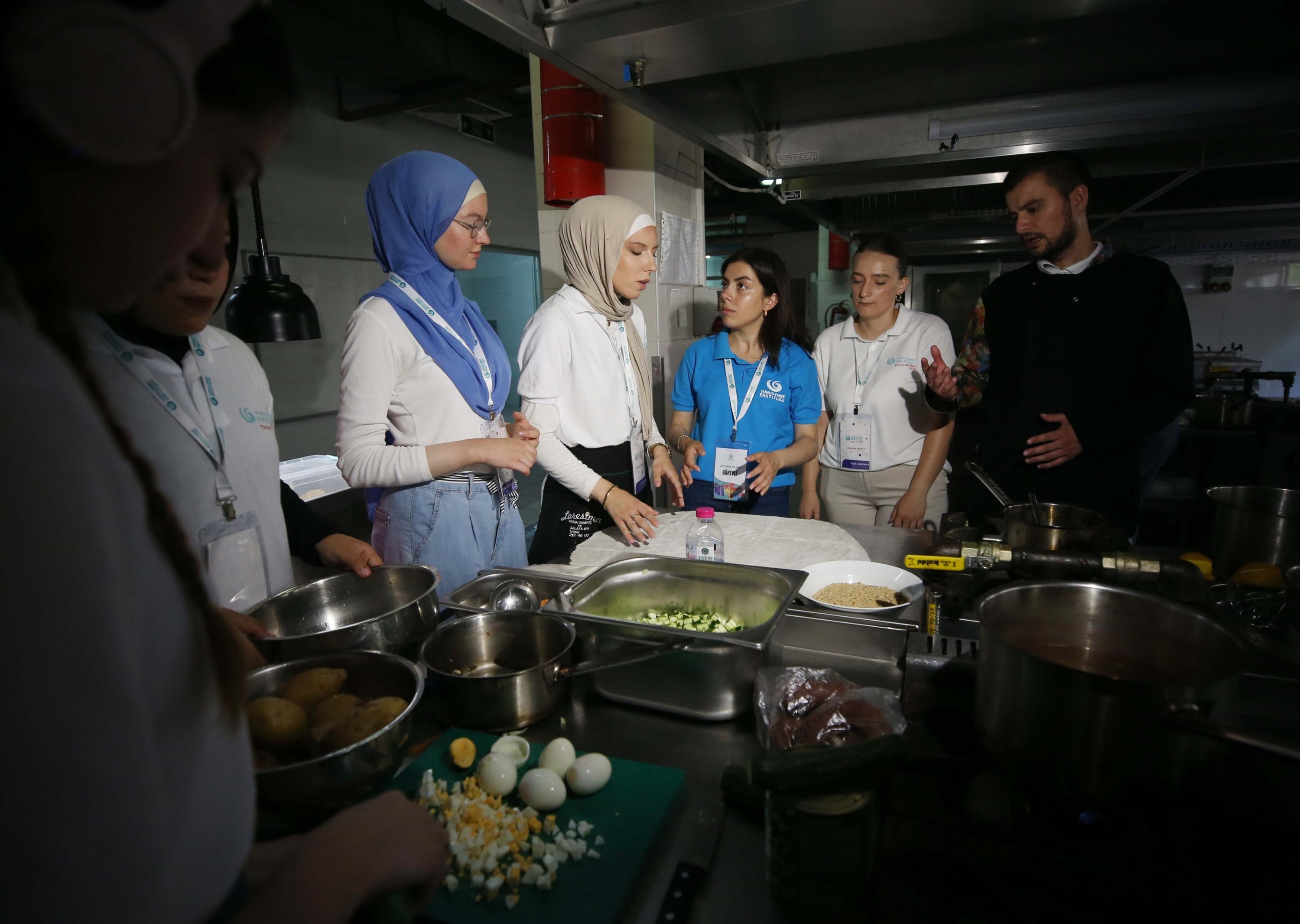
At a summer camp that has become much more than a language program, 19 international students from 10 countries gathered in Türkiye’s northwestern city of Çanakkale to learn Turkish, but also to share a piece of their own cultures, especially through the universal language of food.
Organized by the Yunus Emre Institute (YEE) and hosted by Çanakkale Onsekiz Mart University (ÇOMÜ), the "Turkish, Turkology and Thematic Summer Schools" brought together students from Egypt, Austria, Bosnia-Herzegovina, Morocco, Jordan, Iran, Kosovo, Lithuania, Russia and Tunisia. The group has spent several weeks not only in Turkish language classes but also exploring the city's heritage, engaging in traditional arts and exchanging their stories.
The highlight of the program was a gastronomic event where students introduced dishes from their home countries, and each meal ıs served as a cultural bridge. From Tunisia’s smoky grilled mechouia salad to Albania’s layered flija, Egypt’s creamy rice pudding to Iran’s hearty winter dessert kachi, every plate told a story.
“I made rice pudding the way we do in Egypt,” said Shams Mohamed, a student from Cairo. “It’s similar to the Turkish version, but we add a few different things. It was fun to see how close our cultures are, even in small details.”
The cooking session was led by research assistant Emre Mümin from ÇOMÜ’s Department of Gastronomy and Culinary Arts, where students rolled up their sleeves and recreated recipes from their own homes. The air was filled with the scent of roasted spices, fresh herbs and bubbling pots, a mix of Balkan, Middle Eastern and Mediterranean flavors under one roof.
But food was just one part of the experience; students also explored the city’s iconic sites, such as Kordon Promenade, Aynalı Bazaar, the replica Trojan Horse and the Gallipoli Peninsula. They visited the Çanakkale Martyrs’ Memorial, a deeply emotional stop for many.
“Some of the students were moved to tears,” said Canan Rabia Tarakçı, one of the program’s coordinators. “It was a powerful moment for them to witness a part of Türkiye’s history that resonates with universal themes of sacrifice and remembrance.”
Beyond sightseeing, participants tried their hand at ebru (paper marbling), created ceramic art, and even wrote Turkish recipes by hand. Each activity, from language lessons to bracelet-making workshops, was designed to immerse participants in Turkish culture while fostering friendships that spanned borders.
Melek Kalın Salı, director of ÇOMÜ’s Turkish Language Teaching Application and Research Center (TÖMER), said the program was about more than language learning. “We wanted to offer a complete cultural experience,” she explained. “These students are not just learning Turkish, they are living it.”
ÇOMÜ Rector Cüneyt Erenoğlu emphasized that the program also supports cultural diplomacy. “Our goal is to welcome these students as guests, and see them leave as friends of Türkiye,” he said. “They will carry a piece of Çanakkale back with them, not just souvenirs, but stories and memories. We hope they’ll return to their countries as informal ambassadors.”
For Haniye Hadavan from Iran, the experience was eye-opening.
“Çanakkale is full of history and beautiful nature. But what made it special were the people and the chance to connect with other students from around the world,” she said.
Yusuf Khaled from Egypt echoed that sentiment, “I’ll never forget this experience. The friends I made here, the teachers who guided us, it was all so meaningful. I’m excited to tell everyone back home about Çanakkale.”
As the camp drew to a close, the students took home much more than Turkish language skills; they left with new friendships, an appreciation of cultural diversity and a deeper understanding of what it means to come together across borders.