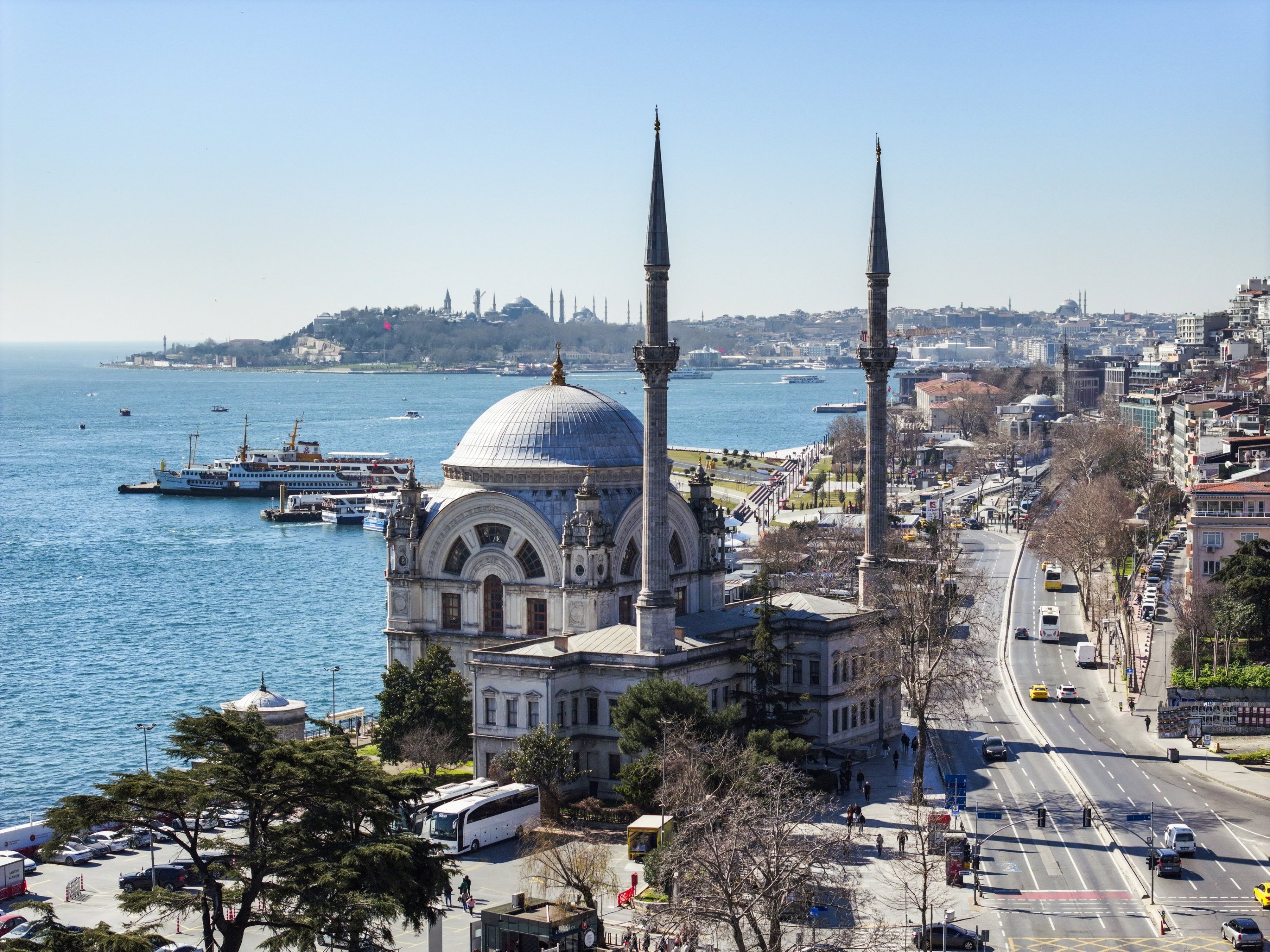
Dolmabahçe Mosque, located on the Bosporus waterfront in Istanbul’s Beşiktaş district adjacent to Dolmabahçe Palace, stands out for its pronounced Western influences in Ottoman architectural design.
The mosque, notable for its position near the famous strait, is especially known for its architectural and historical significance.
Construction began in 1853 under Bezmialem Valide Sultan, the mother of Sultan Abdülmecid, who played an active role in Ottoman social life as a philanthropist with numerous foundations. Following her death, the mosque was completed in 1855 by Sultan Abdülmecid.
Originally named “Bezmialem Valide Sultan Mosque,” the structure came to be commonly known as “Dolmabahçe Mosque” from its inception because it is located directly opposite the gate of Dolmabahçe Palace’s clock tower.
Architecturally, the mosque retains the classical plan scheme with minimal changes, with the main transformation observed in the exterior. Traditional Ottoman ornamentation gradually gave way to Western-inspired motifs and an eclectic decorative approach, making Dolmabahçe Mosque an important example reflecting this 19th-century architectural transition in Ottoman design.
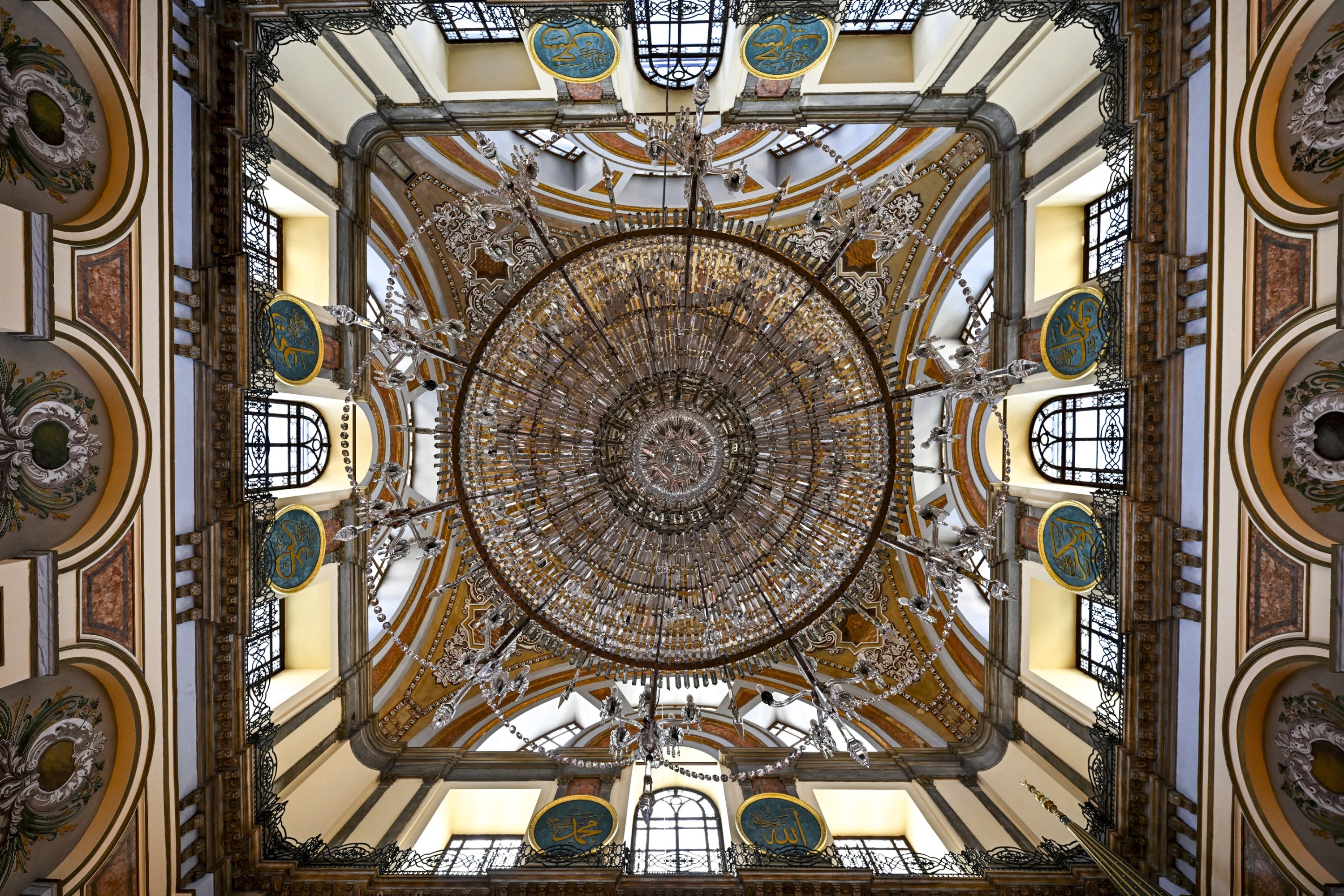
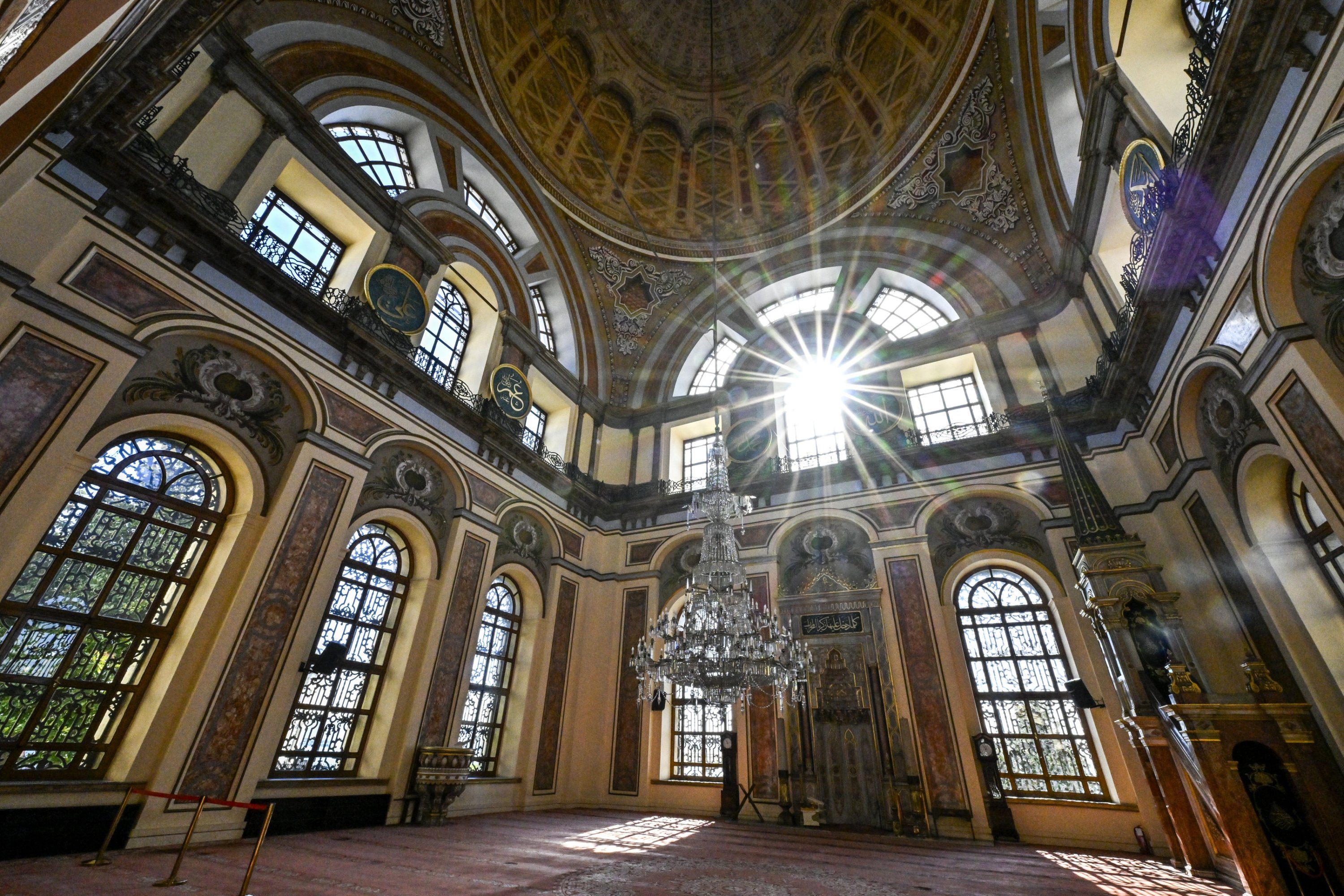
Due to its Bosporus-facing location, large windows and high dome, the mosque offers a bright interior atmosphere. Rich calligraphic decoration, marble work and expansive windows in the prayer hall reflect the architectural understanding of the period.
The mosque’s two minarets complement its silhouette with elegant proportions, while Western architectural influences are clearly visible in the entrance layout and façade decorations.
Flanking the mosque’s front façade, the Hünkar Pavilion gives the building a small palace appearance. Between 1948 and 1961, the mosque served as a naval museum along with the pavilion. After the museum moved to a new building, the mosque was reopened for worship. Its last restoration was carried out in 1966 by the General Directorate of Foundations.
Dolmabahçe Mosque is not only a place of worship but also a structure associated with ceremonial and official uses around the palace. Its spatial relationship with Dolmabahçe Palace positions the mosque among the most striking architectural landmarks along the Bosporus.
Today, the mosque is considered one of Istanbul’s key historical structures. It represents the late-period mosques where Western influences, Baroque, Rococo and imperial styles became evident in Ottoman architecture.
Professor Aziz Doğanay of Marmara University’s Faculty of Theology, Department of Turkish-Islamic Arts History, explained the mosque’s architectural structure, location, significance, interior decoration and calligraphy.
Noting that the mosque shares general characteristics with other Bosporus shoreline mosques, Doğanay highlighted that mosques such as Nusretiye Mosque, Büyük Mecidiye Mosque and Bezmialem Valide Mosque are generally built on four piers and designed with a pavilion in front of the dome.
Doğanay stated that unlike other large Ottoman mosques, Dolmabahçe Mosque does not have a courtyard with arcades. “When state administration moved from Topkapı Palace to Dolmabahçe Palace, there was a need to establish a mosque next to the palace so that the sultan could also attend Friday prayers. Although Bezmialem Valide Sultan Mosque originally had a courtyard, road works and the construction of a stadium removed parts of this space,” he said.
According to Doğanay, the mosque was built in the imperial style, influenced by Western art movements of the period under the so-called “New Classical” approach.
“However, Ottoman architecture rarely copied Western styles directly. Dolmabahçe Mosque combines Baroque, imperial and classical Ottoman elements, making it an eclectic structure with prominent Empire features. The architectural authorship is debated: often attributed to the Balyan family, but archival documents also mention Abdülhalim Efendi,” he added.
Doğanay emphasized that the mosque’s decorative and architectural style reflects Western influence, noting, “At that time, slim minarets were fashionable. Because Dolmabahçe Mosque’s minarets were somewhat thick, the sultan requested they be slimmed. The exterior was thinned using a special combing technique, but the minarets were later damaged in a storm and rebuilt."
"The mosque is built on four piers with arches topped by a dome, which allows for multiple large windows, creating a bright interior. Marble reliefs and painted decoration reflect a style between Baroque and imperial,” he said.
Doğanay also noted that the entrance and pavilion area resemble the imaret mosques of Bursa from the early Ottoman period. While early Ottoman structures were more spiritually oriented, this mosque emphasizes a political dimension.
He added that during the Republican period, the mosque was converted into a naval museum, displaying palace boats, and was used as an office connected to Yassıada after the May 27 coup. It was later restored to a place of worship.