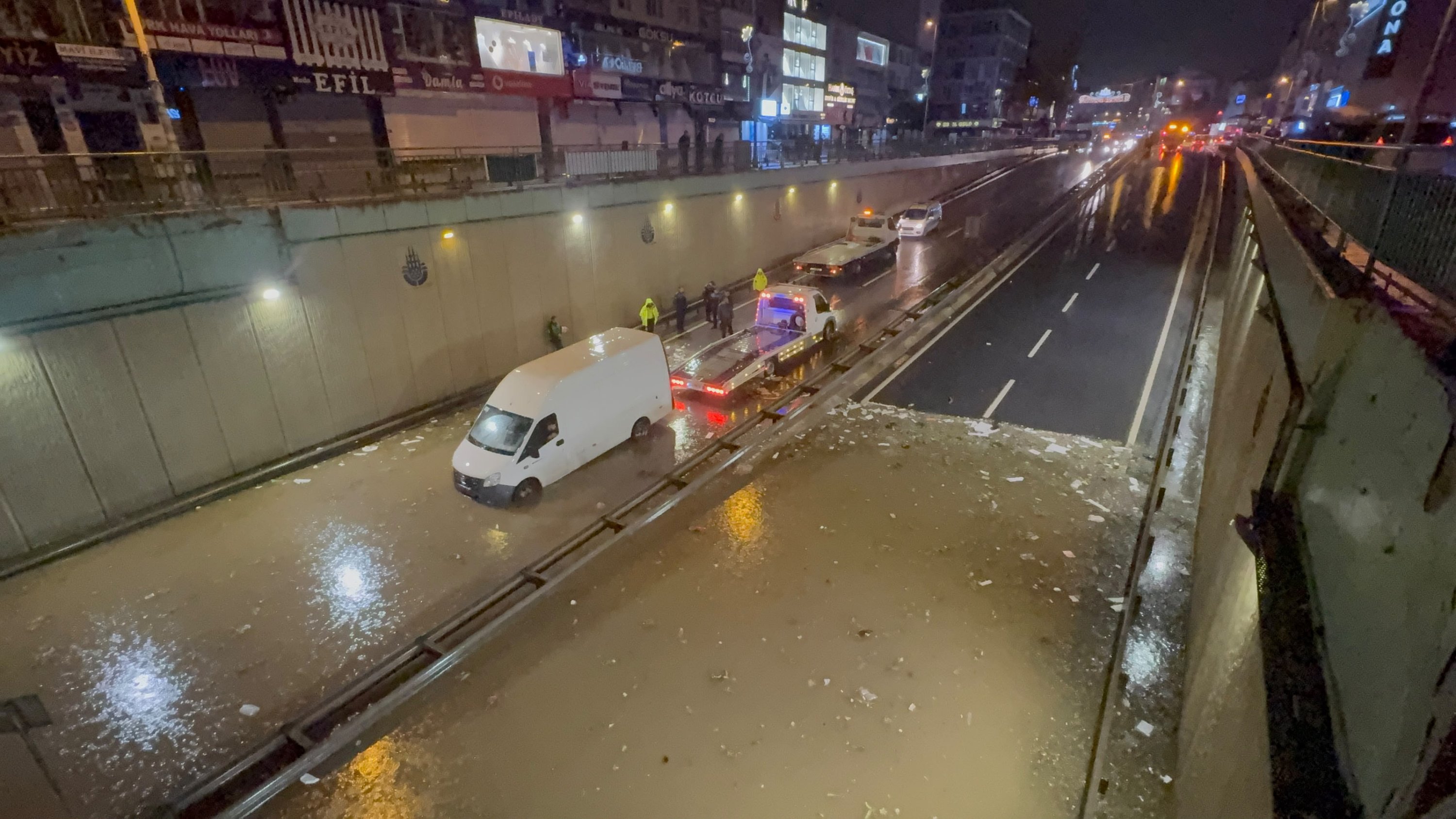
Istanbul's record rainfall reflects a combination of warm Black Sea waters, cold air from the Balkans and moisture-carrying winds, while inadequate infrastructure and construction in streambeds have amplified the damage, a meteorology expert said.
Professor Mikdat Kadıoğlu, a faculty member at Istanbul Technical University's Department of Climate Science and Meteorological Engineering, said the Black Sea's water temperature of around 19.5 to 20 degrees Celsius (67 to 68 degrees Fahrenheit), combined with cold air moving in from the Balkans and the northeasterly poyraz wind, contributed to the heavy downpour that hit Istanbul.
Kadıoğlu said Beykoz received 230.3 millimeters (9 inches) of rainfall in the 24 hours leading up to 11:03 p.m. on Oct. 14, nearly 3.5 times the city's average total rainfall for October of 66.3 millimeters.
He said the situation in Istanbul's northern districts demonstrated how intense rainfall over a short period could overwhelm local resources, adding that a single citywide yellow weather warning might not adequately communicate differences in the location and severity of risks.
Kadıoğlu cautioned against directly attributing the rainfall to climate change, saying a dedicated scientific attribution study would be needed to establish such a link.
"Climate change can increase the intensity of extreme weather events," he said, adding that El Nino could not be identified as the direct cause of the rainfall in Istanbul.
However, he argued that human activity had significantly increased the damage caused by the downpour.
"Climate change increases the danger to some extent, but we make disasters worse," Kadıoğlu said.
He explained that concrete and asphalt prevent rainwater from seeping into the soil, turning much of it into surface runoff that flows toward low-lying areas, streambeds, underpasses and basements.
Improper land use, construction along streambeds, inadequate infrastructure and delayed administrative decisions all contribute to the scale of flood damage, he said.
"Rain is a hazard. A disaster occurs when that hazard meets a city that is unprepared, built in the wrong places and improperly managed," Kadıoğlu said. "Rain is natural; disaster is man-made."
Kadıoğlu said Istanbul's largely combined stormwater and wastewater systems also posed risks during heavy rainfall, as sewage could back up and floodwater entering basements could create health hazards.
He called for covered streams that have been converted into roads, parking lots and residential areas to be reopened, while fill material narrowing streambeds should be removed.
He also recommended collecting rainwater from rooftops, designing parks and public squares to temporarily retain excess water and separating stormwater drainage from wastewater systems.
Flood hazard maps should guide urban development, with construction prohibited in high-risk areas unless risks are properly addressed, he said.
Kadıoğlu added that electrical panels and generators should be installed above flood levels, basement use should be restricted in high-risk areas, and barriers should be placed at parking garage entrances.
He also called for a dedicated flood-resilient building code, publicly accessible maps allowing residents to check flood risks by address, and early warning systems along streambanks.
Underpasses should be equipped with automatic barriers that close when water reaches 15 centimeters, he said, to prevent vehicles from entering dangerously flooded areas.