
Located in the Beylerbeyi district on the Asian shore of Istanbul, the Hamid-i Evvel Mosque is widely regarded as one of the most distinguished examples of 18th-century selatin mosques built in the waterside architectural typology, a style that integrates religious architecture directly with the shoreline of the Bosphorus.
The Hamid-i Evvel Mosque is examined as a representative structure reflecting the architectural transformation of the 18th century, a period when Western influences became increasingly visible in Ottoman design, particularly along the Üsküdar coast.
Commissioned by Sultan Abdulhamid I in memory of his mother, Rabia Sultan, the mosque, also commonly referred to as the Beylerbeyi Mosque, was designed by Mimar Tahir Ağa, one of the prominent architects of the late Ottoman period.
Construction began on April 3, 1777, and was completed on Aug.15, 1778. The mosque was officially opened for worship with the performance of the Friday prayer.
Architecturally, the Hamid-i Evvel Mosque is considered one of the pioneering works of late Ottoman architecture that visibly incorporates Baroque influences. These influences are evident in the mosque’s overall plan, massing, and decorative program.
The restrained use of pointed arches, access to the elevated main prayer hall via a multi-stepped staircase, and the symmetrical placement of two minarets emphasizing the Bosphorus-facing façade collectively illustrate the architectural preferences of the era.
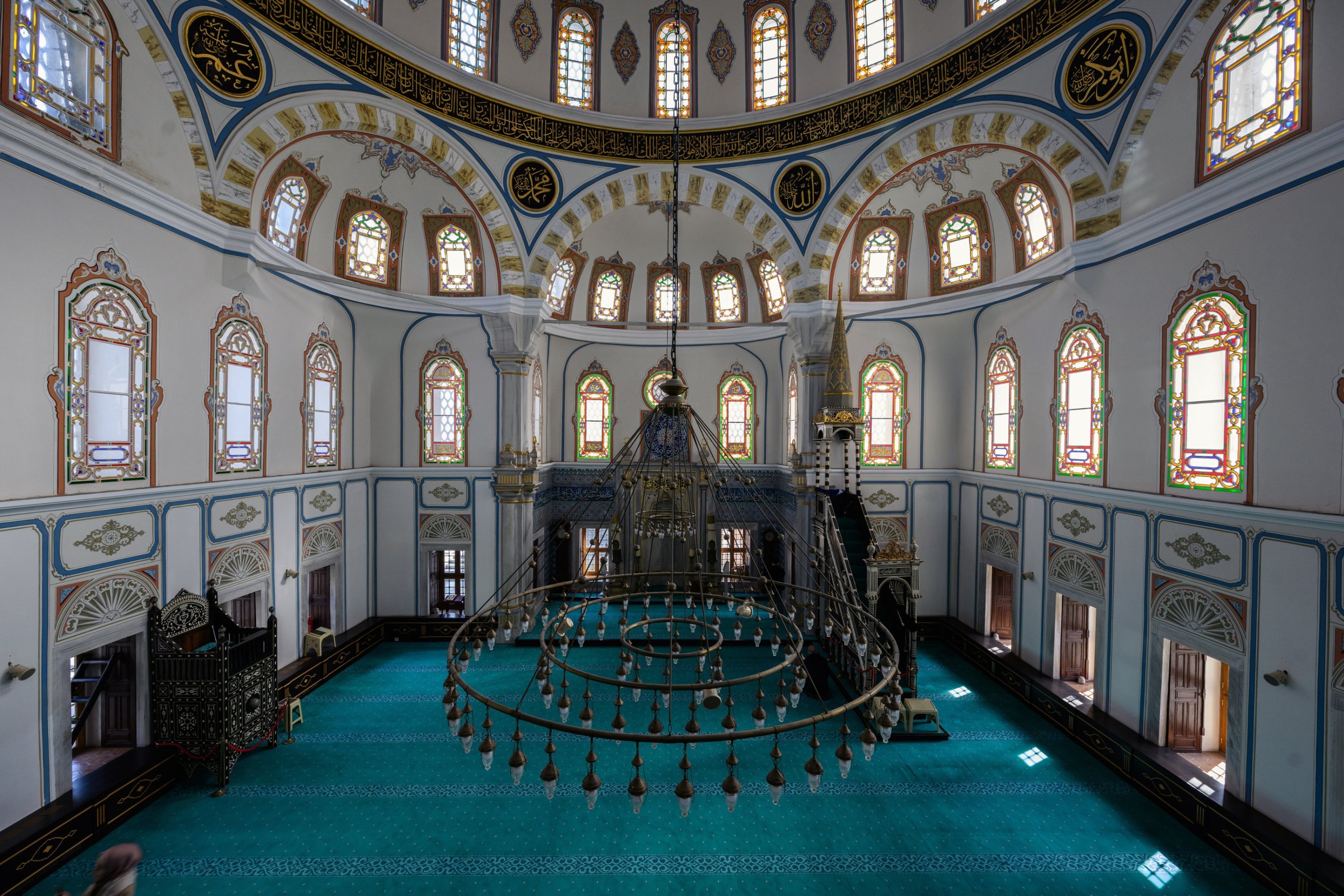
The mosque’s central dome, measuring 15 meters (49.2 feet) in diameter, defines the interior space. A carefully planned window arrangement allows abundant natural light to enter the prayer hall, while Baroque-style ornamental motifs dominate the interior decoration, contributing to a visually refined and spatially expansive atmosphere.
The mosque suffered significant damage on the night of March 13, 1983, following a fire that broke out in the adjacent waterfront mansion. The blaze completely destroyed the wooden dome and partially damaged other sections of the structure.
Restoration efforts were undertaken by the General Directorate of Foundations, and the mosque was reopened for worship on May 29, 1983, following comprehensive repairs.
Beyond the main prayer hall, the Hamid-i Evvel Mosque forms part of a larger architectural complex that includes a bathhouse, a timekeeping room, a primary school, and several fountains.
Together, these elements create a cohesive ensemble unified by architectural style and historical function. Its seamless integration with the shoreline has made the mosque one of the defining landmarks of Üsküdar, both in terms of architectural identity and collective memory.
Efdaluddin Kılıç, a lecturer in the Department of Turkish-Islamic Art History at Marmara University, emphasized that Beylerbeyi historically developed a distinctive cultural and social fabric shaped by prominent figures and imperial presence.
Kılıç noted that while Sultan Abdulhamid I originally commissioned the mosque for his mother, Rabia Sultan, it later underwent repairs and additions during the reign of Mahmud II. He stressed that the structure embodies key characteristics of late Ottoman architecture, particularly in its relationship with the waterfront.
According to Kılıç, the mosque’s proximity to the sea gives it a unique architectural energy. When viewed from the Bosphorus, the structure can resemble a piece of civilian waterfront architecture if the dome and minarets are visually set aside.
This dual character reflects the mosque’s function not only as a place of worship but also as a space used by the sultan and his entourage during imperial visits.
Kılıç explained that certain sections of the mosque were designed as integral interior spaces rather than external annexes. The imperial gallery was planned to allow the sultan to attend prayers together with his retinue.
On the upper level, a separate chamber accessed through a private entrance provided an exclusive space for the sultan and accompanying officials.
As a late-period work by Tahir Ağa, the mosque incorporates European influences, particularly in its decorative elements. Although the structure sustained serious damage during the 1980s fire, restoration efforts preserved much of the original ornamentation.
Notably, the calligraphic band written in taliq script by Yeserizade Mustafa Izzet, located behind the latticed section of the imperial gallery, was reconstructed using original calligraphic templates after parts of it were damaged.
Another defining feature of the Hamid-i Evvel Mosque is its bright and uninterrupted interior space beneath a single dome. The dome’s weight is distributed onto the surrounding walls and four massive piers, allowing worshippers to pray in a broad, column-free area.
At the front of the prayer hall, a recessed mihrab section features a tiled panel inscribed with Ayat al-Kursi, while a medallion above bears verses from Surah al-Ikhlas.
These classical elements coexist with decorative details influenced by Western artistic traditions. The extensive use of stained-glass windows creates multicolored light patterns, particularly visible on sunny days, enhancing the visual richness of the interior.
Kılıç also drew attention to the deliberate placement of Quranic inscriptions at the mosque’s entrances and exits. On the sea-facing door, worshippers encounter the verse instructing believers to turn their direction toward al-Masjid al-Haram, serving as a spiritual reminder as they step back into the worldly landscape of the Bosphorus. At the mihrab, a verse commonly associated with prayer niches reinforces the sense of orientation and direction.
Other exits convey similarly purposeful messages. The door opening toward the funeral courtyard bears a verse emphasizing continuous devotion until the end of life, reminding worshippers that religious responsibility extends beyond the mosque walls.
Inscriptions near the imperial gallery underline humility, reinforcing the notion that even the sultan is ultimately a servant before God.
The mosque once featured functional sundials on its sun-exposed façades, used to determine prayer times. Although these sundials are now largely inactive due to erosion and missing components, antique mechanical clocks remain inside the mosque, reflecting the importance placed on time consciousness in imperial religious architecture.
Kılıç noted that such features align with Islamic principles emphasizing discipline, direction, and the effective use of time in daily life. He also highlighted the exceptional craftsmanship found in elements such as the pulpit and minbar, where materials including bone, ebony, and ivory were employed with meticulous skill.
Finally, Kılıç pointed to a rare surviving example of Ottoman urban heritage near the roadside entrance, a two-step mounting stone once used to assist riders mounting animals. He stressed that such details, often overlooked today, represent an important aspect of Ottoman street culture and deserve careful preservation.


