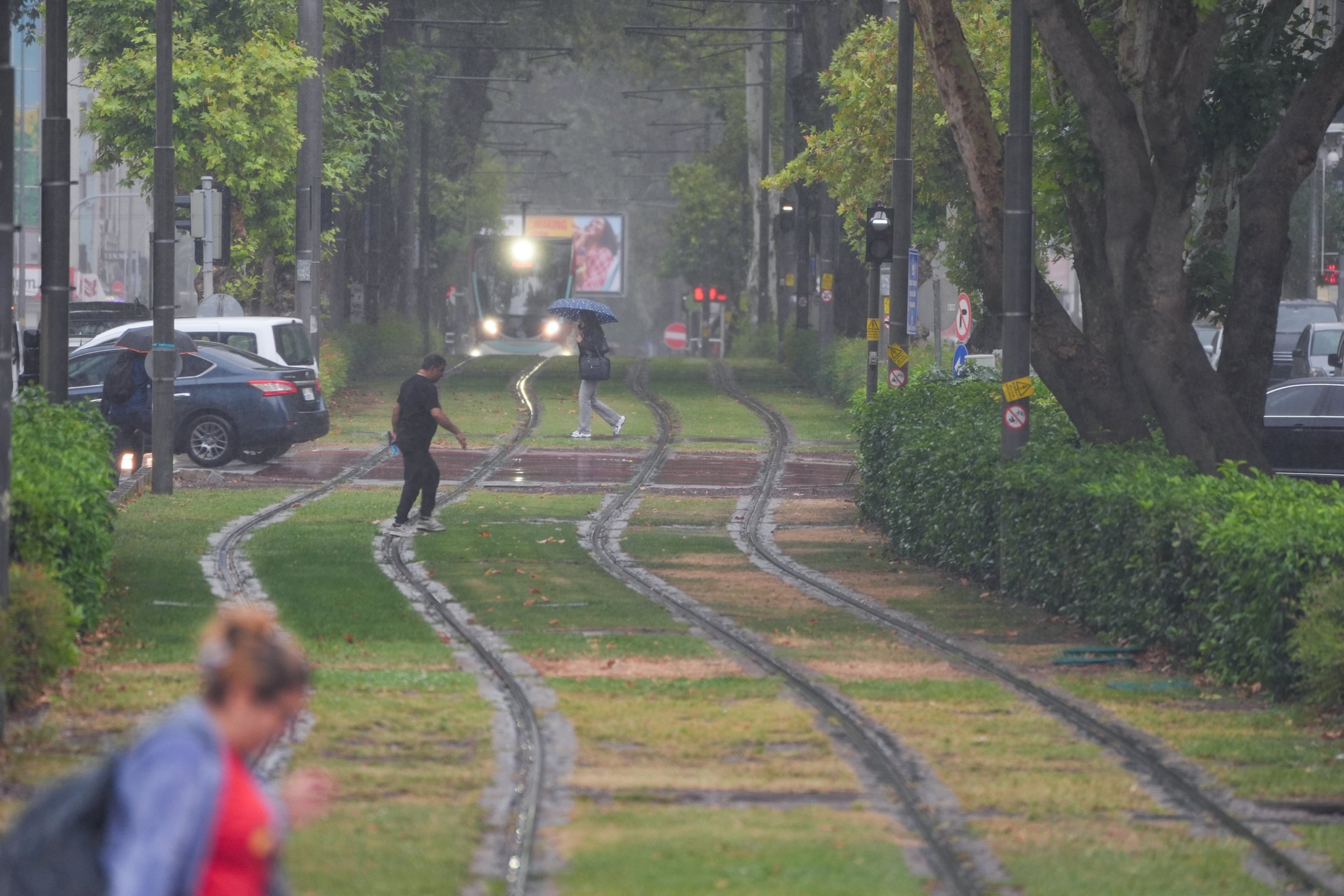
Summer rainfall across Türkiye dropped by more than half compared to long-term averages, making 2025 one of the driest summers on record, according to data from the General Directorate of Meteorology.
Istanbul, the country’s most populous city, faced its lowest summer rainfall in 65 years, highlighting growing concerns about the nation’s water resources and climate resilience.
According to the data, Türkiye’s long-term average summer precipitation between 1991 and 2020 stood at 64 millimeters. This year, however, only 30 millimeters of rain fell across the country, representing a 53% decline compared to the historical average and a 49% decrease compared to last summer, when 58.4 millimeters were recorded.
Meteorologists said rainfall levels this summer were below both seasonal norms and last year’s totals across nearly all regions. The Marmara and Black Sea regions experienced their lowest summer rainfall in more than six decades, while the Mediterranean and Central Anatolia regions endured their driest seasons in 17 years. The Aegean region also saw its lowest precipitation levels in the last 16 years.
Although rainfall slightly exceeded normal levels in isolated areas such as Denizli, parts of Muğla’s southern and western districts, and the surroundings of Mersin and Karaman, most of the country experienced substantial declines. The rate of reduction exceeded 80% across large areas of the Marmara, Aegean, and Southeastern Anatolia regions, as well as much of the Western Black Sea.
Trabzon was the only province to record near-normal rainfall, while all other regions experienced notable declines. The steepest reductions were measured in Çanakkale with 93%, Bilecik with 92%, Izmir with 91%, and Istanbul with 90%. Summer rainfall levels in Amasya, Bartın, Bursa, Düzce, Edirne, Kastamonu, Kocaeli, Sakarya, Sinop, Tekirdağ, Yalova, Zonguldak, and several other provinces also reached the lowest levels observed in 65 years.
Experts say the widespread decline points to deepening drought patterns that have intensified over the past decade.
Istanbul Aydın University meteorology engineer Dr. Güven Özdemir explained that Türkiye typically remains under the influence of persistent high-pressure systems during the summer, resulting in prolonged dry and hot weather. “Although we occasionally see local rainfall, the overall picture shows that drought is becoming a long-term reality rather than a short-term anomaly,” he said.
According to Özdemir, the Marmara region received significantly less rainfall than its seasonal norms, while the Black Sea Region saw declines particularly outside its eastern parts. “The Mediterranean and Aegean regions were extremely dry this summer. Combined with record-breaking heat, these conditions have created severe stress on water supplies,” he added.
Özdemir pointed to global warming, fossil fuel use, population growth and the expansion of urban heat islands as key drivers behind the worsening drought trend. He emphasized that rising temperatures increase evaporation, which depletes surface and groundwater resources faster than they can be replenished.
In Istanbul, the country’s largest metropolitan area, dam levels have already fallen to about 29%, triggering alarm among local authorities and residents alike. “Many of the dams in the Aegean and Bursa regions are nearing depletion,” Özdemir warned. “If we do not receive sufficient rainfall this winter, we could face serious water shortages that would affect agriculture, industry, and daily life.”
The meteorologist also noted that southeastern Anatolia received almost no rainfall throughout the summer, while most of Central Anatolia saw only brief, localized showers. “In the Mediterranean and Aegean regions, hot air masses arriving from Africa and the Arabian Peninsula further increased evaporation rates,” he said. “Without adequate rainfall, this evaporation has rapidly drained our reservoirs and underground water reserves.”
Environmental experts are urging authorities to take preventive measures before the situation worsens. Long-term solutions, they say, include investing in water conservation infrastructure, modern irrigation systems and renewable energy technologies to mitigate the effects of climate change.
Türkiye’s declining summer rainfall is part of a larger global pattern. According to climatologists, Mediterranean climate zones, including southern Europe and the Middle East, are among the most vulnerable to prolonged dry spells and rising temperatures due to climate change.
Özdemir stressed the importance of sustainable water management policies to cope with these new climatic realities. “The coming winter will be decisive,” he said. “If rainfall does not return to normal levels, we must be prepared for significant challenges in managing water resources next year.”