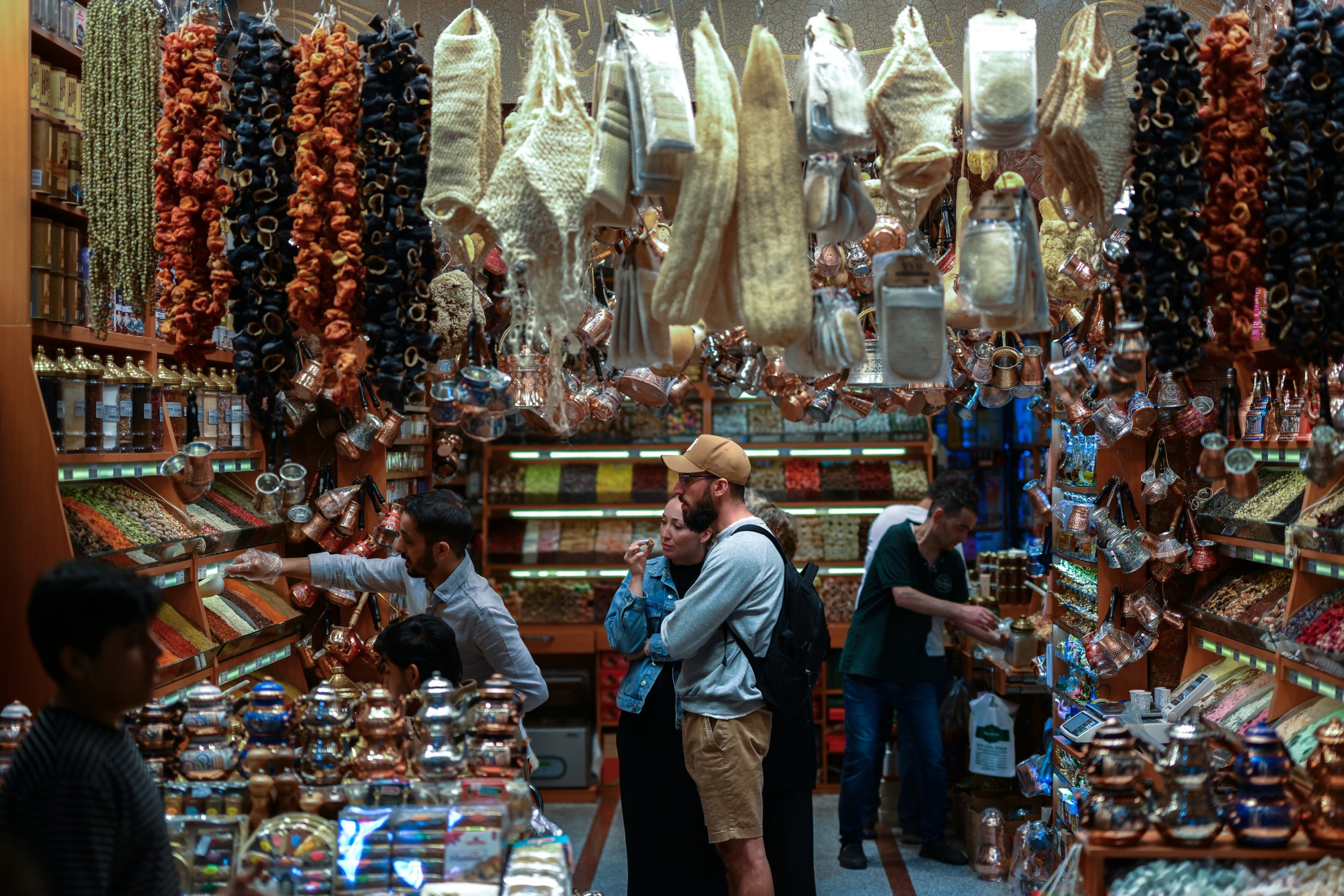
The Egyptian Bazaar, also known as the Spice Bazaar, one of Istanbul’s most important historic trade centers, continues to attract both domestic and international visitors with its nearly 400-year history dating back to the Ottoman era, welcoming 50,000 to 60,000 visitors daily and supporting hundreds of jobs.
As one of the defining landmarks of Istanbul's historic peninsula, the bazaar has preserved its central role in the city's economic and cultural life, maintaining a centuries-old commercial tradition that continues to thrive today.
Fehmi Yılmaz, a historian at Marmara University’s Faculty of Humanities and Social Sciences, said the bazaar has long been at the center of national and international trade networks.
“The Egyptian Bazaar’s most important characteristic has always been the spice trade,” Yılmaz said. “For many years, consumer goods reached Istanbul through Egypt, which is why the structure became known as the Egyptian Bazaar.”
He noted that the market shaped trade not only in Istanbul but also across Anatolia and Rumelia.
“Spices arriving from the Far East were first brought to the Egyptian Bazaar and distributed among merchants. They were supplied not only to traders in Istanbul but also wholesale to merchants throughout Anatolia and Rumelia. It was an extremely important commercial center,” he said.
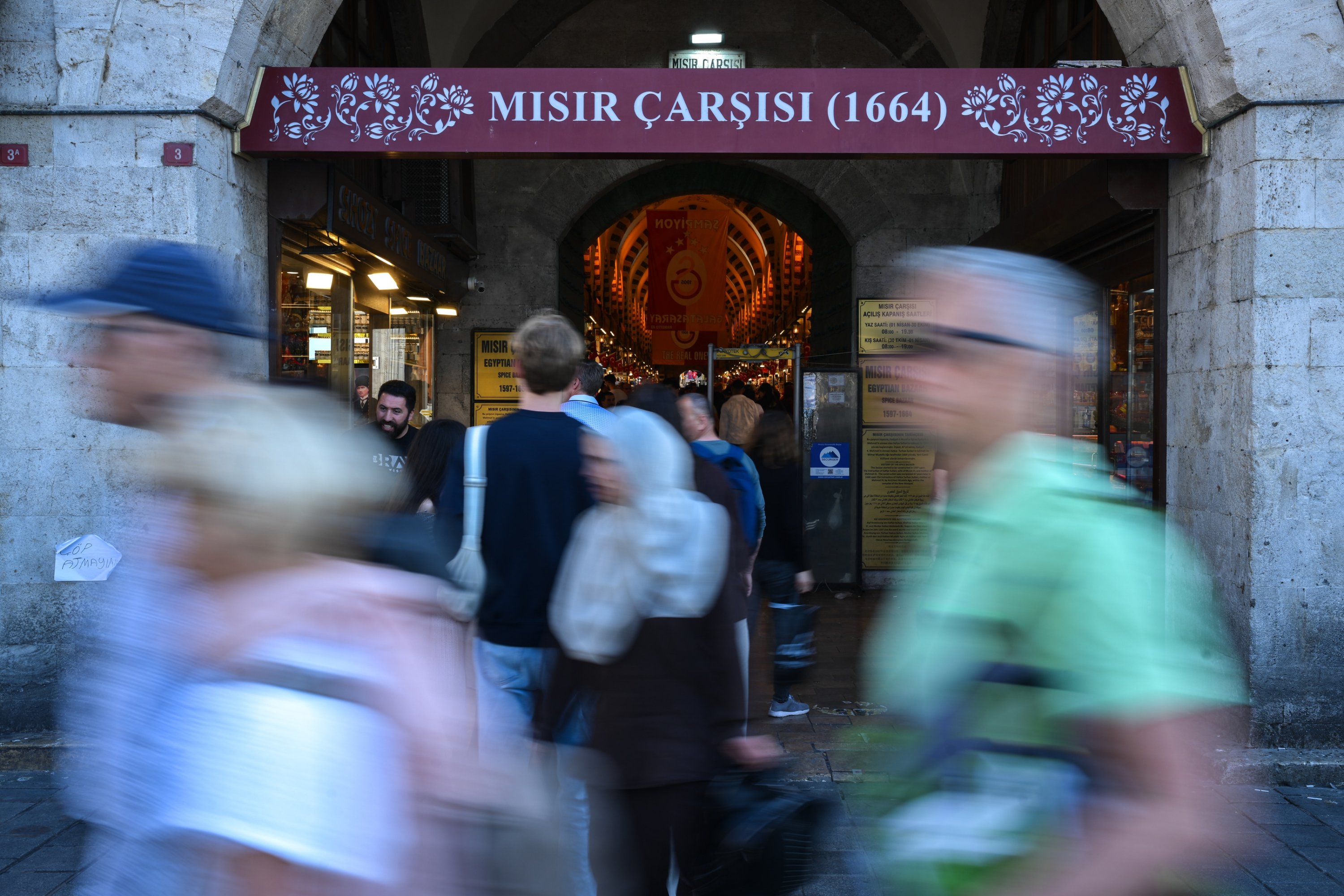
Yılmaz noted that the Egyptian Bazaar served as a vital commercial hub, providing Istanbul residents with easy access to essential goods thanks to its strategic location at the heart of the city.
The historic marketplace underwent significant transformations during the Republican era. A devastating fire in 1940 severely disrupted its operations, but the structure was restored and reopened three years later. Following extensive conservation and restoration efforts in the 2000s, the bazaar regained its present-day appearance in 2018.
Emphasizing its significance beyond commerce, Yılmaz said the Egyptian Bazaar should not be viewed merely as a historic building.
"It is far more than a structure of bricks and domes," he said. "It is a landmark that preserves and promotes our culture, history and commercial heritage, carrying them beyond the borders of Istanbul."
Yılmaz also pointed to similar marketplaces in Egypt, Damascus and the Balkans, noting that they emerged from the same Ottoman trade network and underscoring the importance of safeguarding this shared historical legacy for future generations.
Sami Koyuncu, president of the Egyptian Bazaar Tradesmen’s Assistance and Protection Association, said the bazaar began operating in the 1640s and was one of the centers where goods transported by foreign ships during the Ottoman period were sold.
Revenue generated from the market was used to support the nearby New Mosque and charitable foundations, a tradition that continues today, he said.
According to Koyuncu, around 80% of the bazaar’s businesses are involved in the trade of nuts and spices.
“The Egyptian Bazaar is a meeting point. It is a street, a culture and a way of life,” he said. “People from many different nations come here, and we have hosted many state leaders over the years.”
The bazaar contains around 120 shops and is open seven days a week. On average, each shop employs seven to eight people.
“Many of our employees speak three or four languages because we serve visitors from all over the world,” Koyuncu said.
He added that the bazaar supports a broader commercial ecosystem that includes textile shops, bead sellers, restaurants and other traditional businesses in the surrounding area.
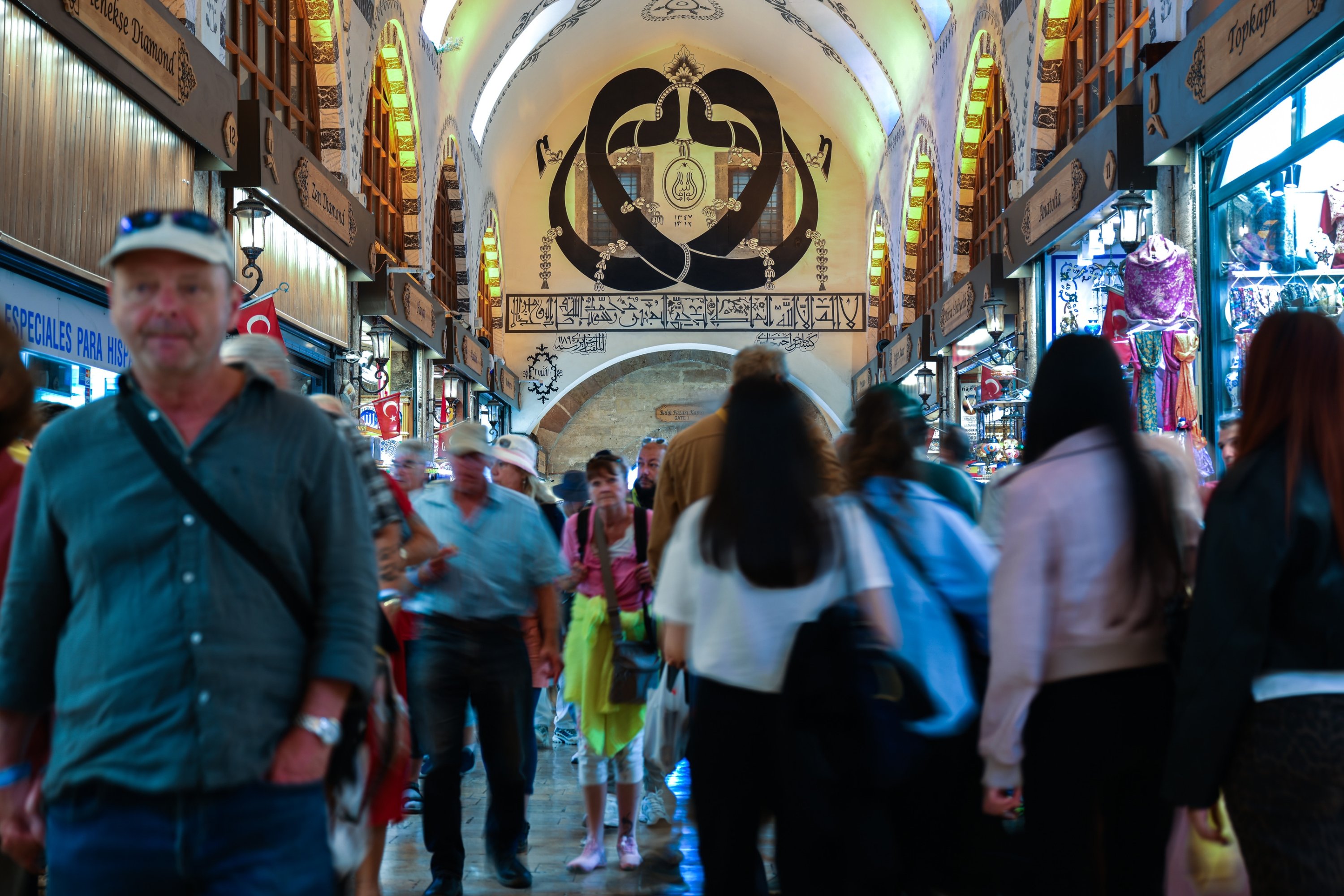
Koyuncu said global developments have affected tourism flows and that conflicts in the Middle East have slightly reduced visitor numbers from the region.
“Despite that, we welcome an average of 50,000 to 60,000 visitors every day,” he said. “About half are foreign visitors, and half are local consumers.”
Unlike many other tourist destinations, the Egyptian Bazaar appeals to both international tourists and local residents, offering products that are often difficult to find elsewhere, he added.
Koyuncu said visitor demographics vary throughout the year, with large numbers of visitors arriving from Spain, Latin America and Greece, while guests from many other countries also frequent the market.
Koyuncu emphasized that the bazaar’s reputation for quality products remains one of its strongest attractions.
“Customers come here believing they will find the best products, and they do,” he said. “Many businesses have been passed down through generations, and merchants grow up with the mindset of offering the highest-quality goods.”
He noted that products from around the world are displayed and sold at the bazaar, in keeping with its historic role as an international trading hub.
“A foreign tourist may taste pistachios from Gaziantep or Siirt and later create opportunities for those products to be exported to their home country,” Koyuncu said. “That is why the Egyptian Bazaar can be viewed not only as a marketplace but also as a trade fair.”