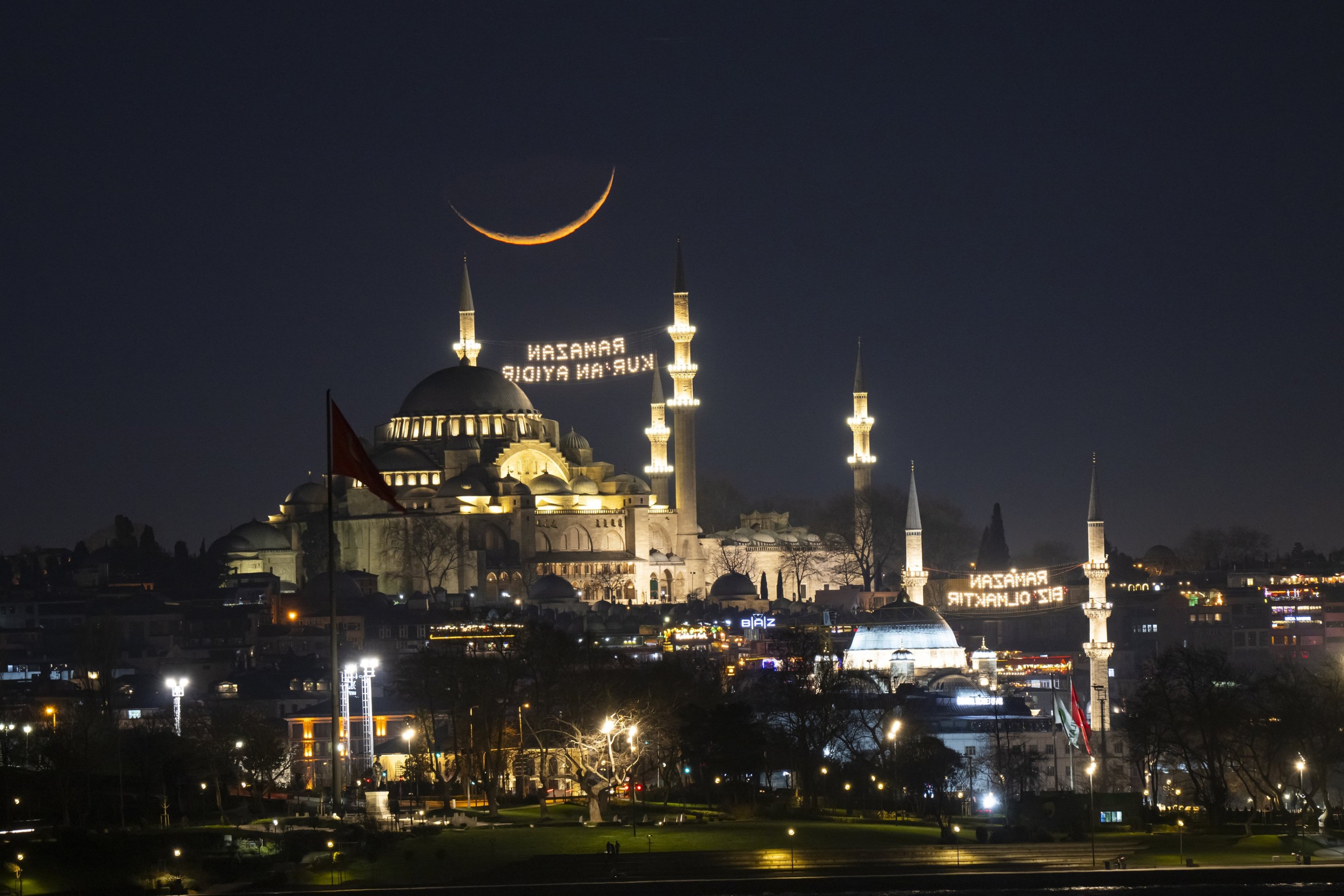
Standing as one of the most comprehensive achievements of classical Ottoman architecture, the Süleymaniye Mosque, designed by Mimar Sinan, continues to define the historical, cultural and urban identity of Istanbul nearly five centuries after its completion. Far beyond its role as a place of worship, the mosque has functioned for 469 years as a fully integrated külliye, bringing together education, health care and social services within a single institutional framework that reflects the Ottoman vision of city life.
Constructed between 1550 and 1557 using Sinan’s distinctive mathematical and engineering principles, the Süleymaniye Mosque was completed in just seven years. Rising prominently on Istanbul’s skyline, the structure commands attention not only through its monumental exterior but also through its lesser-known subterranean corridors and hidden architectural elements, which continue to attract scholarly interest. From the moment visitors pass through its imposing gates, the mosque delivers a carefully orchestrated experience that combines spiritual calm with architectural sophistication.
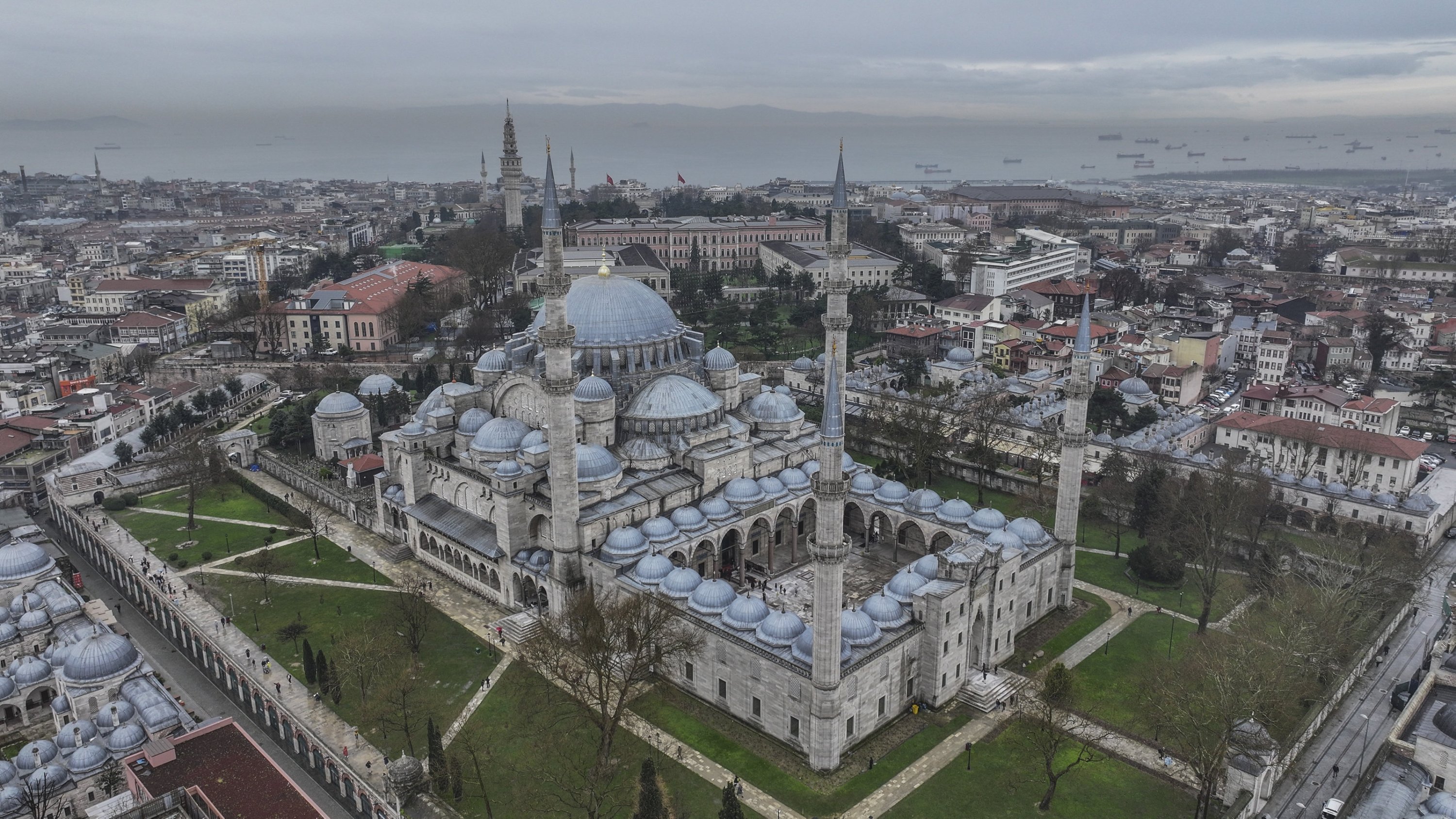
Commissioned by Kanuni Sultan Süleyman, the mosque sits at the heart of a vast külliye that includes madrassas, a darüşşifa (hospital), an imaret (public soup kitchen), a library, a bathhouse and mausoleums. Together, these components represent one of the most holistic embodiments of the Ottoman urban and social order, where religious, educational, and welfare functions were intentionally designed to coexist.
Throughout the centuries, the madrassas within the Süleymaniye complex played a decisive role in positioning Istanbul as a leading center of scholarship in the Islamic world. At the same time, the darüşşifa and imaret served as architectural expressions of the Ottoman social state, offering healthcare and food services to the public.
Located in Istanbul’s Fatih district and overlooking the Golden Horn, the mosque remains one of the city’s most visually dominant landmarks. Its commanding position has long made it a defining element of Istanbul’s silhouette.
Several of the madrassas that once functioned as higher education institutions during the Ottoman period are now, following extensive restoration work, used by universities and research bodies in Istanbul for academic and scientific activities. This adaptive reuse underscores the continuity of knowledge production within the complex.
The transformation of the first and second madrassas into the Süleymaniye Manuscript Library has further strengthened this legacy. Housing rare and valuable collections, the library continues to serve researchers, ensuring the uninterrupted transmission of scholarly tradition from the Ottoman era to the present day.
Academic and art historian Yasin Saygılı explained that within Ottoman tradition, each sultan commissioned a selatin mosque using funds derived not from the state treasury but from the ruler’s share of spoils gained through military campaigns. These structures, he said, functioned as symbolic monuments commemorating imperial victories.
Saygılı explained that Sultan Süleyman first commissioned the Şehzade Mosque following the death of his son, Şehzade Mehmet. Later, as he became increasingly aware of his advancing age, the sultan decided to construct another imperial mosque, leading to the realization of the Süleymaniye project.
He noted that Ottoman architectural convention dictated that large-scale public buildings, particularly those commissioned by the sultan, be constructed on a monumental scale. Within the city walls, only selatin mosques were permitted to have multiple minarets.
According to Saygılı, the Süleymaniye Mosque stands out as a vast külliye comprising mausoleums, a cemetery, fountains, and medreses, while also functioning historically as a center of higher learning. Adjacent institutions included Dar al-Fiqh and Dar al-Hadith medreses, as well as a hospital and a medical school.
He emphasized that during the Ottoman period, the complex served as a key institution for educating bureaucrats, scholars and jurists. In contemporary terms, it could be compared to a comprehensive academic establishment offering undergraduate, graduate, and doctoral-level education. Saygılı described the Süleymaniye as one of the pinnacle achievements of classical Ottoman architecture, deliberately positioned within the cityscape like a gemstone set atop a crown.
Until the 19th century, most journeys to Istanbul were undertaken by sea. Saygılı noted that as ships entered the Golden Horn and the fog cleared, the most prominent landmarks to appear were Ayasofya, Topkapı Palace and the Süleymaniye Mosque. Together, their domes, minarets and monumental forms conveyed a powerful visual and symbolic narrative of imperial authority and cultural sophistication.
Saygılı recalled that Sinan identified the Süleymaniye Mosque as his journeyman work and highlighted its four main minarets, which marked a significant transition from the earlier two-minaret tradition. Some historians interpret the four minarets as a reference to Sultan Süleyman being the fourth ruler after the conquest of Istanbul, while the 10 balconies are widely thought to symbolize his status as the 10th Ottoman sultan.
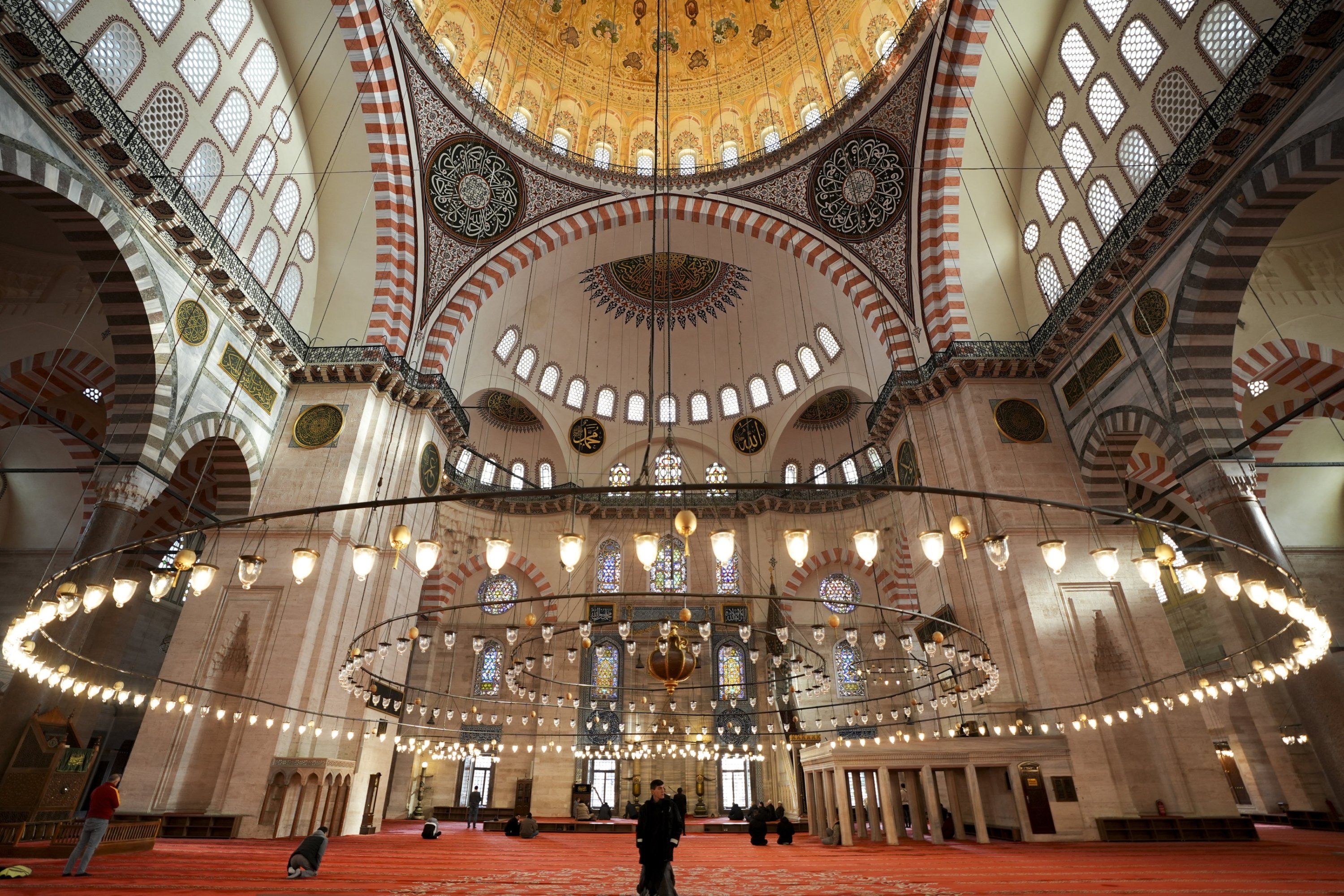
He explained that the mosque’s main dome rests on four massive piers, symbolizing both the unity of the Islamic community and the four Sunni schools of jurisprudence. This structural symbolism reinforces the intellectual and spiritual coherence embedded in the building’s design.
Many of the columns used both inside and outside the mosque were transported from different regions of the Ottoman Empire, Saygılı said, reflecting the empire’s vast territorial reach. Porphyry columns at the courtyard entrance were brought from the Süleyman Pasha Medrese in Iznik, while others originated from regions including Iraq, Syria, and Anatolia, collectively reinforcing the symbolic geography of imperial power.
Saygılı also emphasized that life within and around the mosque during Ramadan differed markedly from modern practices. Until the late Ottoman period, particularly from the mid-19th century onward, mosques played a central role in Ramadan nights, extending far beyond their religious function.
During this period, he said, mosques served as vibrant social venues where families gathered after sunset to drink salep and boza, attend fair-like events, watch Karagöz and Hacivat shadow plays, shop at temporary stalls, entertain children, and spend extended hours together. In this way, the courtyards of mosques such as Süleymaniye became large-scale communal spaces that blended worship, culture, and social interaction throughout the holy month.