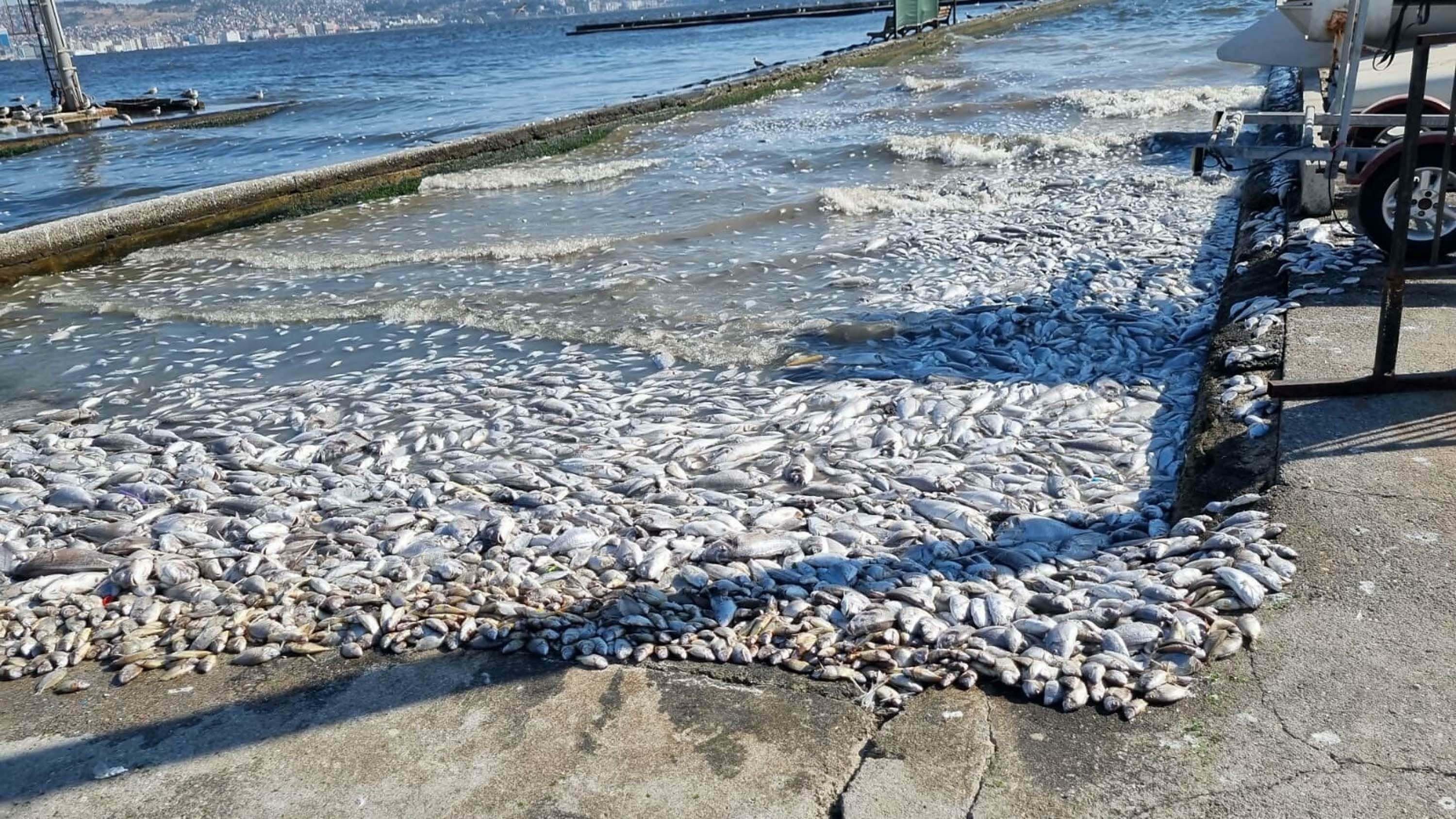
Izmir Bay, in western Türkiye, is once again under threat as experts warn of an impending surge in plankton overgrowth that could lead to mass fish deaths.
Levent Yurga, a faculty member of Ege University’s Fisheries Faculty, has raised alarms about the bay’s deteriorating ecological balance, attributing the problem primarily to persistent pollution from domestic and industrial waste.
According to Yurga, Izmir Bay’s “immune system” has been weakened, allowing foreign plankton species to multiply unchecked among native marine life. This excessive plankton growth, fueled by nutrients from untreated wastewater and industrial discharge, especially during rainy seasons when floods carry additional waste into the bay, can deplete oxygen levels in the water, creating hypoxic conditions that suffocate fish and other aquatic organisms.
“Some plankton species are toxic, and their rapid increase lowers oxygen in the water. Even hardy species like cartilaginous fish begin to die when oxygen drops,” Yurga explained. He emphasized that these conditions have caused repeated episodes of fish mortality in recent years.
The ecological challenges faced by Izmir Bay are not new. Over the past decades, the bay has experienced cycles of pollution and partial recovery. In the early 2000s, severe pollution led to widespread fish deaths and environmental degradation. However, investments in wastewater treatment and pollution control helped the bay begin to recover, with some areas becoming swimmable again by 2003.
Last year, residents witnessed an overabundance of jellyfish in parts of the bay such as Seferihisar and Foça, an indicator of ecological imbalance. Yurga warns that similar blooms of jellyfish and foreign plankton species are likely this year, further signaling environmental stress.
Yurga stressed that reducing pollution remains the only viable solution to restore Izmir Bay’s health. “If we reduce pollution from the rivers flowing into the bay and increase wastewater treatment capacity, the bay can start cleaning itself from the bottom up within two to three years,” he said.
He also pointed out that pollution control is not solely the responsibility of municipal authorities. Public awareness and cooperation are crucial.
“The community must be educated and engaged in protecting the bay,” he added.
With the continued threat of fish deaths and ecological disruption looming, environmentalists and local authorities face increasing pressure to act. Yurga’s call for expanded wastewater treatment facilities and enhanced pollution management reflects the urgent need to protect this vital marine habitat, which supports fisheries, tourism and local livelihoods.
Experts and government authorities have raised concerns about the failure to adequately address wastewater treatment and pollution control, attributing much of the blame to the Izmir Metropolitan Municipality, which has been governed by the Republican People’s Party (CHP) since 2003.
Last year, fish deaths and foul odors were reported along the coastline of the Bayraklı district in Izmir Bay, spreading toward the Karşıyaka shore. The problem first surfaced on Aug. 20, when numerous dead fish and unpleasant smells were detected in the Turan area of Bayraklı.