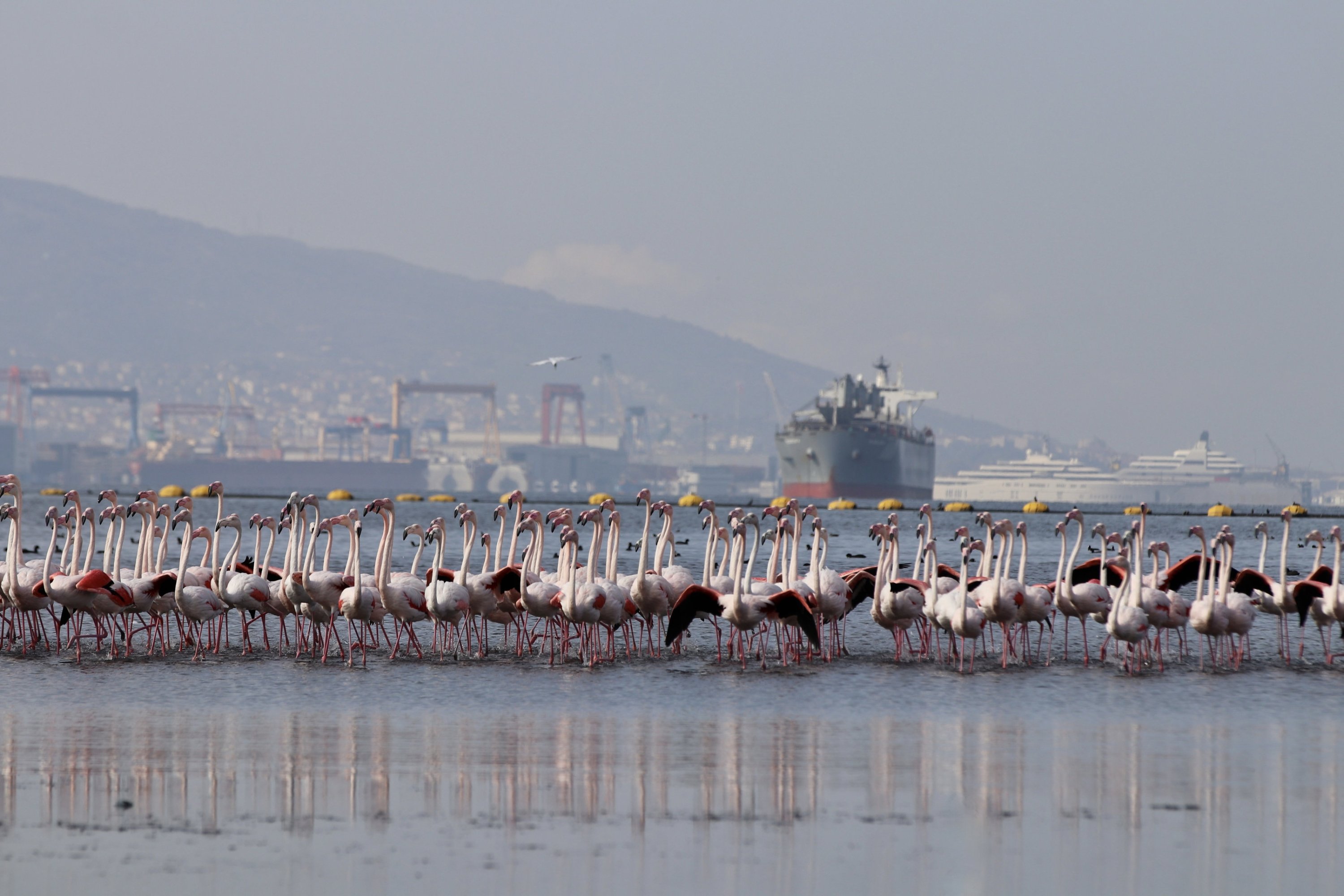
A 2.5-year-long sediment cleanup project led by the Kocaeli Metropolitan Municipality is breathing new life into Izmit Bay, in northwestern Türkiye, contributing to ecological recovery, increased biodiversity and improved water quality, officials said.
Launched in May 2023 in cooperation with the Ministry of Environment, Urbanization and Climate Change, the “Cleaning, Dewatering and Disposal of Eastern Basin Sediment of Izmit Bay” project has removed approximately 1.6 million cubic meters (565 million cubic feet) of sediment across 182 hectares. The initiative targets the revitalization of both underwater and surface ecosystems, tackling oxygen depletion and the accumulation of pollutants that have long threatened marine life.
Mayor Tahir Büyükakın described the project as one of the most significant rehabilitation efforts in the world, citing collaboration with TÜBITAK and several Turkish universities. He emphasized that sediment accumulation at the bottom of the bay creates oxygen-free zones, making it impossible for most marine organisms to survive.
“When sediment builds up at the sea floor, oxygen levels drop and the ecosystem becomes uninhabitable,” Büyükakın said. “This cleaning is extremely valuable for oxygenation, allowing fish, mussels, seagrass and other species to thrive again.”
The project has already begun to show visible results. Fish species that had long disappeared are returning, mussels and seagrass are reestablishing and dolphins have been observed entering the bay, a strong indicator of improved water quality.
The cleanup has also revitalized the Izmit Wetland, one of the most important stopovers for migratory birds in the region. Flamingos and other species have been spotted in the area, marking the ecosystem’s gradual recovery.
Büyükakın highlighted the role of local infrastructure in supporting the project, noting that 23 wastewater treatment plants around the bay prevent the discharge of domestic wastewater. These measures have helped prevent mucilage formation, a phenomenon that has caused severe environmental damage in the Marmara Sea in recent years.
“The results are promising,” Büyükakın said. “We are observing an increase in both the number and diversity of marine life. Dolphins, seahorses and fish that had disappeared are now returning. The project demonstrates that human intervention can reverse environmental damage and restore natural balance.”
Officials also hope the area will become a major bird-watching site and a tourism destination as biodiversity improves. Büyükakın envisions a future where children can safely swim in the bay and blue flags fly over local beaches, symbolizing clean, healthy marine conditions.