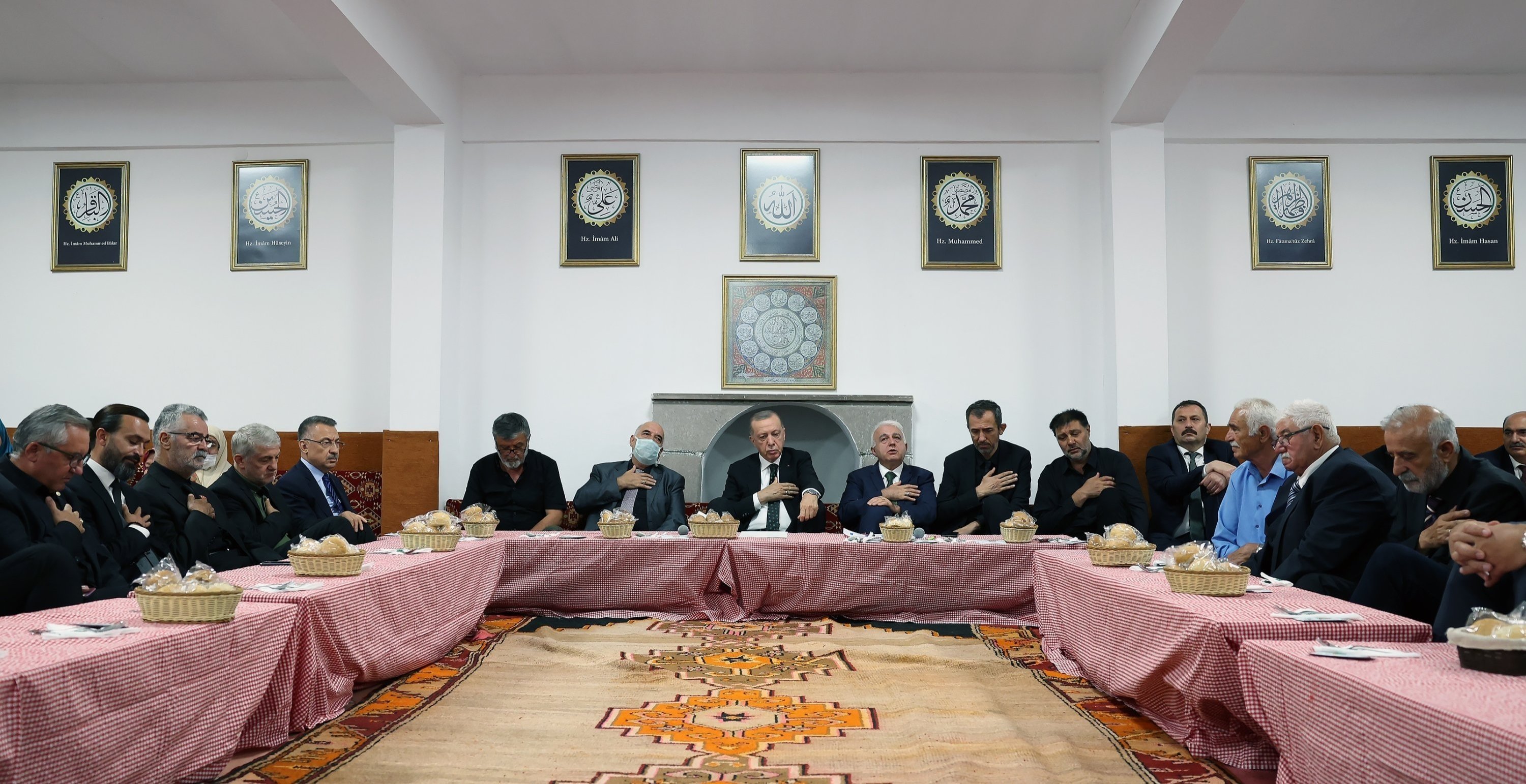
Once a taboo in relations between the Turkish state and the Alevi community, government officials now visit cemevis, the places of worship of Alevism. Their goal has been to meet with dedes, the spiritual leaders of Alevis, to listen to their concerns and better understand the community’s needs. Eventually, these yearslong efforts have started to change relations once marked by mistrust. Alevis are increasingly recognizing the sincerity of the state, particularly the ruling Justice and Development Party (AK Party), in its efforts to engage the community.
One senior dede described the process as long and gradual, saying it is not like planting tomato seedlings and expecting immediate results, but more like planting walnut trees that no storm can uproot. In the end, all the Turkish people will share the fruit.
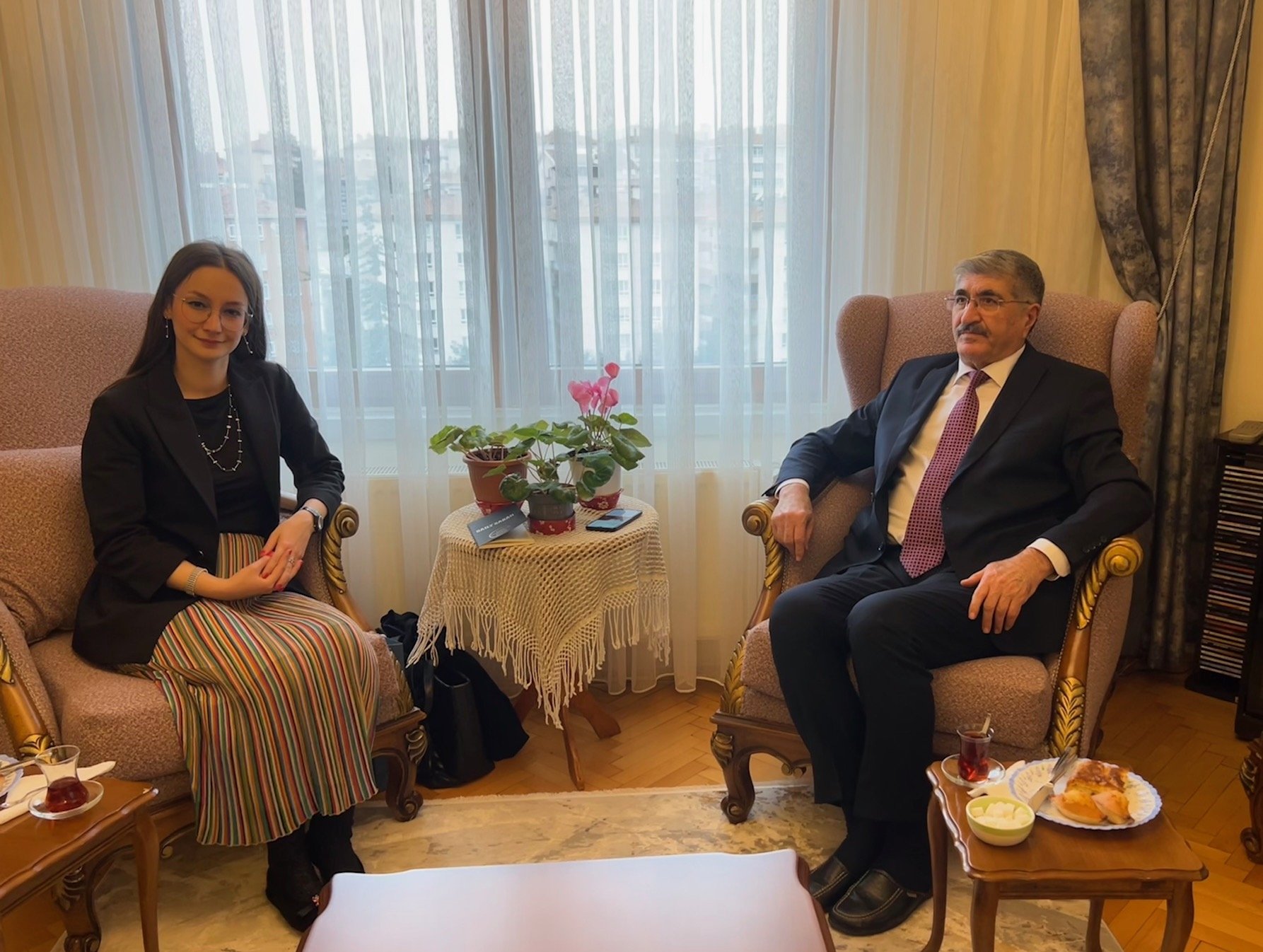
“I describe the establishment of this presidency as a revolution – a revolution in the mindset of the Turkish state over the past 500 years,” said Hüseyin Dedekargınoğlu, a leading dede, researcher and author on Alevism, pointing to the Alevi-Bektashi Culture and Cemevi Presidency, opened in 2022, by the government.
The establishment of the presidency is the first of its kind, as the Parliament officially addressed the demands and needs of the Alevi community for the first time in the republic’s and broader Anatolian history.
It is a key element in the broader “Alevi initiative” the AK Party started in 2008, as part of a broader effort to address the concerns of ethnic and religious communities. Since then, the government has held consultations with community leaders and introduced measures aimed at responding to long-standing Alevi demands and expanding their rights.
Alevis, a Muslim religious group of an estimated 10 million to 15 million people in Türkiye, have long had strained relations with the central state over religious recognition. The divide dates to the 16th century, when Alevis, whose beliefs were closer to those of the Shiite Safavid Empire, supported it against the Sunni Ottoman Sultan Selim I at the 1514 Battle of Chaldiran. In the years that followed, the gap between the Ottoman state’s Sunni Islamic understanding and Anatolian Alevism – an interpretation of Islam blending Shiite traditions with Anatolian folk beliefs – widened.
Dedekargınoğlu said bridging the gap with the Alevis could only be achieved through a change in the state’s mindset, something he believes could only be guided by a strong leader with religious sensitivity, and that leader could only be President Recep Tayyip Erdoğan.
Emphasizing the significance of Erdoğan’s role in terms of societal acceptance, he said: “For over 20 years, there has been a leader who has garnered the votes of half the society. Now, when this religiously sensitive leader emerges and declares that 'Alevis are ours,' and 'cemevis are ours,’ that changes everything.”
Under Erdoğan’s leadership, the Alevi initiative aimed to take concrete steps to improve relations between the state and the Alevi community.
The process formally began with a series of workshops held between 2009 and 2010. During these meetings, the problems and expectations of Alevi citizens were discussed with nongovernmental organization (NGO) representatives, theologians and academics. The stated aim was to identify the core issues of the Alevi community and to develop a road map for addressing them. The findings of the workshops were compiled into a comprehensive report.
Between 2014 and 2016, government officials organized meetings with Alevi leaders, leading to a reform package that recognized several Alevi rights and introduced programs to address the community's long-standing needs. Measures included covering the operating expenses of cemevis, providing state-sponsored support for the pilgrimage of dedes and lifting legal restrictions on these religious leadership structures. As a final move, a council to receive opinions and proposals from Alevi communities was established.
During the period between 2018 and 2021, state officials visited Alevi villages across Türkiye, including 1,585 cemevis, to identify the roots of problems. An extensive report was prepared, documenting 8,740 demands, more than 5,600 of which were addressed.
In 2022, the Alevi-Bektashi Culture and Cemevi Presidency was established within the Ministry of Culture and Tourism. The presidency’s primary mandate is defined as conducting research on Alevism and providing administrative support for dedes and cemevis.
That same year, Parliament passed a law allowing provincial directorates to build, maintain and repair cemevis. It also granted them discounted or free water and power access. Currently, the presidency supports over 2,000 cemevis nationwide.
As the ruling AK Party has worked to engage the Alevi community, the government ally, the Nationalist Movement Party (MHP), has also taken actions that are well-received by Alevis.
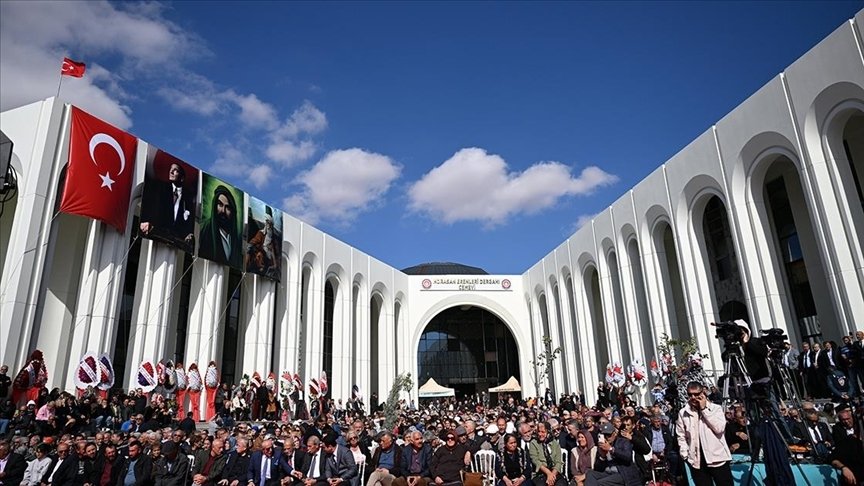
Dedekargınoğlu said that Alevis view MHP leader Devlet Bahçeli’s donation of his personal land in the Hacıbektaş district of Nevşehir for the construction of a cemevi positively. During their meeting, Dedekargıoğlu told Bahçeli that the community saw both the land donation and his decision not to have the cemevi named after him as a symbolic gesture of goodwill, especially considering that the MHP does not typically receive support from Alevi voters.
Bahçeli’s act represents a significant change in the MHP’s approach to the Alevi community, as the party has had a history of tensions with the Alevi community.
Covering roughly 6,000 square meters, the Hacıbektaş Horasan Erenleri Dergahı Cemevi complex is the largest cemevi project in Türkiye and the world. Built in consultation with the Horasan Erenleri Associations Federation and Alevi dedes, its architecture reflects Alevi beliefs and traditions.
Hacıbektaş district is a significant center for Alevis, as it houses the tomb of the eponymous 13th-century Sufi mystic, Haji Bektash Veli, who is considered one of the greatest Sufis in Anatolia and is revered as one of the most respected figures within the Alevi community for his teachings.
Recently, Bahçeli also ignited a debate regarding the legal status of cemevis, saying that, "We must show the will to register cemevis as places of worship. We need to stand in solidarity with our Alevi Muslim brothers and sisters on this issue. Just as we stand for mosques, we must also stand for cemevis."
While Bahçeli’s statements indicate growing political support for Alevis, one of the major concerns for the Alevi community is the legal classification of cemevis. The cemevis are currently regarded as foundations under the Interior and Culture and Tourism Ministries, rather than recognized as houses of worship, which would legally entitle them to receive state funding like mosques, churches and synagogues of recognized religious minorities in the country.
In addition, the community advocates for the exemption of Alevi students from compulsory religion classes in elementary and high schools, believing this would further reflect recognition of their faith. However, there are also other issues.
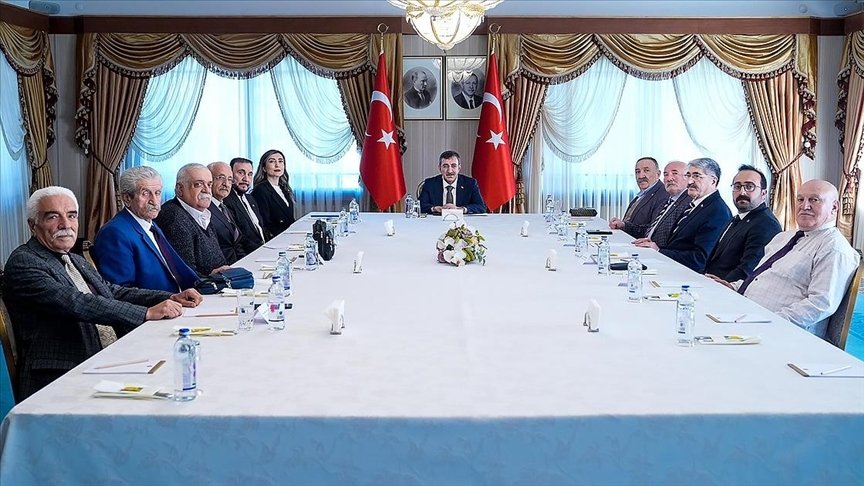
In a recent meeting with Vice President Cevdet Yılmaz and Alevi-Bektashi Cemevi President Esma Ersin, Dedekargınoğlu stressed the importance of expanding the staff of the Alevi-Bektashi Presidency. The dede underlined that to effectively reach all regions of Türkiye and serve the diverse needs of Alevi communities, a large-scale recruitment of officials is necessary. Currently, the Presidency employs 53 people.
Also highlighting the significance of the Alevi diaspora, Dedekargınoğlu said that the government should make efforts to engage with the diaspora, building stronger connections and addressing their concerns.