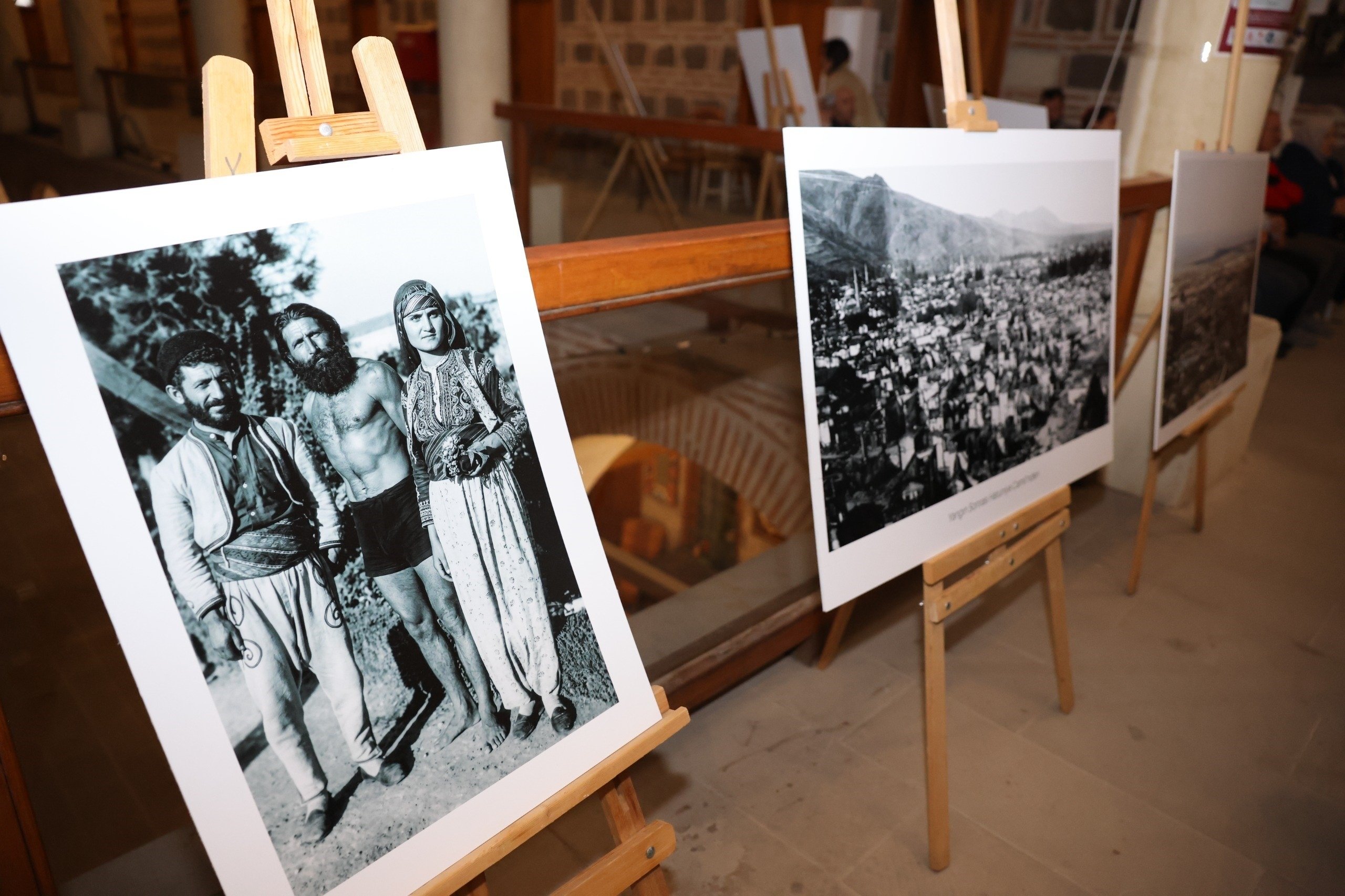
For decades, the story of Ahmet Bedevi, better known as the “Manisa Tarzanı” ("Tarzan of Manisa"), has been intertwined with the history of the western Turkish city he called home.
Remembered for his simple lifestyle and deep devotion to nature, Bedevi became one of Manisa’s most distinctive figures. A recent event in the city offered a fresh look at the period when he arrived there – a turbulent era marked by occupation, destruction and the devastating Manisa fire.
The “Tarzan and Manisa” talk was held at the Kurşunlu Han Poetry House as part of a series of cultural events supported by the Şehzadeler Municipality. Researcher and historian-author Erkan Akbalık presented archival documents and photographs shedding new light on Manisa’s history during the period.
Akbalık shared for the first time with a local audience documents he obtained from Greek state archives, offering new details about the Greek occupation of Manisa and the events surrounding it.
The talk examined the period when Bedevi arrived in Manisa, alongside the major historical developments that shaped the city at the time. Archival material was used to illustrate the atmosphere of the occupation and provide a glimpse into daily life during a turbulent chapter in the city’s history.
One of the most striking parts of the event focused on the major fire that devastated Manisa between Sept. 5 and 8, one of the darkest episodes in the city’s history.
Akbalık also presented photographs of the fire obtained from Norwegian archives, showing the destruction left behind by the disaster. The images were displayed publicly for the first time at the event.
But the story of the Manisa Tarzanı goes far beyond the unusual nickname that made him famous.
Born in 1899 in Samarra, in present-day Iraq, Bedevi served in the Ottoman army during World War I and later fought in the Turkish War of Independence. He was awarded the Independence Medal for his service. After the war, he settled in Manisa and devoted himself to restoring the city’s greenery, planting thousands of trees over the years.
Bedevi eventually made his home on Mount Spil overlooking Manisa, living a remarkably simple life close to nature. He was known for walking through the city wearing little more than shorts, and residents began calling him the “Manisa Tarzanı” after a 1934 Tarzan film became popular in local cinemas.
His unusual appearance was only one part of the legend. Bedevi became known for his efforts to green the city and his deep connection with nature, turning him into a lasting symbol of Manisa’s environmental identity.
The discussion at the Poetry House also explored that legacy and the relationship Bedevi developed with the city and its natural surroundings.