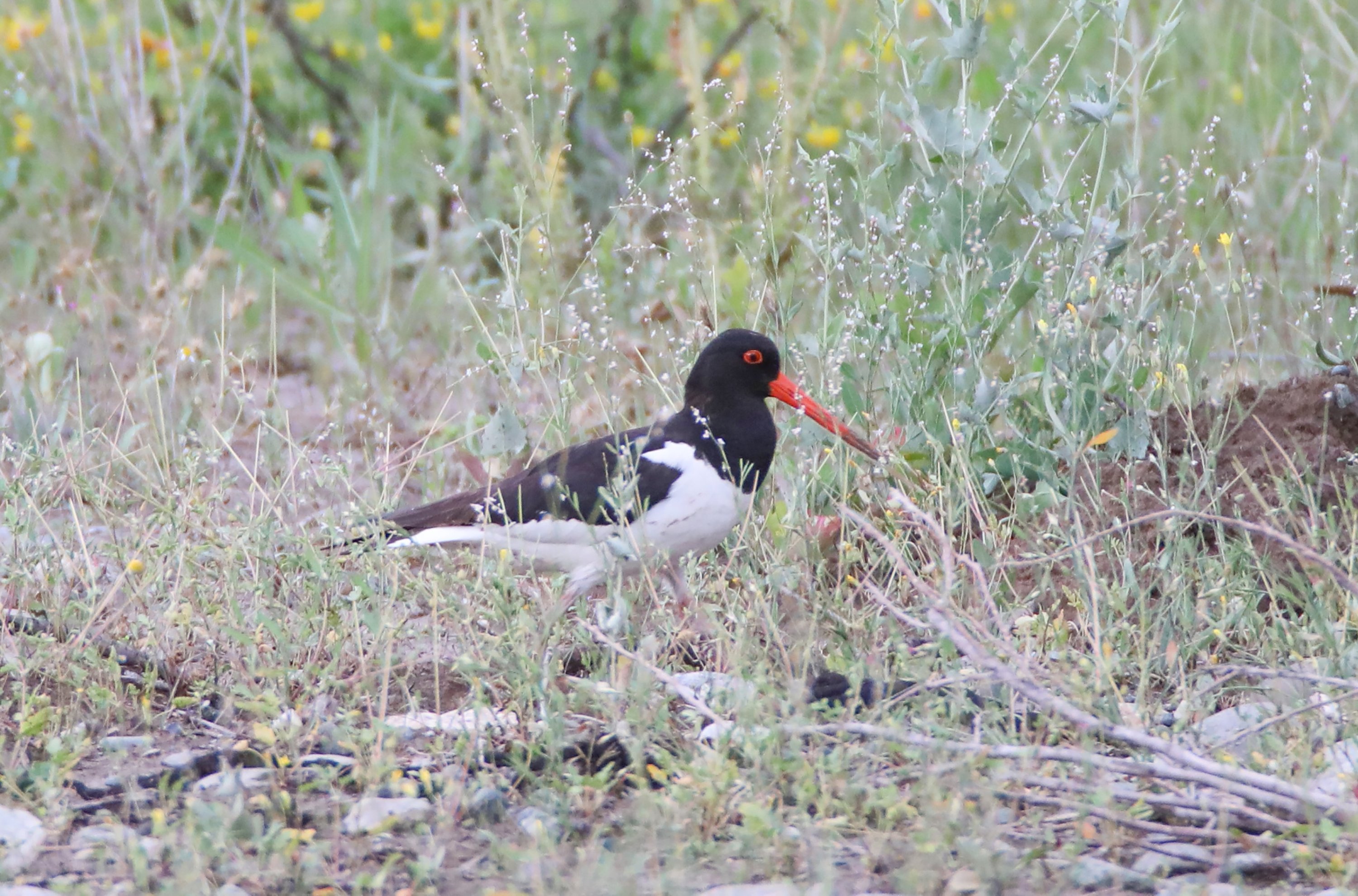
A Eurasian oystercatcher equipped with a satellite transmitter last May has flown across eight countries, offering scientists valuable data on migratory patterns.
The bird was tracked from the Aras Bird Paradise in the Yukarı Çıyrıklı village of Tuzluca district, Iğdır, a key wetland in eastern Türkiye monitored by the NorthernNature Association (KuzeyDoğa) with the approval of the General Directorate of Nature Conservation and National Parks.
At the Aras Bird Research and Education Center, many migratory birds are fitted with satellite transmitters to follow their movements.
The Eurasian oystercatcher, listed as endangered on the International Union for Conservation of Nature’s (IUCN) Red List, was released back into its natural habitat on May 20, 2024, after receiving a satellite transmitter. Since then, it has flown over Türkiye as well as Armenia, Iraq, Saudi Arabia, Egypt, Eritrea, Sudan and Yemen.
As temperatures dropped, the bird began its southward migration. On July 17, 2025, it passed through Şırnak in southeastern Türkiye, then crossed Iraq toward the Red Sea, eventually settling in the Al Qahma region along Saudi Arabia’s coast before continuing further south.
The bird achieved its highest altitude at 6,224 meters (20,433 feet) and reached speeds of up to 132 kilometers per hour (82 miles per hour). NorthernNature Association President Koç and professor Çağan Şekercioğlu of Utah universities said the ongoing data excites scientists and provides new insights into migratory behavior.
Şekercioğlu noted that the bird breeds on islands in the Aras River, which are threatened by gravel extraction, and explained that after summer breeding, the bird travels across eastern Anatolia, Syria, Iraq, Saudi Arabia and the Red Sea before wintering in Eritrea.
He added that the bird has now begun its fall migration again, currently south of Jeddah, and is expected to return to the Aras River islands in spring 2026 for the next breeding season.