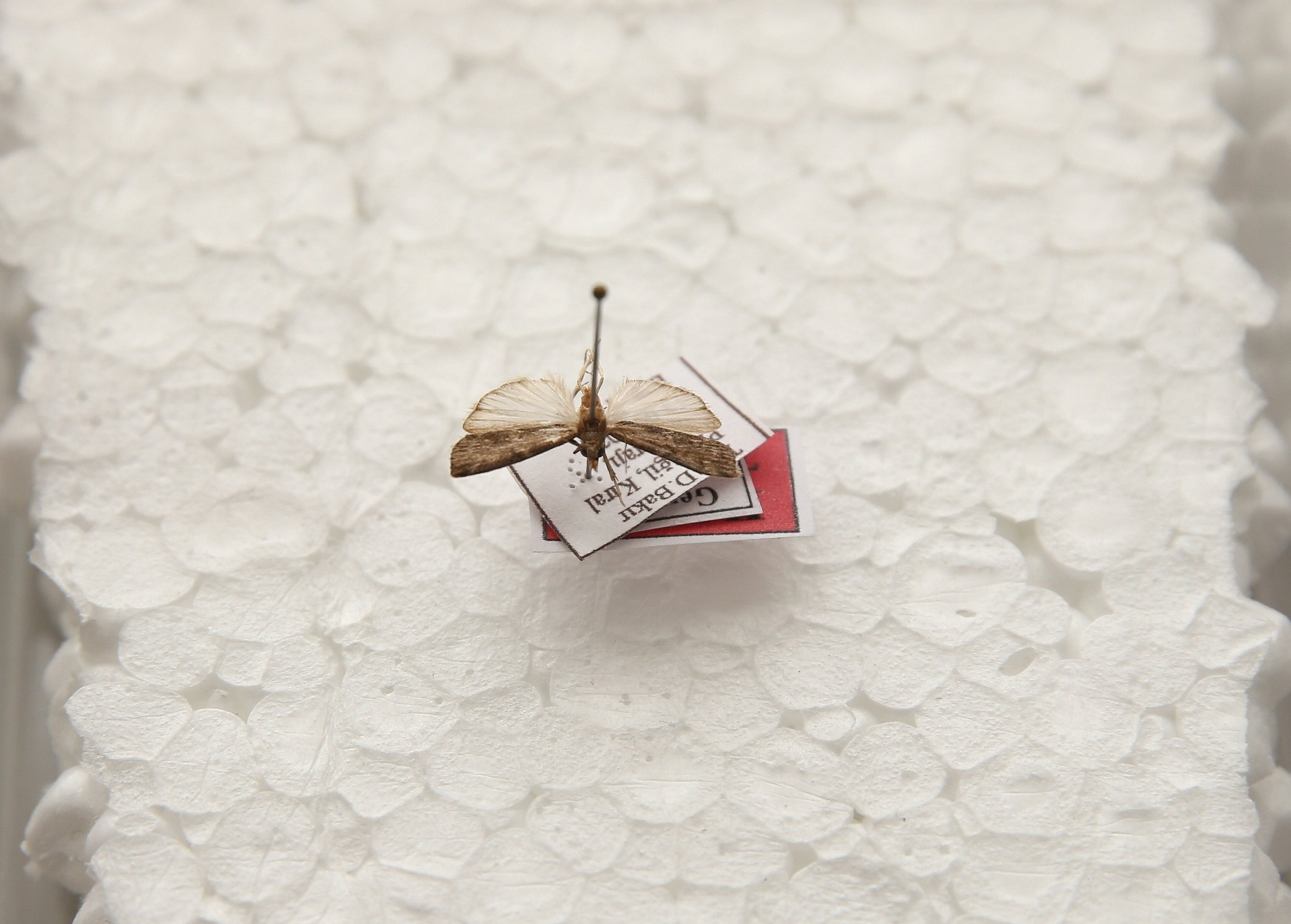
In a development underscoring Türkiye’s expanding biodiversity research ecosystem, Bitlis Eren University (BEU) Department of Biology graduate and current master’s degree researcher Yılmaz Orak has formally introduced a newly identified moth species to the global scientific record, naming it after his spouse, Yıldız Orak.
Orak, who completed his undergraduate education at BEU before serving as a laboratory technician at Bitlis State Hospital, later assumed duty at Diyarbakır Selahattin Eyyubi State Hospital while commencing his graduate studies at BEU. His early-life fascination with insects, particularly Lepidoptera, transitioned into a structured academic framework following his engagement with the research program.
Under the scientific advisement of BEU professor Kesran Akın, Orak conducted a multi-year field sampling initiative in Diyarbakır’s Eğil district. Spanning three to four years, the research utilized light-trap collection methods to obtain 97 Pyraloidea (long-snouted moth) samples. Subsequent laboratory evaluation, executed jointly by Akın and Orak through morphological and genetic sequencing, revealed that one of the collected specimens did not correspond with any previously identified entry in global literature and taxonomic archives.
Further classification confirmed that the specimen belonged to the Tephris genus and represented an entirely new species within the global taxonomy of long-snouted moths. In recognition of continuous spousal support throughout rigorous field and laboratory phases, Orak designated the species Tephris yildizae, a dedication he described as both scientifically permanent and personally symbolic. The full findings were published in Zootaxa, an internationally recognized journal in systematic entomology.
Reflecting on the discovery, Orak noted that his childhood interest in nature became a sustained analytical pursuit during postgraduate research. He underscored that his advisor’s methodological discipline and academic guidance served as a foundational infrastructure for the study.
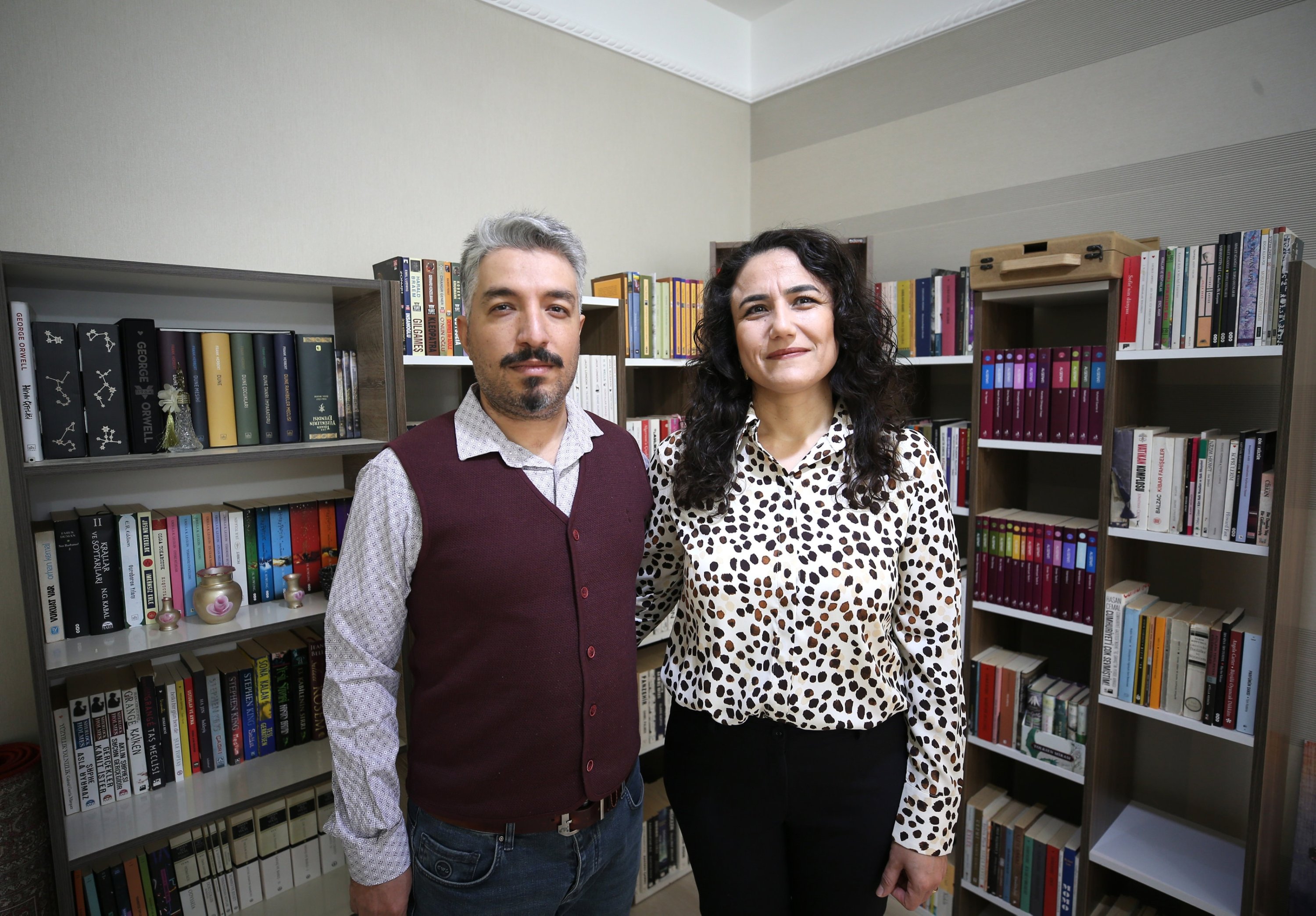
“Through detailed morphological and molecular screenings, we determined that one of our specimens diverged from all known reference sets. Field conditions, specimen preservation and validation stages required extensive institutional and personal bandwidth. My spouse stood beside me throughout field operations and laboratory hours; therefore, naming this taxonomic addition after her was a scientific acknowledgment and personal gratitude,” he said.
Orak also verified that two additional species have been cataloged as new records for Türkiye’s fauna as a result of the same research cycle. He noted that such additions hold long-term importance for the national biota registry, proving Diyarbakır’s ecological abundance and reinforcing Türkiye’s role in global biodiversity mapping.
“Our region continues to harbor previously undocumented Lepidoptera populations. These findings are not solely academic notations; they constitute ecological datasets impacting conservation planning and long-range species management protocols,” he added, affirming continued commitment to field expansion and taxonomy-based investigations.
Akın emphasized that Türkiye, geographically positioned between Europe, Asia and Africa, serves as a biotic corridor with substantial genetic and endemic richness. He stated that between 2018 and 2022, he and Orak compiled approximately 100 long-snouted moth taxa from Eğil, 79 of which were recorded for Diyarbakır for the first time.
Previously, only 56 species of the same group were known in the province. Türkiye’s registered Lepidoptera count currently stands at approximately 5,600 species, with close to 700 attributed to Pyraloidea classifications.
Providing further scientific context, Akın noted that the Tephris genus is globally represented by only 11 known species, seven of which are present in the Palearctic biogeographical zone. He underlined that Tephris yildizae diverges from all known members in morphological and genital structure profiles.
“Specimen evaluation, dissection, sequencing and comparison required long-term technical assessment cycles. The resulting taxonomic distinction was validated and documented within Zootaxa, solidifying its status in international classification repositories,” he said.
Yıldız Orak expressed that despite the pandemic-related extension of her spouse’s academic timeline, she remained consistently supportive. She described the naming attribution as deeply meaningful and affirmed her ongoing commitment to his future scientific workstreams.