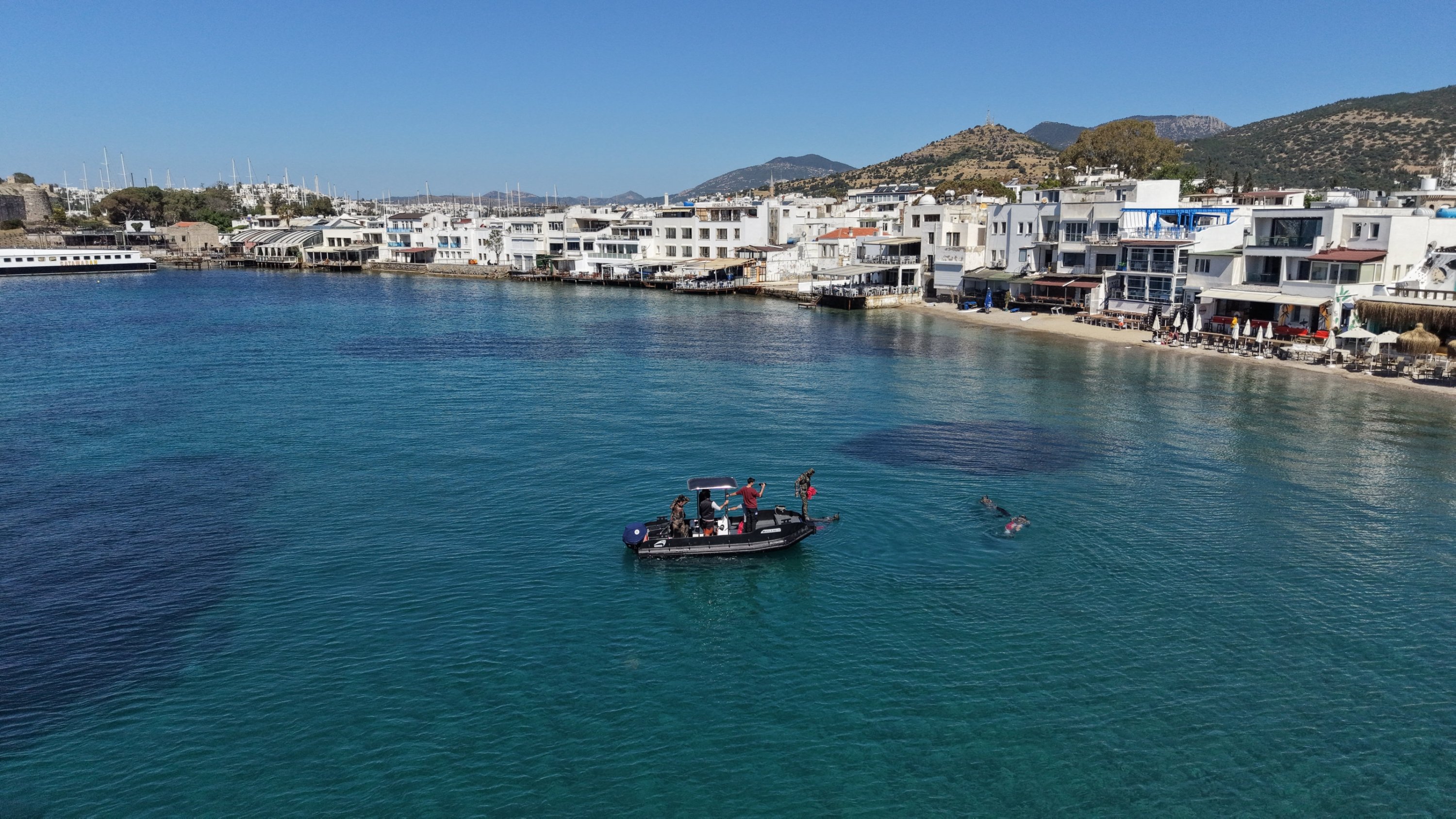
Sea surface temperatures approached record levels last month and could rise even further if El Nino conditions develop later this year, increasing the risks of marine stress events, coastal flooding and storm surges, according to Cem Gazioğlu of Istanbul University.
Speaking on recent global climate data, Gazioğlu, director of the university’s Institute of Marine Sciences and Management, warned that the interaction between oceans and the atmosphere is intensifying extreme weather events both globally and across Türkiye.
According to the Copernicus Climate Change Service, the global average air temperature in April reached 14.89 degrees Celsius (58.8 degrees Fahrenheit), 0.52 degrees above the long-term average, making it the third hottest April on record.
Sea surface temperatures in oceans outside the polar regions reached 21 degrees Celsius last month, marking the second-highest level ever recorded, while Arctic sea ice coverage fell to its second-lowest April level.
Gazioğlu said climate systems can no longer be assessed only through atmospheric temperatures, emphasizing that oceans now play a central role in shaping global weather extremes.
“The climate system has evolved into a complex structure that must be evaluated together with processes such as ocean heat storage, marine heat waves, hydrological extremes, cryosphere melting and atmospheric circulation anomalies,” he said.
“The strengthening atmosphere ocean interaction is increasing both the frequency and intensity of extreme meteorological events in mid-latitude regions. This creates new areas of risk both globally and regionally,” he added.
According to Gazioğlu, rising sea surface temperatures increase upper ocean heat content and strengthen energy transfer mechanisms, allowing the atmosphere to carry more moisture and intensifying storms, extreme rainfall, prolonged heat waves and drought conditions.
“If El Nino becomes effective, new sea surface temperature records could be seen throughout 2026,” Gazioğlu said. “As a result, marine biological stress events could intensify, while the risks of coastal flooding and storm surges may increase.”
El Nino is a climate phenomenon caused by unusually warm ocean temperatures in the Pacific Ocean, which can disrupt weather patterns worldwide and contribute to stronger storms, heatwaves, droughts and rising global temperatures.
He also warned that the effects of climate and oceanographic changes are becoming increasingly visible across Türkiye.
Along the Aegean and Mediterranean coasts, prolonged sea surface temperature anomalies are changing species distribution, accelerating the spread of invasive species and transforming marine ecosystems, he said.
Gazioğlu added that severe floods and increasing landslides in the Black Sea Basin demonstrate the impact of changing atmospheric moisture systems on regional hydrology.
“The mucilage formation observed in the Marmara Sea is also linked to seawater temperature anomalies, stagnant hydro oceanographic conditions and increasing nutrient loads,” he said.
He noted that intense rainfall-driven sediment transport is accelerating coastal erosion in the Black Sea, while short but high-intensity rainfall events around Istanbul, Türkiye, are contributing to more frequent urban flooding.
At the same time, meteorological and hydrological drought conditions are becoming more visible across central and southeastern Türkiye, placing the country under multiple climate-related risks simultaneously.
Describing the Eastern Mediterranean as a global “climate change hot spot,” Gazioğlu warned that warming sea surface temperatures could increase the formation potential of Mediterranean cyclones, known as “medicanes,” as well as other high-energy weather systems affecting coastal regions.
He called for the rapid expansion of high-resolution climate observation networks and continuous monitoring systems, arguing that traditional marine monitoring conducted once or twice a year is no longer sufficient to track highly dynamic climate events.
“Operational oceanography-based continuous observation infrastructures have now become a strategic necessity,” Gazioğlu said.