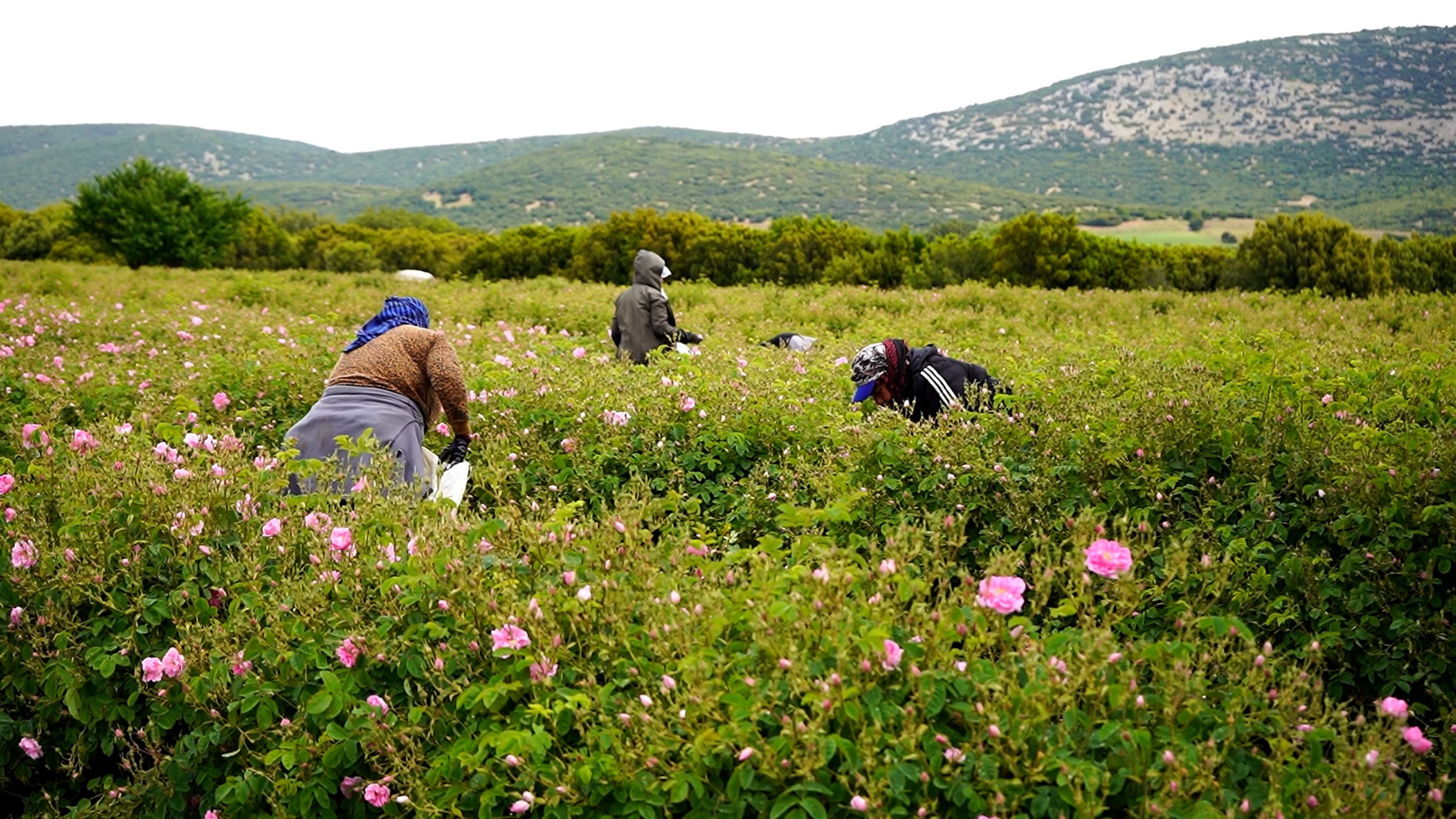
Rose harvesting has begun in Türkiye’s southern province of Isparta, known as the country’s “rose garden” and responsible for around 65% of the world’s rose oil production.
The cultivation of roses in Isparta dates back to 1888, when Müftüzade Gülcü Ismail Efendi brought rose cuttings from Bulgaria’s Kazanlak region hidden inside his walking cane and planted them in the province. Today, rose farming serves as a major source of income for hundreds of families in the region.
With the blooming season underway, producers across the province have started harvesting roses. Farmers head to the fields before sunrise, as exposure to sunlight reduces the flowers’ oil content, and the freshly picked roses are quickly transported to factories for processing.
In Ardıçlı village in Isparta’s Keçiborlu district, workers carefully collect the roses by hand before filling sacks and sending them to production facilities.
Ali Yolcu, who has been cultivating roses on a 70-decare (17-acre) field for about 12 years, said last year’s frost significantly reduced yields, but producers are optimistic this season.
“Things are going much better compared to last year. Rainy and cool weather had a positive effect on the roses,” Yolcu told Anadolu Agency (AA) in an interview on Thursday.
“Last year, we harvested 10.5 tons due to frost damage. This year, the buds are abundant, and we expect around 20 tons in yield,” he added.
Yolcu said harvesting begins early in the morning and can continue until nighttime in higher-altitude areas.
He noted that part of the harvest is processed in traditional distillation cauldrons, where around 60 kilograms (132 pounds) of roses are boiled at a time, while the remaining flowers are sent for rose oil production.
Rose oil produced in Isparta is widely used as a raw material in the cosmetics industry, with a significant portion exported abroad.