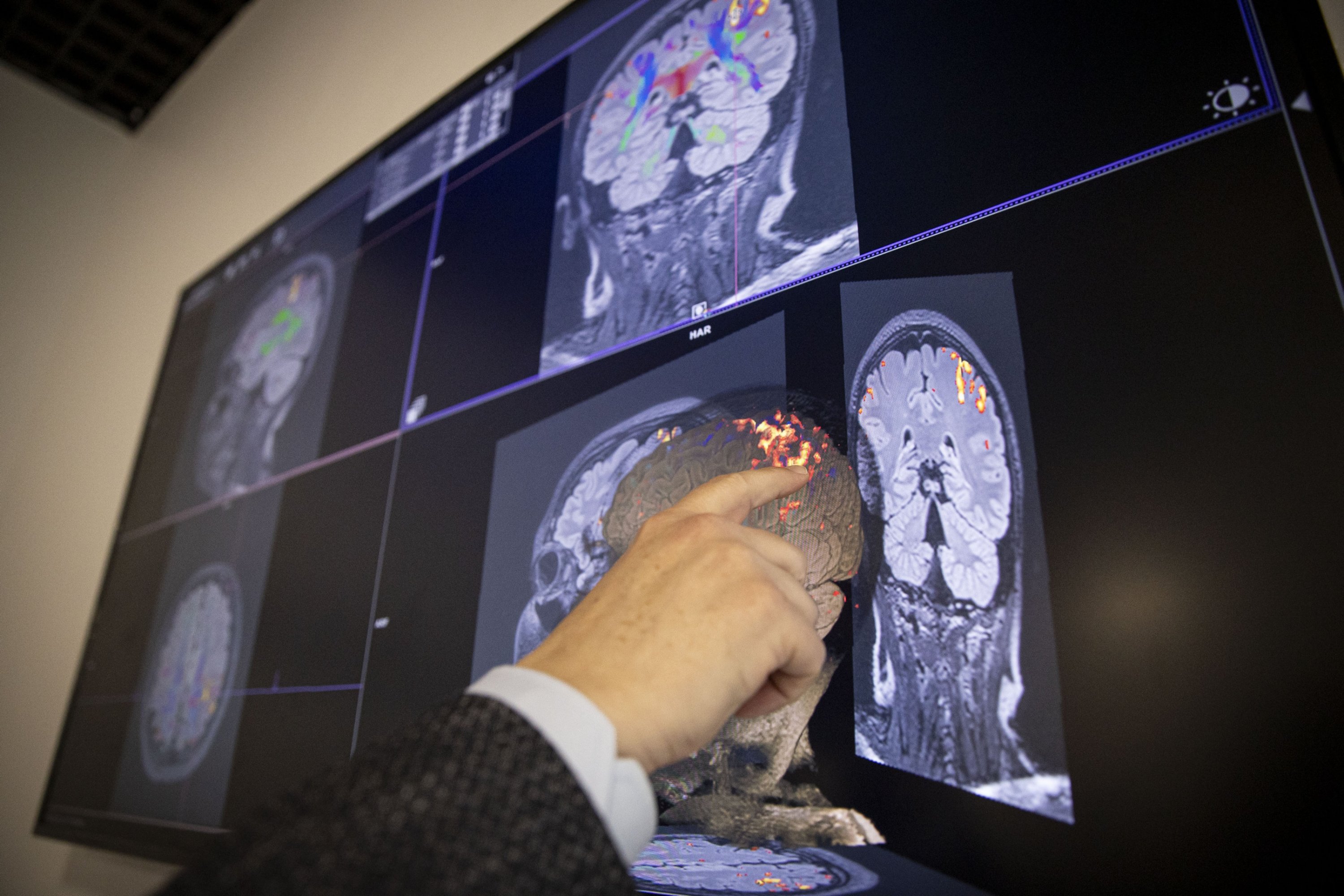
A study conducted by scientists from Ankara University has shed light on the intricate relationship between dopamine levels, stress and the brain's perception of time. The research, which delved into the neurological mechanisms underlying time perception, revealed significant findings that could revolutionize the understanding of mental health disorders such as depression, schizophrenia and Parkinson's disease.
According to the study, stress exerts a disruptive influence on the brain's executive control over time perception, leading to a distortion in individuals' perception of time. Conversely, individuals with elevated dopamine levels demonstrate a heightened accuracy in perceiving time intervals.
The implications of these findings extend far beyond the realm of neuroscience, offering potential insights into the diagnosis and treatment of conditions characterized by disturbances in time perception.
Metehan Çiçek, a faculty member at Ankara University's Faculty of Medicine Department of Physiology and head of the Neuroscience and Neurotechnology Joint Application and Research Center's (NÖROM) Human Neuroimaging Laboratory, shared insights into the research conducted under the TÜBİTAK-supported project titled "The Effect of Social Stress on Time Perception: Epigenetics and Brain Imaging Study."
Çiçek, who brings over three decades of expertise in neuroscience garnered from prestigious institutions in the United States, highlighted the utilization of advanced brain imaging techniques in the study. Explaining the motivation behind the research, Çiçek expressed curiosity about the subjective experience of time during moments of stress or emotional intensity, prompting a meticulous investigation into the neural mechanisms underlying such phenomena.
The study, conducted with the approval of the ethics committee, involved two experiments aimed at elucidating the impact of social stress on time perception. Utilizing magnetic resonance imaging (MRI) technology, researchers exposed 45 healthy adults to stimuli inducing social stress, simulating feelings of failure.
The imaging results revealed distinct alterations in time perception under conditions of stress, with individuals exhibiting a tendency to perceive time as passing slower than it actually does.
Çiçek emphasized that stress-induced disruptions in brain activity during tasks related to time perception underscore the critical role of executive control mechanisms in temporal processing. The findings suggest that during periods of stress, the brain inadvertently slows down the perception of time, potentially influencing decision-making processes in critical situations.
Çiçek stated that in the second experiment of the same study, they examined DNA methylation from the saliva samples of 44 healthy individuals and said: "As a result of this examination, it was shown that individuals with high dopamine levels in their brains perceive time more accurately. In other words, in cases of stress, dopamine levels increase and the brain perceives time more accurately."
Pointing out that dopamine is actually related to reward, Çiçek said: "For example, when we eat, or when our team wins a match, the dopamine system is activated. On the other hand, individuals with high brain dopamine levels are activated during the time perception task. It has been observed that brain activations have become more efficient. This finding may explain why we feel time passes more slowly under stress."
Answering the question about the results Çiçek said: "If we combine them with our previous research results, the perception of time is impaired in depressed patients. In fact, depressed patients do not benefit from rewards, nothing makes them happy. In other words, there is a problem in the dopamine system."
The results of the study were written as neuroscience doctoral theses by Güvem Gümüş Akay and Gözde Vatansever. Çiçek also added that their international articles are in the preparation stage to be sent to scientific journals.