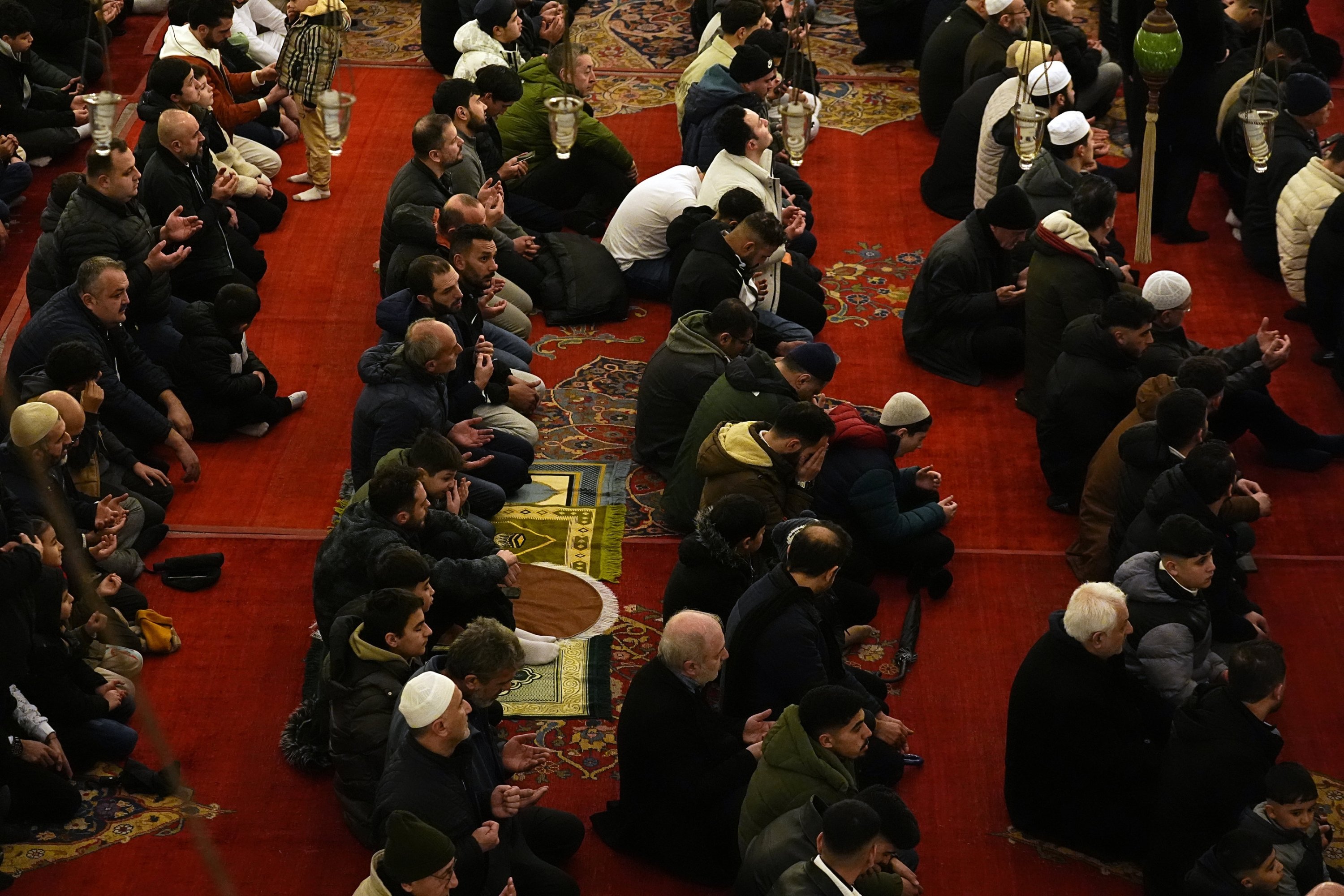
A new academic study on religiosity in Türkiye challenges common public perceptions about atheism, deism and generational religious decline, suggesting that belief in God remains overwhelmingly widespread while levels of practice vary across social groups.
Marmara University associate professor Zübeyir Nişancı says research examining faith and religiosity in Türkiye shows that atheism and deism are not as widespread as commonly believed, and that it is not possible to definitively conclude that younger generations are less religious.
Nişancı, who analyzed findings from the “Faith and Religiosity in Türkiye with Data” report under the Türkiye General Social Survey Project, said the study provides a broad national overview across around 40 social indicators, including religion.
He said the results indicate that while religious practices vary, belief remains widespread across society.
Based on the data, he said: “94% of society believes in God. A portion of the remainder is skeptical, while approximately 4% are closer to atheism, deism or agnosticism. Atheism and deism in Türkiye are not as widespread as they are often discussed in public debate.”
Nişancı added that interpreting deism or similar belief structures requires more complex analytical frameworks, warning against drawing conclusions from single indicators.
He said some surveys incorrectly interpret the gap between high belief rates and lower levels of religious practice as evidence of deism. “In Western literature, this is described as non-affiliated belief or non-practicing belief, and a similar situation exists in Türkiye,” he said.
He stated that around 25% of people in Türkiye believe in God but do not practice religious rituals, adding that classifying this group as deists produces misleading interpretations.
“Overall, we see that religion plays an important role in the lives of a large segment of society. A significant majority are believers, and a considerable portion perform religious practices. However, society is not homogeneous; the role of religion varies across regions, social groups, and different segments,” he said.
He noted that prayer participation is around 40%, while roughly 13% of the population is detached from religious practices.
According to his findings, 67% of respondents describe themselves as very religious or religious, though he stressed this reflects self-perception rather than behavioral measurement.
Nişancı said demographic differences remain significant, with older groups showing higher levels of both belief and religiosity compared with younger cohorts.
Differences in practices such as fasting exist across age groups, but it is not methodologically sound to conclude automatically that younger generations are less religious overall, he added.
Education is identified as the strongest differentiating factor, with higher education levels correlating with lower levels of belief, religious practice, and self-identified religiosity.
Fasting is noted as the most widely practiced religious observance, while women are reported to have higher levels of religiosity than men.
Nişancı said, “In general, we observe that a large majority of people in Türkiye maintain some level of connection to religious belief and practice. Urbanization is also an important factor."
"We examine it in three categories: rural, mid-density urban, and high-density urban. We see clear differences in religiosity among these groups. In highly urbanized areas, religiosity is lower. However, the differences are not very large, and in some parameters, the results are quite close. Still, there is a difference,” he said.
This comes amid ongoing public debate and recurring claims suggesting elevated levels of atheism and deism in Türkiye. However, the study’s data-driven framework presents a more nuanced picture, indicating that while expressions of religiosity may differ across demographic and social lines, core belief in God remains broadly intact across the population, challenging simplified narratives circulating in public discourse.