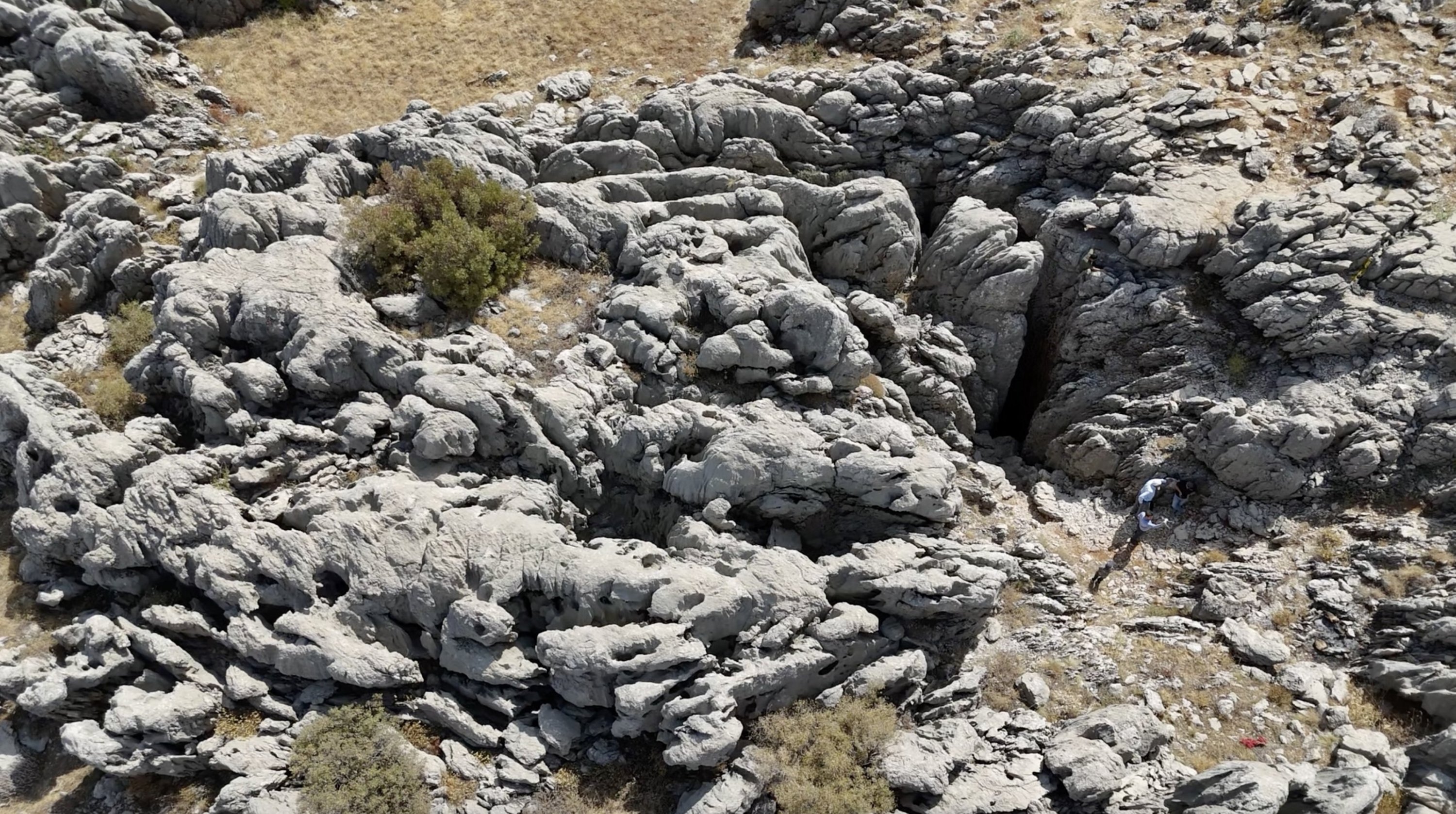
Villagers in the Gerger district of Adıyaman, southeastern Türkiye, continue to preserve their winter food supplies using traditional methods that date back centuries, storing them in a cave located at an altitude of 1,800 meters.
The cave, situated on the Avacık Plateau, functions like a natural refrigerator, allowing products to mature in a cool environment throughout the summer. Villagers place their cheeses, curds and butter inside the narrow, rocky cave entrance at the end of spring, where the products remain protected from the summer heat. When the weather turns cold, they retrieve their supplies to meet their winter needs and sell the surplus for extra income.
Villager Mehmet Ay explained that the cave has been used for hundreds of years and that the tradition has been passed down from generation to generation.
“The entrance is quite difficult,” Ay said. “From what I heard from my grandfather and father, this place is about 300 to 400 years old. Everyone stores their curd, butter, and cheese here. They stay for around four months to reach the right consistency. Once the rains begin and the weather gets colder, we bring the products home.”
Ay emphasized that food preserved in the cave develops a unique flavor compared to that kept in modern refrigerators, “In the fridge, products freeze and lose their taste. In the cave, they mature slowly and naturally. That’s why their texture and flavor are completely different. You can’t find the same taste in a refrigerator.”
Another villager, Ahmet Selim, said that the cave has been used collectively by residents of three villages for centuries.
“Villagers bring their tulum cheese, curd, butter and other dairy products here,” he explained. “They stay for about four months until they reach the right consistency. Later, we take what we need and sell the rest.”
Selim added that recently, wild animals have been drawn to the cave. “We noticed that a wild animal was damaging some products. We believe it might be a lynx, but we haven’t seen it clearly yet. To monitor the situation, we set up a camera trap to track its movements.”