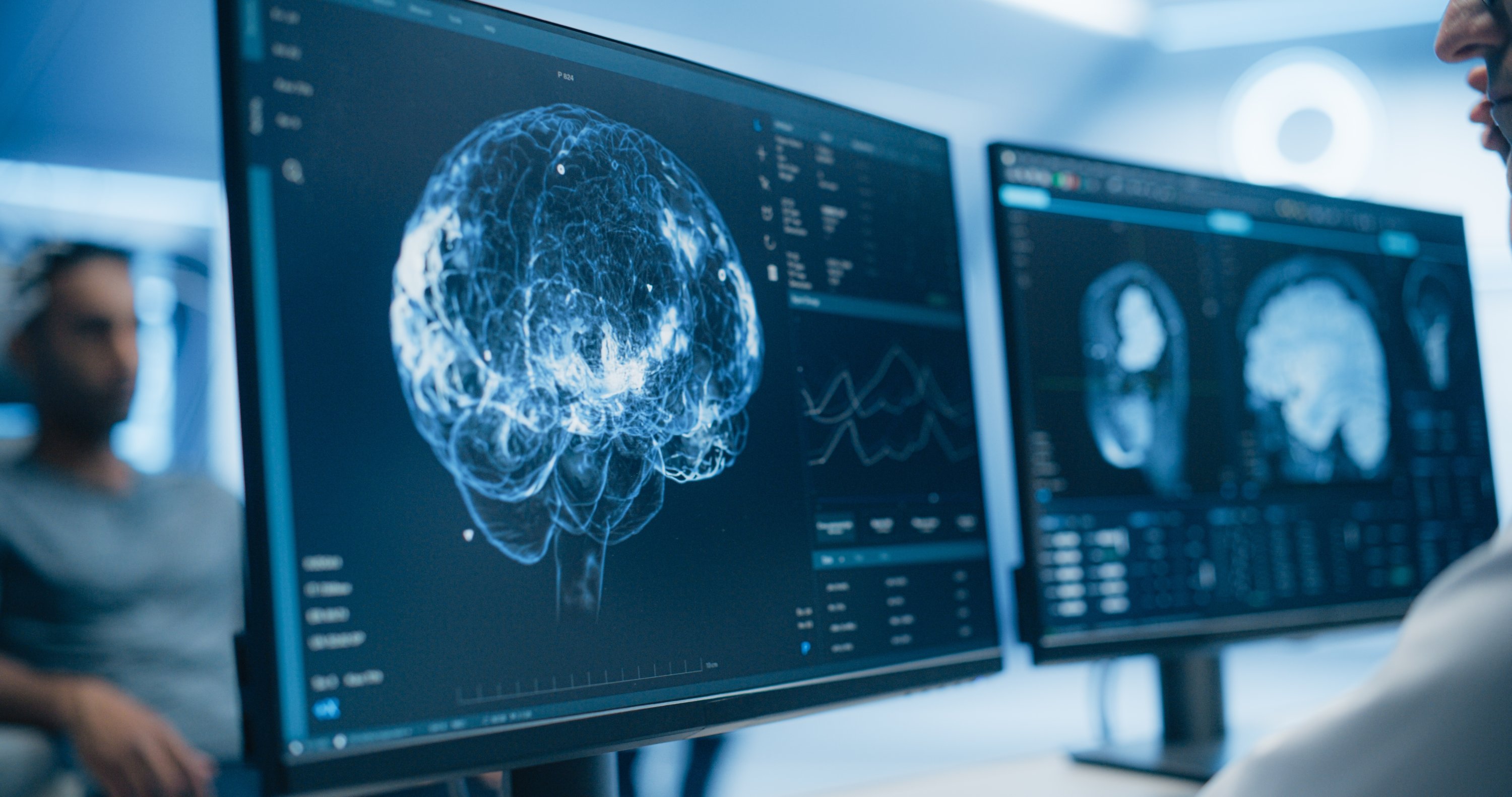
Turkish scientists are playing a pioneering role in interventional neuroradiology, a rapidly advancing field that offers minimally invasive alternatives to open surgery for conditions such as stroke, which ranks as the second leading cause of death worldwide, vascular malformations, aneurysms, and certain brain and bone tumors.
Professor Dr. Turgut Talı, president of the Turkish Society of Neuroradiology, said interventional neuroradiology is among the most important, fast-developing, and heavily invested areas in modern medicine. The field is divided into endovascular applications and spine-spinal cord procedures.
In spine treatments, conditions such as herniated discs are addressed without open surgery. Using a needle and a thin device, tissue can be ablated, frozen or removed piece by piece. Age-related spinal changes causing chronic pain or limited mobility can also be treated through this approach. Special cages or metallic devices can be inserted into discs or narrowed spaces between vertebrae to relieve pain effectively without surgical incisions.
Talı explained that bone and spinal tumors are similarly treated by inserting a needle or administering medications through the skin. “We insert the needle directly, apply radio waves or freezing and inject medications as needed. These methods are minimally invasive and avoid open surgery entirely,” he said.
Spinal fractures caused by osteoporosis, falls or accidents can also be treated with minimal intervention. “One or two needles are used to inject bone cement, restoring the vertebra’s height. Patients may receive only local anesthesia and can walk home immediately. Infections can be drained, and local medications applied. Collapsed vertebrae, spinal deformities and many other conditions are now treated without incisions or surgery,” Talı added.
He emphasized that these procedures usually do not require hospitalization, unlike traditional surgeries. Patients can quickly return to daily life without general anesthesia, making the approach safer and more convenient.
Interventional methods are also used for brain aneurysms. “Traditional surgery requires hospitalization, skull bone removal, general anesthesia, and intensive care. With endovascular techniques, a catheter is inserted from the groin or arm, and specialized materials fill the aneurysm. The procedure is complete in a short time, and patients recover quickly. Aneurysms and vascular malformations are now treated almost entirely with these minimally invasive methods,” Talı said.
He noted that Turkish specialists train international colleagues and play a leading role globally. “Our teams have taught doctors in the U.S., Europe, China and the Middle East through live demonstrations and video broadcasts. Interventional neuroradiology courses under the European Neuroradiology Society were first initiated by our colleagues, and we evaluate and certify trainees worldwide,” he said.
Professor Dr. Cem Çallı, president of the European Neuroradiology Society, highlighted that neuroradiology allows detailed imaging of the nervous system, brain, spine, and other areas. Stroke treatment is a critical application, enabling rapid clot removal to prevent permanent paralysis. He added that brain tumor diagnosis and surgical planning are also enhanced by these minimally invasive techniques.
Çallı emphasized that interventional radiology, often called “surgery without a scalpel,” has reduced the need for many traditional procedures. Patients recover faster, avoid lengthy hospital stays, and the socio-economic burden of care is decreased. New techniques now extend the optimal treatment window for stroke from six hours to 24 hours.