Agriculture and Forestry Minister Ibrahim Yumaklı announced on Friday the discovery of a new SAT-1 serotype strain of foot-and-mouth disease in Türkiye. “To prevent its spread, we promptly closed animal markets and restricted animal movements. Our Foot-and-Mouth Institute produced the vaccine. So far, we’ve sent 8.5 million doses to the field, and next week we’ll dispatch another 2.5 million,” he said.
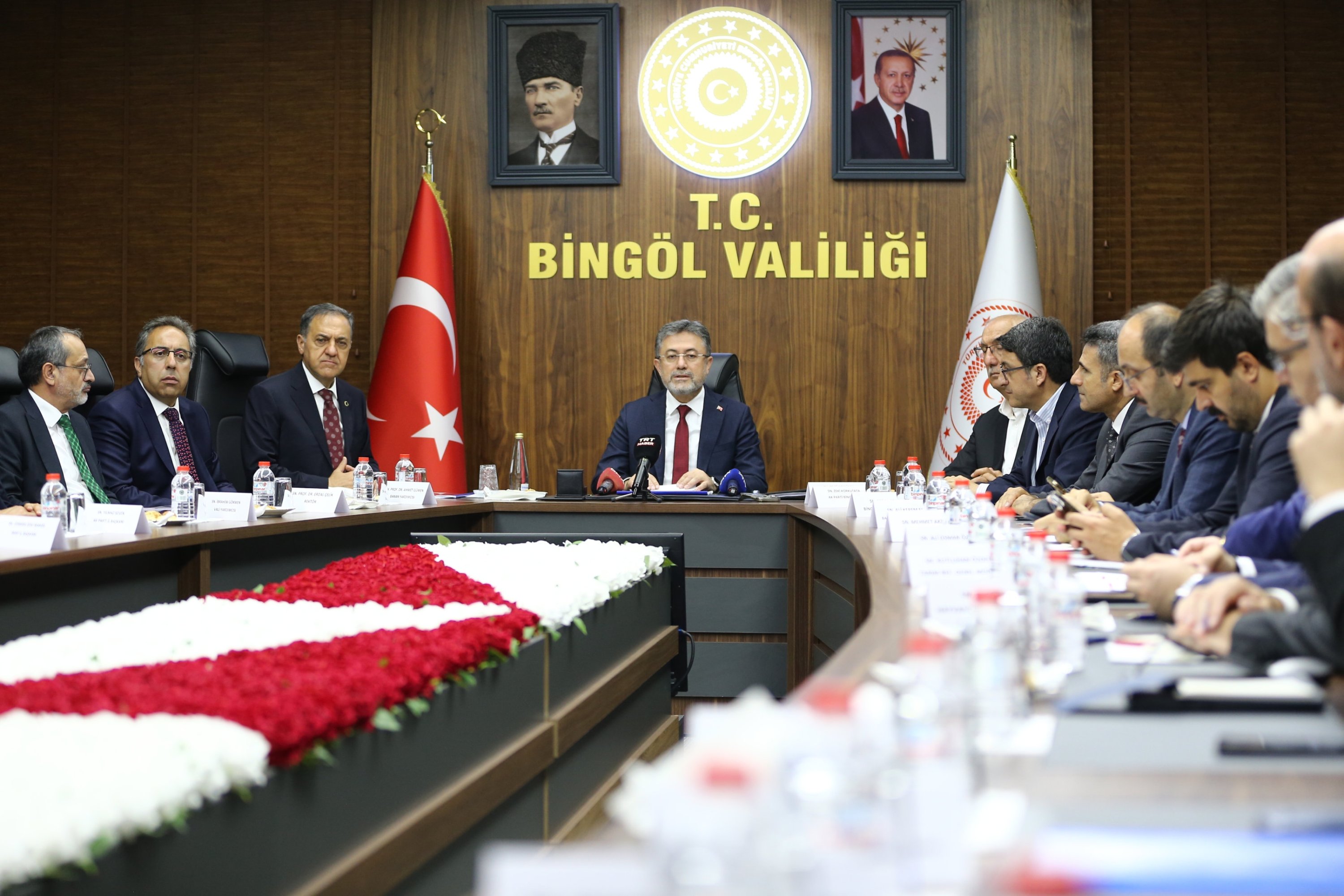
Yumaklı made these remarks during his visit to Bingöl, where he held several meetings. He visited the Governor's Office and met with Governor Ahmet Hamdi Usta. At a subsequent meeting held at the Governor's Office with sector stakeholders, Yumaklı emphasized that they continue their field visits to evaluate every aspect of the agriculture and forestry sectors and observe the effects of newly implemented policies.
Highlighting the importance of a consultation-focused approach, Yumaklı noted that each topic raised by sector representatives would be carefully recorded. He underlined that agriculture and forestry are now globally acknowledged as strategic sectors.
“Global climate change, warming, and various other factors are posing major challenges. Since June 1, we’ve been battling wildfires. Hot weather, low humidity, and extremely strong and unstable winds are threatening our green homeland,” Yumaklı said, adding that these challenges are not unique to Türkiye but are being faced worldwide.
He continued: “A single careless spark can sadly destroy an entire ecosystem. I extend my gratitude to our forest heroes, institutions, ministries, and citizens supporting us. May God have mercy on those who lost their lives in this cause. We will continue to protect this green homeland for which they sacrificed their lives.”
Minister Yumaklı highlighted that water has become a critical issue in Türkiye and globally, especially over the past five years. He emphasized the importance of using water resources efficiently and sustainably, focusing on irrigation projects such as AI-supported systems starting in Adana and expanding to four more provinces. Advanced wastewater treatment for reuse is also being implemented to minimize water loss.
Last September, production planning centered on water resources was put into practice for both crop and livestock sectors – a long-discussed but previously unimplemented initiative that has been widely adopted by producers.
Yumaklı also noted the impact of agricultural frost caused by temperature fluctuations, with frost events in February and April affecting various crops in several provinces, including walnuts, plums and apricots in Bingöl. Producers with TARSIM insurance received compensation, and payments for uninsured farmers are being processed through the Farmer Registration System.
Referring to last year’s livestock roadmap, Minister Yumaklı highlighted efforts to increase animal breeding, strengthen family farms, and support women and young entrepreneurs in production. As part of production planning, specific livestock and dairy regions were designated to ensure investments are made in the right locations. Bingöl is one of two provinces recognized as a center for livestock, dairy, and poultry production.
On the new SAT-1 foot-and-mouth disease strain, Yumaklı said swift measures were taken by closing animal markets and restricting movement. The Foot-and-Mouth Institute developed a vaccine, with 8.5 million doses already distributed and 2.5 million more on the way. Vaccination will reach 85% before animal markets gradually reopen. He assured that there is no threat to the meat supply.
Yumaklı also noted that future goals align with the “Century of Türkiye” vision, emphasizing agriculture and forestry as priorities. Quoting President Erdoğan, he stressed that a strong Türkiye depends on strong agriculture and that improving competitiveness requires better rural infrastructure.
He described Bingöl as an important city in terms of structured urbanization and a significant agricultural hub. Yumaklı pointed out that Bingöl has now started to market its agricultural products, turning production into branded products.
“If you produce something but cannot market it or create added value, or if you ignore branding, sustainability becomes impossible. Bingöl honey is the only honey from Türkiye that has received a geographical indication from the European Union, which is highly valuable. Bingöl also has dairy processing facilities. The face of Bingöl has changed in this regard. Currently, half of Bingöl’s land is actively cultivated by about 6,000 farmers. We will continue contributing to Bingöl becoming a brand city through its production,” he said.
“In the past 23 years, approximately TL 133 billion ($3.27 billion) in investment has been made in Bingöl. There are 164 water and irrigation facilities that have been commissioned. With the irrigation facilities now in service, 112,000 decares of land have been opened to irrigation, contributing approximately TL 1 billion annually to the economy. Under the ORKÖY program, 2,231 projects have also been supported through grants and loans.”
Yumaklı said that 9 million saplings have been planted to enrich Bingöl’s greenery, emphasizing the importance of trees after recent wildfires. He invited citizens to participate in planting on Nov. 11, National Afforestation Day.
He also announced the completion of the tender for the TL 700 million Bingöl Drinking Water Treatment Plant and plans to establish a forest park and two bee forests in Bingöl.
Regarding the national agricultural census, Yumaklı explained that the process has entered its second phase, with ministry and Turkish Statistical Institute (TurkStat) personnel working together in the field. He urged producers to cooperate to ensure accurate data collection.